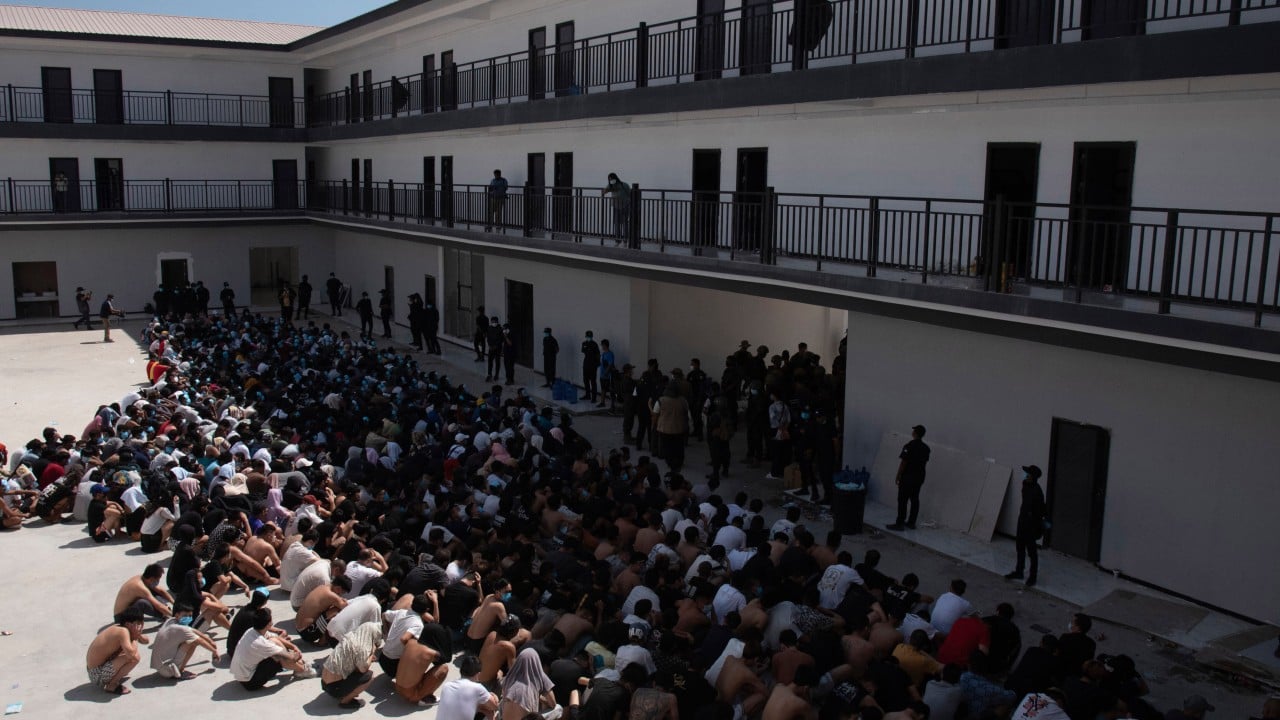
The air inside the compound always smelled of scorched plastic and stale tea. Neon lights hummed an electric frequency that never stopped, burning away the boundary between day and night. For nineteen hours straight, the glowing screen remained the only reality.
Type. Delete. Refresh. Chase the target.
To the outside world, it looked like a frantic corporate office. Inside, it was a cage. Thousands of young people, lured by promises of high-paying tech jobs abroad, found themselves trapped behind razor wire. Passports confiscated. Phones searched. Armed guards patrolling the concrete perimeter. They were not employees. They were hostages, forced to run multi-million-dollar online financial scams targeting victims across the globe.
And now, the state has decided to draw a line in blood.
The Architecture of a Modern Trap
Consider how a person ends up in such a place. The story rarely begins with chains. It starts with an advertisement on social media. A glossy post promising free flights, luxury accommodation, and a generous salary for data entry or customer service in Southeast Asia.
For a college graduate struggling in a stagnant job market, or a young worker drowning in debt, that advertisement feels like a lifeline. They pack a bag. They buy a one-way ticket.
The moment they land, the descent begins.
Their documents vanish into the desk of a smiling recruiter. They are driven deep into border regions, far from embassies, far from help, and deep into fortified industrial parks managed by transnational syndicates. There, the training starts. They are handed scripts. They are taught how to build fake romantic relationships online, how to manipulate cryptocurrency markets, and how to drain life savings from unsuspecting retirees thousands of miles away.
Fail to meet your daily quota, and the punishment is swift. Beatings. Deprivation of food. Solitary confinement. Electric shocks.
The scale of this underground economy is staggering. Billions of dollars move through these digital compounds every single year, bleeding economies and shattering families. Law enforcement agencies across multiple continents have struggled to mount an effective response, largely because these cyber-slave camps operate in the lawless shadows of regional conflict zones, protected by corrupt local networks and heavily armed guards.
Yet, pressure has reached a boiling point. International outrage, combined with mounting diplomatic demands from neighboring countries whose citizens were among the enslaved, forced authorities to act.
A Severe Turn of Law
When news broke that Myanmar had formally approved the death sentence for individuals convicted of operating these cyber scam centers, the global community stopped.
Capital punishment is a heavy word. In the context of transnational organized crime, it represents an escalation of unprecedented proportions. The policy shift signals an acknowledgment by regional authorities that the traditional methods of fines, mild prison terms, and superficial raids are no longer enough to pierce the armor of multi-billion-dollar criminal syndicates.
Critics argue about the efficacy of state-sanctioned executions. Human rights advocates raise valid alarms regarding judicial transparency, fair trials, and the risk of low-level coerced operatives taking the fall while kingpins remain untouched in hidden offshore havens.
Yet, the message from the judicial decree is deafening. The golden age of operating industrial-scale cyber slavery with impunity is drawing to a violent close.
Walk through the abandoned sectors of these raided compounds today, and the silence is deafening. Broken computer monitors litter the floor. Chairs lie overturned. Faded security lanyards hang from door handles like forgotten ribbons. The people who sat here are gone, either repatriated to their home countries or still lost in the vast machinery of displacement and trauma.
The heavy hand of the law has finally arrived at the iron gates. But clearing the compounds is only the first step of a much longer reckoning. The digital economy that feeds these syndicates remains vast, hidden in encrypted messaging apps and decentralized financial ledgers.
The neon hum has faded from the compound walls. The guards are scattering into the jungle. But the human cost etched into the lives of those who survived the screens will echo long after the ink on the new death penalty statutes has dried.
The gates are open now. The real challenge is making sure no one ever has to walk through them again.