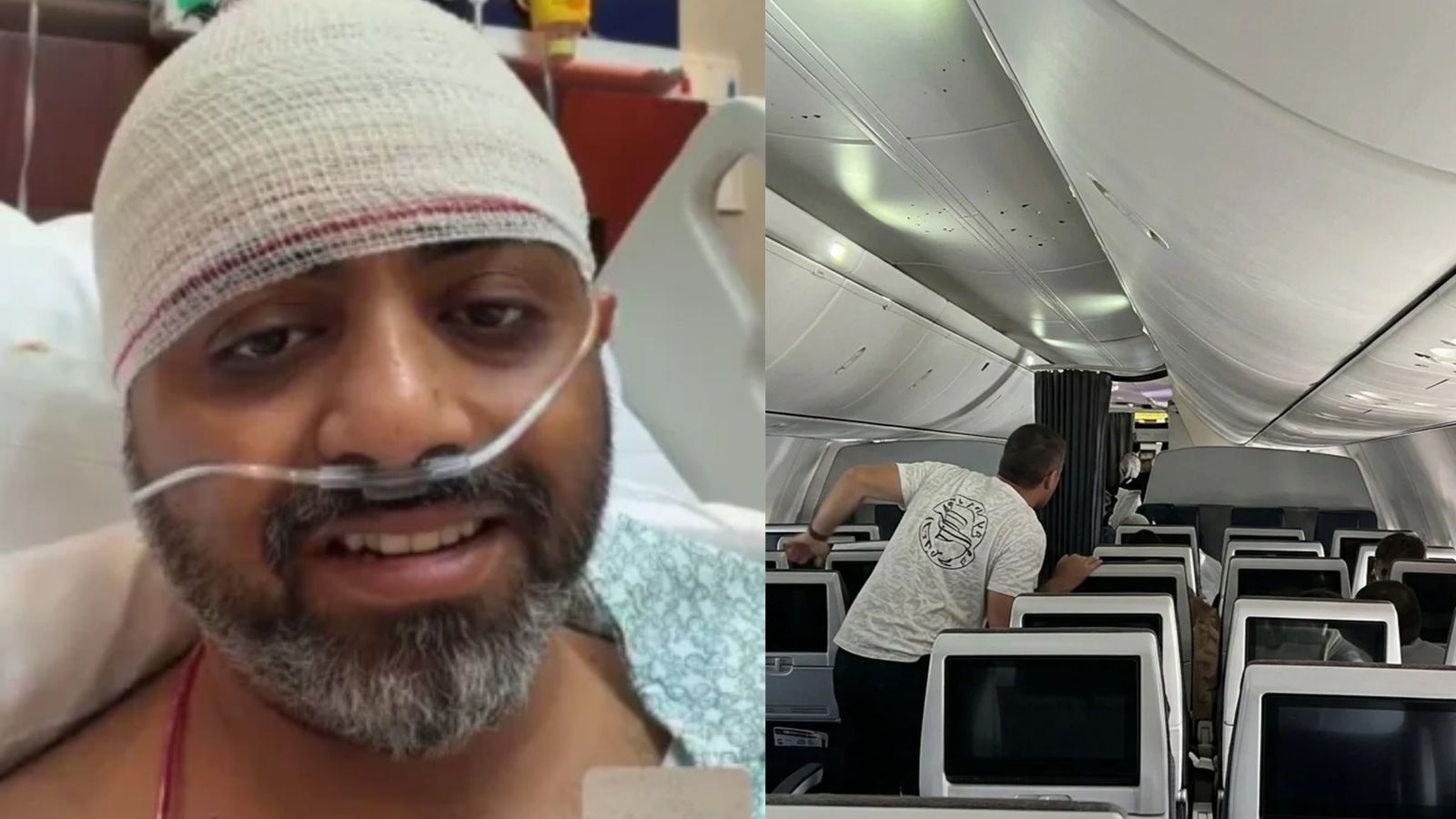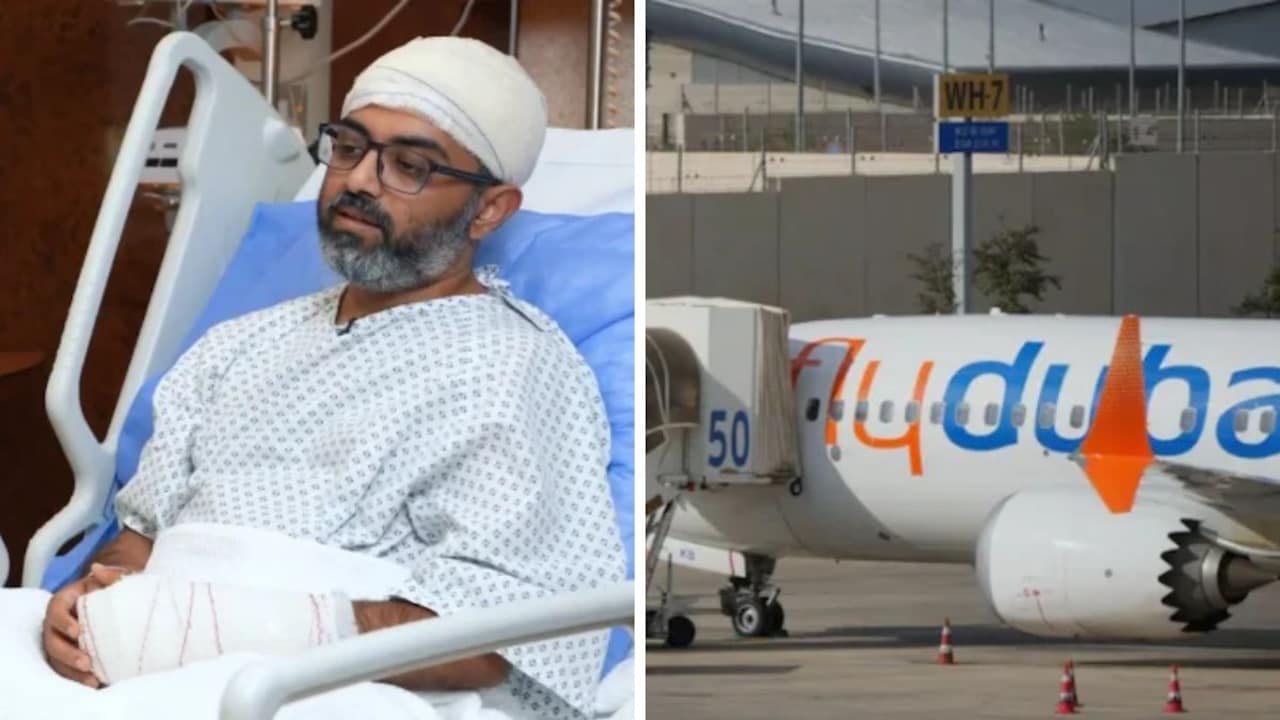
Eyewitness accounts of sudden mid-air shocks on commercial flights capture visceral human fear, yet they routinely invert the actual causal hierarchy of aviation safety. When a headline frames a disruptive flight event around a single "hero" or a subjective moment of shock—such as a passenger reporting that they "didn't know what hit me" on a route linking Dubai and Tel Aviv—the narrative treats a complex socio-technical system as if it were a single dramatic confrontation. Real commercial aviation safety is governed by airframe structural margins, atmospheric physics, flight crew standard operating procedures, airspace risk management, and cabin human factors working in concert.
To understand what actually happens during an in-flight shock or emergency on a high-scrutiny regional corridor, this analysis maps the structural flaws in sensationalist eyewitness reporting and replaces them with a rigorous operational framework. It separates verified aviation principles from educated hypotheses where specific flight data is absent, examines the physics and human-factors mechanisms behind sudden cabin disruptions, and lays out actionable protocols for airlines and passengers alike.
Deconstructing Eyewitness Framing vs Operational Reality
Sensationalist coverage relies on dramatic compression. It isolates an individual passenger's sudden loss of spatial or cognitive orientation and elevates that moment into the defining explanation of the event. In aviation operations, a passenger's feeling of not knowing what hit them is a predictable consequence of startle response and vestibular disorientation, not proof that the aircraft itself suffered an uncontained or mysterious failure.
The human inner ear detects linear acceleration and angular motion, while vision and proprioception cross-check those signals. When an aircraft experiences abrupt vertical acceleration—whether from severe clear-air turbulence, an abrupt climb or descent maneuver, or a sudden wake encounter—the vestibular system registers an immediate shift in G-load before the prefrontal cortex can build a coherent spatial model. To the passenger, the onset feels instantaneous and total. To the flight crew monitoring primary flight displays, inertial reference units, and engine indications, the same event has a measurable vector, airspeed profile, and aerodynamic cause.
A second flaw in eyewitness-driven reporting is the misuse of the "hero" label. In commercial aviation, safety depends on distributed redundancy rather than individual improvisation. Captains and first officers train repeatedly for abnormal and emergency checklists, crew resource management (CRM), and threat-and-error management, while cabin crew execute well-rehearsed crowd-control and injury-mitigation drills. Calling a single individual a hero without identifying a specific, verified action—such as rendering first aid, securing a loose hazard, or assisting an incapacitated traveler—blurs the boundary between routine competence under stress and extraordinary intervention.
Categorizing the Core Variables of an In-Flight Shock
Rather than treating a distressing flight event as an undifferentiated "horror," operational analysts separate the incident across three structural pillars:
- The External Environment Pillar: Atmospheric conditions (convective cells, mountain waves, wind shear, clear-air turbulence), traffic density, and regional airspace constraints such as rerouting, holding patterns, or heightened security posture along corridors connecting the Gulf and the Eastern Mediterranean.
- The Aircraft and Crew Pillar: Airframe certification margins, flight control laws, autopilot modes, weather radar interpretation, and crew adherence to structured checklists and CRM communication protocols.
- The Cabin and Human Factors Pillar: Seatbelt compliance rates, loose cabin items acting as projectiles during vertical load spikes, passenger physiological reactions (panic, hyperventilation, motion sickness), and post-event medical triage.
Notice the distinction between known facts and educated hypotheses when analyzing an incident without a published civil aviation investigation report or verified flight-data telemetry. It is a known fact that narrow-body airliners commonly operated on regional Middle Eastern routes—such as the Boeing 737 family flown by flydubai—are certified to withstand gust and maneuver loads far exceeding routine turbulence, and that unbuckled occupants face the highest injury risk during sudden vertical accelerations. By contrast, attributing a specific unnamed or under-documented event to a particular trigger—such as sudden wake turbulence, an evasive altitude change, or an unforecast shear layer—without official flight data or Air Traffic Control records remains an educated hypothesis.
The Physics and Mechanics of Sudden Mid-Air Disruptions
When passengers describe being thrown upward or feeling the floor drop out beneath them, the underlying mechanism is almost always a rapid change in normal load factor (measured in Gs). In straight-and-level flight, load factor equals $1\text{ G}$, meaning apparent weight equals normal body weight. A sharp vertical gust or abrupt pitch input can briefly push load factor above $1\text{ G}$—pinning unrestrained items and bodies downward—or drop it well below $1\text{ G}$, creating a brief sensation of weightlessness followed by a jarring rebound when lift reasserts itself.
Clear-Air Turbulence and Invisible Shear
Unlike convective storm clouds that appear on onboard weather radar as distinct precipitation returns, clear-air turbulence (CAT) often occurs in cloudless skies near jet streams or strong horizontal and vertical wind shears. Because moisture droplets are absent or sparse, traditional weather radar cannot reliably paint CAT directly ahead of the nose. Crews rely instead on upper-level wind forecasts, pilot reports (PIREPs) from preceding aircraft, and progressive avionics or ground-based predictive tools where available.
The operational bottleneck is lead time. Even when a flight crew spots an unfavorable wind gradient or receives a PIREP, an aircraft cruising at high groundspeed covers roughly 12 to 14 kilometers per minute. A few minutes of warning can mean the difference between illuminating the seatbelt sign early while passengers are seated and hitting a shear zone while cabin service carts are in the aisle.
Airspace Complexity on Regional Corridors
Flights operating between Dubai and Tel Aviv traverse a region where commercial aviation faces overlapping operational pressures. Even in normal periods, regional corridors can experience dynamic airspace closures, military or security buffer zones, congested entry/exit fixes, and rapid reroutings. When airspace availability tightens, air traffic control may assign non-standard altitudes, step climbs or descents, or vectors that place aircraft near shifting wind bands or holding stacks.
From a systems perspective, rerouting is a classic second-order effect. A route adjustment designed to maintain safe separation or avoid restricted airspace can place a flight along a track with higher turbulence exposure or tighter fuel and timing margins. Passengers only feel the cabin jolt or hear the engines spool up for a climb; they rarely see the upstream airspace geometry that forced the trajectory change.
Why Cabin Outcomes Diverge So Sharply
Two passengers sitting two rows apart can experience the same atmospheric disturbance with radically different outcomes. The deciding variable is mechanical restraint coupled with cabin physics.
- Seatbelt geometry: A lap belt worn low and snug across the pelvis couples the passenger's torso to the seat structure, which is engineered to absorb dynamic loads. A loose belt leaves slack that converts a sharp vertical acceleration into an impact impulse.
- Unsecured mass: Overhead bin latches can pop under extreme flexing or improper loading, turning heavy carry-on bags into falling hazards. Hot beverages, glass bottles, and metal serviceware become ballistic objects during abrupt G-shifts.
- Cognitive state: Passengers who are already anxious—whether due to fear of flying or heightened regional news awareness—exhibit faster sympathetic nervous system activation. Elevated adrenaline narrows attentional focus, making a routine turbulence bump feel like catastrophic failure.
Consider an illustrative operational scenario. Suppose an aircraft climbing or cruising at flight level 350 encounters an unexpected vertical wind shear pocket. The autopilot and flight envelope protections keep pitch and bank within safe parameters, and the wings flex elastically to shed load. In row 12, a passenger with a snug seatbelt feels a violent stomach drop and a loud thud from an overhead bin; in row 18, an unbuckled traveler standing near the lavatory is lifted and slams against the ceiling panel before dropping into the aisle. The aircraft's structural integrity never approached its limit, yet the human injury outcome was severe because restraint was absent at the exact instant of peak vertical acceleration.
How Crew Protocols and Risk Controls Operate Under Stress
Commercial aviation safety is built on layers of defense—often modeled conceptually as overlapping barriers where a failure in one layer is caught by another. When an unexpected jolt hits the cabin, the flight deck and cabin crew execute parallel, time-critical workflows.
On the flight deck, the immediate priority is Aviate, Navigate, Communicate:
- Aviate: Maintain positive aircraft control, verify airspeed, altitude, and attitude on primary flight instruments, and disengage or adjust autopilot/autothrottle modes only if required by abnormal indications or flight manual guidance.
- Navigate: Assess whether to maintain current altitude, request a climb or descent to smoother air, or execute a diversion if an injury, medical emergency, or aircraft system issue warrants landing at the nearest suitable airport.
- Communicate: Coordinate internally via Crew Resource Management so one pilot flies and monitors instruments while the other communicates with Air Traffic Control and updates the cabin crew on expected conditions and seatbelt requirements.
Simultaneously, cabin crew transition from service mode to safety and assessment mode. They secure loose equipment, instruct passengers to fasten seatbelts immediately, check aisles and lavatories, and assess whether any occupant sustained head, neck, back, or extremity trauma. If a passenger becomes acutely distressed or injured, cabin crew evaluate available first-aid equipment, check for medically qualified passengers onboard when appropriate, and relay status updates to the flight deck so the crew can decide whether a standard destination arrival suffices or an earlier landing is prudent.
Limitations of Current Mitigations
No safety protocol eliminates every risk, and acknowledging operational trade-offs is essential for realistic risk assessment:
- Seatbelt discipline vs cabin comfort: Keeping the seatbelt sign illuminated continuously across long segments erodes compliance over time—a behavioral fatigue effect familiar to every airline safety manager. If passengers treat the sign as background noise during mild ripples, they are less likely to buckle up immediately when conditions deteriorate.
- Predictive limits: Aviation meteorology has improved dramatically over decades, yet micro-scale shear and localized clear-air eddies still occasionally evade pre-flight forecasts and real-time detection.
- Information asymmetry: During an active event, flight crews cannot provide continuous running commentary without diverting attention from flying the aircraft. Silence from the cockpit during a bump often feels ominous to passengers even when the crew is calmly executing standard procedures.
Actionable Playbook for Travelers and Aviation Operators
Passengers cannot control atmospheric wind fields or airspace routing, but they can sharply reduce personal injury risk and cognitive overload by treating cabin safety as an active habit rather than a pre-departure formality.
Step-by-Step Personal Risk Reduction Protocol
- Keep the seatbelt fastened whenever seated: Treat any moment in your seat—even when the seatbelt sign is off—as a potential turbulence window. Tighten the strap low over the hips so there is minimal slack.
- Minimize movement during transitions: Plan restroom visits and stretching breaks outside climb, descent, or weather-active phases, and return to your seat promptly when the seatbelt sign chimes.
- Stow high-mass items properly: Place heavy items under the seat in front of you when permitted rather than lifting excessive weight into overhead bins, and avoid balancing hot drinks on tray tables during bumpy air.
- Anchor your breathing during a shock: When a sudden drop triggers a startle surge, slow exhalations (such as inhaling for four seconds and exhaling for six seconds) help down-regulate sympathetic hyperarousal so you can follow crew instructions clearly.
- Distinguish sensation from danger: Remind yourself that vertical drops of a few meters or brief G-shocks feel far larger to the inner ear than they are to an airframe designed for extreme structural loads.
For airline operators and flight safety teams managing regional routes with complex airspace and passenger psychology, the strategic imperative is closing the gap between technical airworthiness and perceived cabin control. That means pairing rigorous turbulence forecasting and crisp crew-to-cabin communication with clear, non-alarmist briefings that explain why early seatbelt discipline matters on dynamic corridors. Investing in structured post-event debriefs—separating objective flight and medical data from emotional eyewitness accounts—ensures every jarring flight strengthens the system rather than feeding panic.