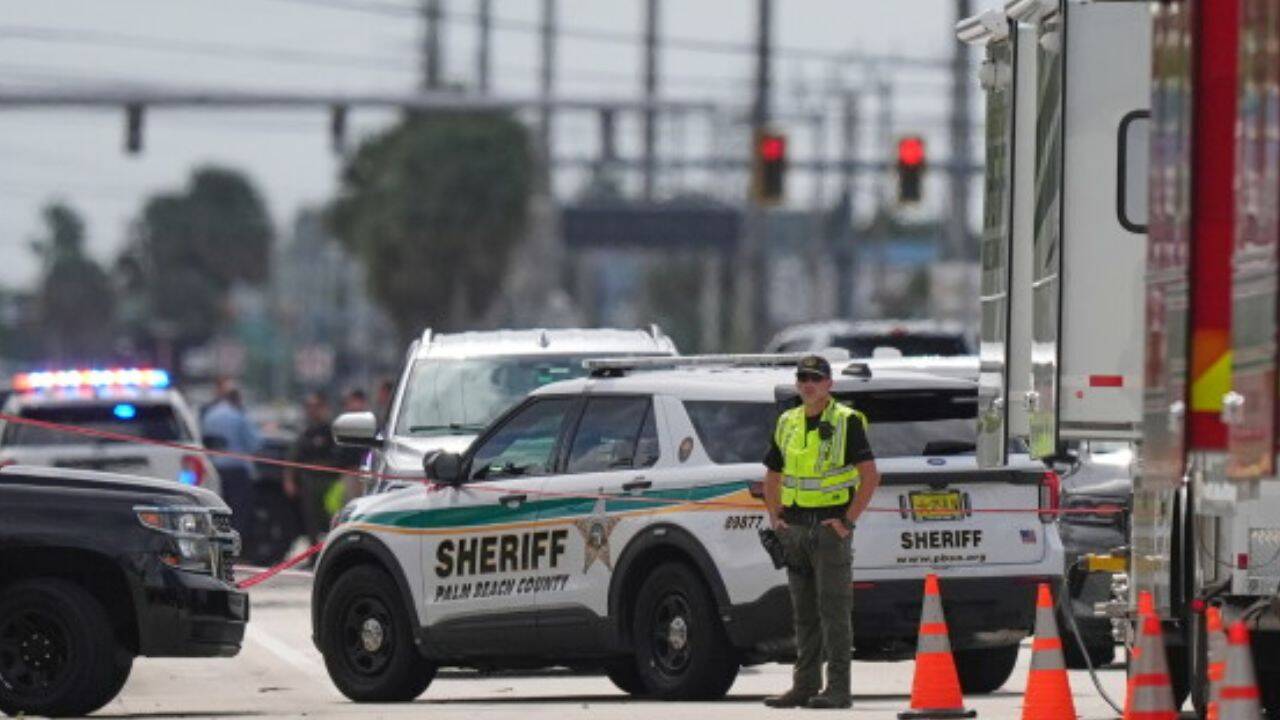
Two people are dead after gunfire erupted at a Florida Citibank office complex, and corporate security teams everywhere are scrambling to figure out what went wrong.
It happens fast. One minute you're sitting at a desk reviewing quarterly spreadsheets, and the next, sirens are screaming outside your window while armed officers sweep the hallways. When news broke that two individuals had died following reports of gunfire at a Citibank facility in Florida, the public immediately asked the same question they always ask after a workplace shooting. How did someone bring a weapon inside a major financial institution's office complex?
The reality is uncomfortable. Modern corporate campuses look like fortresses from the street, complete with turnstiles, visitor badges, and uniformed guards in the lobby, yet they often rely on security theater rather than actual threat prevention.
What Actually Happened at the Florida Citibank Complex
Emergency dispatchers received calls reporting shots fired at the Citibank office complex in Florida, prompting an immediate, massive law enforcement response. Tactical units, local police, and emergency medical personnel locked down the surrounding perimeter while clearing the building floor by floor. By the time the dust settled, authorities confirmed two people were dead at the scene.
Notice how early reports often blur critical details during active incidents. In the first hours following gunfire at a large corporate hub, information trickles out in fragments—witnesses hear loud pops, employees shelter in place behind locked conference room doors, and law enforcement prioritizes neutralizing the threat before releasing names or motives.
Here's what we know about how these incidents unfold operationally:
- Immediate lockdown protocols force thousands of employees into darkened offices while SWAT teams methodically clear massive multi-story floor plans.
- Perimeter containment shuts down adjacent roadways, halting local traffic and stranding commuters while investigators secure crime scenes.
- Forensic timelines take days or weeks to reconstruct, especially when determining whether the incident stemmed from a targeted personal dispute, a disgruntled insider, or an external breach.
Major financial institutions like Citibank operate sprawling administrative centers across Florida—most notably in Tampa, where thousands of employees work across massive corporate campuses handling global operations, technology, and banking support. Unlike retail bank branches, which sit behind bulletproof glass with silent alarms and visible armed deterrents, back-office complexes are designed for workflow efficiency and open collaboration.
That architectural difference matters. A lot.
Why Corporate Office Complexes Are Vulnerable to Workplace Gunfire
If you walk into a retail bank branch to cash a check, security is front and center. Walk into an administrative office complex for the exact same bank, and the security posture shifts entirely toward protecting data rather than stopping physical violence.
I've walked through dozens of corporate operations centers over the years, and the pattern is always identical. Companies spend millions on badge readers to stop corporate espionage, while leaving parking garages, loading docks, and pedestrian walkways completely unscreened for weapons.
Think about how an employee or visitor enters a typical suburban office complex. You pull into a massive parking structure or surface lot, grab your bag from the passenger seat, walk across a courtyard, and tap an RFID badge at a glass turnstile. Nobody checks your backpack. Nobody runs you through a magnetometer. If you hold a valid employee badge—or tailgate closely behind someone holding a tray of coffees—you're inside the building in ten seconds flat.
The Illusion of Badge-Access Security
Corporate leadership loves badge access because it creates a clean digital audit trail. Security directors can tell you to the exact second when someone entered the third-floor breakroom.
What a badge reader cannot tell you is what's inside that person's briefcase.
According to data compiled by the U.S. Bureau of Labor Statistics, homicides remain one of the leading causes of fatal occupational injuries across the United States, with shootings accounting for the overwhelming majority of those deaths. Yet outside of federal courthouses, airports, and select high-profile headquarters, almost no private-sector office buildings screen bags or require metal detectors for daily staff.
Why? Because executives hate friction. Making 4,000 employees line up through airport-style screening every morning at 8:30 AM creates bottlenecks, hurts morale, and screams distrust. So companies gamble that background checks and keycards will keep weapons off the property.
Insider Threats vs. External Intruders
Most people picture a workplace shooter as a stranger kicking down the front doors. In practice, that's rarely how corporate shootings happen.
Research from the FBI's Active Shooter Incidents reports consistently shows that shooters at commercial and office environments frequently have a direct connection to the workplace—either as current employees, former staff members, contractors, or domestic partners targeting someone inside.
When someone already knows the layout of the building, understands which stairwell doors don't latch properly, and knows when security guards rotate shifts, standard perimeter locks become almost useless. Even worse, HR departments and corporate security teams often operate in separate silos. A manager might notice erratic behavior or hear troubling comments during a termination meeting, yet fail to alert physical security until after the employee has walked back to their car.
How Law Enforcement Responds to Office Complex Shootings
The moment someone dials 911 to report gunfire inside a corporate complex, local police abandon the old "wait for SWAT" playbook that failed so catastrophically decades ago.
Modern police doctrine demands immediate entry. The first two or three patrol officers on scene—regardless of whether they're wearing heavy tactical gear—grab their patrol rifles and move directly toward the sound of gunfire. Their single objective is stopping the shooter as fast as possible to prevent additional casualties.
Inside a massive facility like a Citibank operations hub, that job is brutal.
Corporate complexes feature modular cubicles, glass-walled conference rooms, server rooms with reinforced doors, and interconnected wings spanning hundreds of thousands of square feet. Every cubicle row is a blind corner. Every locked office might hide thirty terrified workers—or an armed suspect waiting in ambush.
Once the immediate threat is over and two fatalities are confirmed, the scene shifts from a tactical emergency to a painstaking criminal investigation. Detectives seize terabytes of closed-circuit surveillance footage, pull badge-swipe logs from turnstiles, interview dozens of traumatized witnesses, and trace firearm serial numbers through the Bureau of Alcohol, Tobacco, Firearms and Explosives (ATF).
What Employees and Companies Get Wrong About Active Shooter Drills
Most corporate workplaces make employees watch a twenty-minute compliance video once a year, click through a five-question quiz, and call it "emergency preparedness."
Honestly, that kind of box-checking training is practically useless when adrenaline hits your bloodstream.
When gunfire breaks out in an office, human brains don't smoothly recall bullet points from an HR slide deck. People freeze. They step into the hallway to see what made that loud banging noise. They waste precious seconds packing up their laptops or looking for their phones before running.
Why "Run, Hide, Fight" Fails Without Muscle Memory
The Department of Homeland Security popularized the Run, Hide, Fight framework, and while the concept makes complete sense on paper, employees routinely misapply it during real emergencies:
- Hesitating to run: People wait for an official announcement over the PA system or a text alert from management before evacuating. By the time corporate communications drafts and approves a mass notification, minutes have passed.
- *Hiding in terrible spots:*Ducking under a standard desk offers zero ballistic protection and leaves you completely visible if someone walks into the room. Hiding only works behind a locked, solid-core door with heavy furniture barricaded against the frame and lights turned completely off.
- Ignoring improvised weapons: If you're forced into the "fight" phase because a shooter breaches your room, grabbing a heavy fire extinguisher, a pair of scissors, or a hot pot of coffee isn't dramatic—it's survival. Most office workers never even look around their workspace to identify what they could use as a weapon.
The Communication Breakdown During Lockdowns
Another massive failure point during office complex shootings is internal communication. When hundreds of employees call 911 simultaneously from inside the same building, cell towers near the complex can become temporarily congested, while dispatchers get flooded with conflicting reports from different floors.
Meanwhile, employees hiding under desks often leave their phone ringers on loud. Imagine hiding in a dark conference room while twenty phones buzz and chime with incoming text messages from panicked family members watching breaking news alerts on television.
Practical Steps You Can Take Right Now at Your Workplace
You can't single-handedly redesign your company's security architecture, and you shouldn't walk into work tomorrow paralyzed by fear. Workplace shootings remain statistically rare compared to everyday risks like highway commutes. Still, treating your personal safety passively leaves you entirely at the mercy of luck.
Start paying attention to your physical environment the next time you walk into your office building.
Locate at least two exits from your floor that don't rely on the main lobby elevators, and physically walk down those stairwells once so you know exactly where they dump you outside. Check whether the doors to your floor's conference rooms lock from the inside—many modern glass-walled meeting rooms don't lock at all, making them death traps during a lockdown.
Keep your phone on silent—not vibrate, completely silent—whenever you're at your desk, and build the habit of leaving your bag behind if an emergency alarm sounds. Most importantly, if a coworker makes explicit threats, talks obsessively about weapons, or exhibits sudden, alarming behavioral shifts, report it immediately to both HR and corporate security in writing so there's an undeniable paper trail demanding action.