Industrial manufacturing plants are massive, echoing cathedrals of steel, automation, and movement. They are also, fundamentally, giant shelters. When you build a million-square-foot facility with high rafters, warm air currents, and plenty of hidden nooks, you are not just constructing an assembly line for trucks. You are inadvertently building a five-star resort for urban wildlife.
Pigeons know this better than anyone. If you found value in this piece, you should check out: this related article.
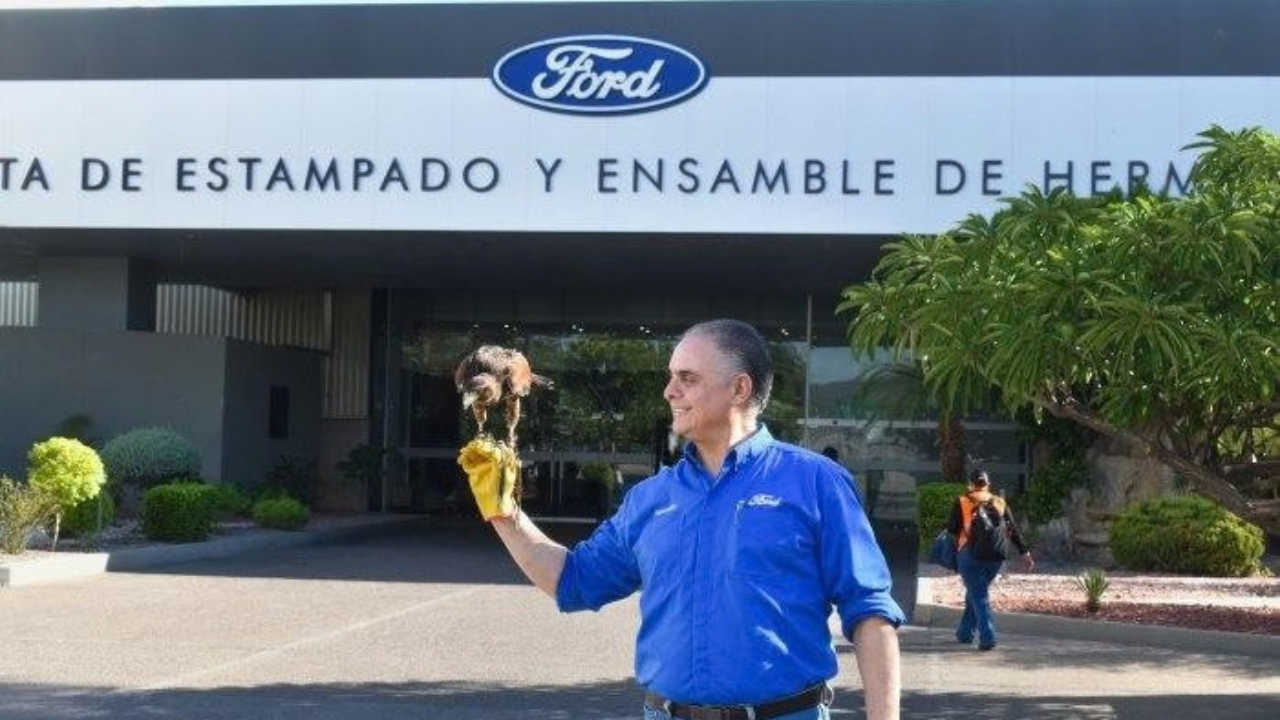
For years, the management team at Ford’s sprawling manufacturing facility in Cuautitlán, Mexico, faced an old industrial headache. It was not a supply chain bottleneck or a union dispute. It was pigeon infestation. Thousands of feral pigeons had moved into the cavernous roof structure of the plant. They nested in places they should never have been, fouled expensive robotic equipment with acidic droppings, and created an ongoing sanitation hazard on the production floor.
Standard pest control methods failed miserably. Traditional spikes, netting, and chemical deterrents proved utterly useless against a population of birds smart enough to adapt to heavy industrial noise. Shooting them was out of the question for obvious operational and safety reasons. Trapping made barely a dent in a population that reproduced faster than maintenance crews could clear them out. For another perspective on this development, check out the latest coverage from Business Insider.
So, plant leadership did something radical. They brought in a hawk.
The Biological Solution to a Mechanical Problem
In industrial facilities, the default reflex to any mechanical or logistical failure is to throw technology at it. If a process breaks, engineer a better bracket. If a sensor fails, buy a higher-grade component. But nature often operates on rules that bypass human engineering entirely, and industrial facilities are beginning to remember that the oldest predator-prey dynamics still work better than any patent pending gadget.
The Cuautitlán plant contracted a specialized falconry service. Instead of spikes and poisons, they introduced a living, breathing apex predator into the rafters: a trained Harris hawk named Cooper, handled by professional falconers.
The strategy relied entirely on psychological warfare rather than physical elimination. A Harris hawk does not need to hunt down and kill every single pigeon in a million-square-foot factory to solve the problem. It just needs to establish absolute dominance.
Pigeons are remarkably pragmatic creatures. When they realize an active, lethal predator has claimed their airspace as a permanent hunting territory, their risk assessment changes instantly. The biological alarm system kicks in. Within days of the hawk's presence, nesting behavior plummeted. Feeding inside the facility stopped entirely because the birds were too busy trying not to become lunch.
Within a remarkably short window, pigeon activity inside the Ford facility dropped by eighty percent. The remaining twenty percent quickly learned to stay far away from the open loading docks and high assembly zones.
The Hidden Costs of Pest Infestation in Manufacturing
To an outsider, complaining about pigeons sounds like a trivial corporate annoyance. It sounds like a quirky human interest story about a bird doing a job. But walk onto an automotive assembly floor, and the reality changes fast.
Pigeon guano is intensely acidic. When it accumulates on sensitive robotics, automated guided vehicles, or newly painted vehicle bodies moving down the line, the financial damage compounds rapidly. An automated paint shop requires sterile, particle-free environments. A stray feather or airborne dust kicked up by nesting birds can ruin the paint finish on a multi-thousand-dollar vehicle body, forcing an immediate, expensive rework cycle.
Furthermore, accumulated droppings create serious slip-and-fall hazards for plant workers navigating catwalks and maintenance ladders. They clog ventilation filters, corrode electrical conduits, and create health compliance issues that can draw the attention of occupational safety regulators.
When a plant loses millions of dollars a year in equipment degradation, spoiled inventory, and continuous cleanup labor, spending budget on a professional falconer stops looking like a gimmick. It looks like hardheaded cost accounting.
Why Modern Industry is Turning Back the Clock
The success of the Ford Mexico pigeon mitigation program highlights a broader shift in how major corporations approach facility management. For decades, the default playbook relied heavily on chemical pest control and hard infrastructure modifications like netting and wiring.
Those methods have severe limitations. Nets sag, tear, and trap other wildlife cruelly. Poisons create secondary toxicity risks, potentially harming local ecosystems or domestic animals if the poisoned pests wander off-site. Chemical repellents wear off quickly in industrial environments filled with machine heat and solvent vapors.
Living predators offer a dynamic response that static infrastructure cannot match. A hawk adapts to changes in the environment. It moves where the pests move. It learns the habits of the flock and disrupts them at the source.
Other heavy industries are taking notes. Large agricultural storage facilities, aircraft hangars, railway terminals, and port authorities are increasingly trading plastic spikes and ultrasonic noise emitters for trained raptors. It is an intersection of ancient animal husbandry and modern corporate asset protection.
The Limits of the Apex Predator Strategy
As compelling as the results in Cuautitlán are, falconry is not a plug-and-play software update. It requires specialized human expertise that cannot simply be purchased off a shelf and left in a corner to run itself.
A trained hawk requires professional handlers, daily care, veterinary oversight, and strict adherence to animal welfare standards. You cannot treat a raptor like an industrial robot. If the handler lacks deep experience, the bird can become stressed, injured, or ineffective.
Moreover, biological deterrence is an ongoing commitment, not a one-time fix. If the hawk is removed, the environmental pressure lifts, and the pigeons will eventually return to reclaim their historical roosts. The predator must remain an active, visible part of the facility’s ecosystem to maintain the deterrent effect.
The Real Takeaway for Industrial Operations
The story of Ford’s hawk is ultimately about perspective. When modern corporate engineering hits a wall, the best solution is sometimes to stop trying to outsmart nature and start utilizing it.
The next time a facility manager looks up at a high-ceilinged warehouse filled with unwanted guests and rising maintenance bills, the answer might not be found in a hardware catalog. It might be sitting quietly on a leather glove, waiting to go to work.