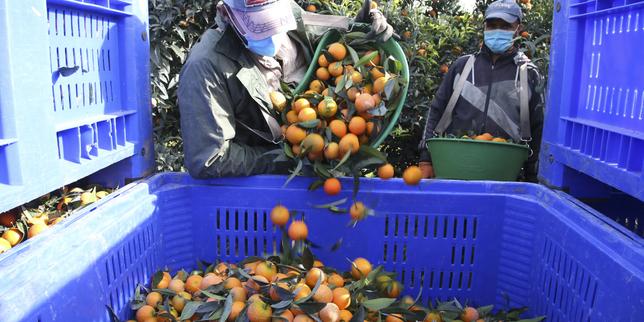
France can't eat without Moroccan hands. That's the blunt reality facing the agriculture sector today. For years, thousands of seasonal workers have traveled from Morocco to French fields to harvest everything from strawberries in the south to grapes in the Champagne region. But the old way of doing things is hitting a wall. The French government is now moving to tighten the framework around these migration flows, trying to balance a desperate need for labor with increasing pressure to control borders and ensure decent living conditions.
If you think this is just about paperwork, you're missing the bigger picture. It's a high-stakes tug-of-war between economic survival and political optics. Farmers are panicking because they can't find local workers willing to do back-breaking labor for minimum wage. Meanwhile, authorities are worried about workers overstaying their visas or falling into the "gray market" where exploitation is rampant.
Why the current system for seasonal workers is broken
The existing setup relies heavily on the Office Français de l'Immigration et de l'Intégration (OFII). They're the ones who facilitate the recruitment of Moroccan workers through agreements with the Moroccan employment agency, ANAPEC. On paper, it's a win-win. Morocco reduces its unemployment rate, and France gets the labor it needs.
But talk to anyone on the ground and they'll tell you it's a mess. Many workers arrive only to find that their housing is subpar or that the "seasonal" nature of the work is used as an excuse to bypass standard labor protections. On the flip side, French officials are seeing a rise in the number of workers who don't return to Morocco once the harvest ends. This "leakage" in the system is exactly what the new measures aim to plug.
The government wants a more "circular" migration. They want people to come, work hard, and go home. To make that happen, they're looking at stricter contracts and better tracking. But you can't just track people like packages. You have to address why they stay in the first place—which is usually a lack of opportunity back home and a French economy that secretly relies on undocumented labor to keep food prices low.
The agriculture crisis driving the demand
France's agricultural sector is facing a massive recruitment crisis. We're talking about a deficit of tens of thousands of workers every year. French youth aren't lining up to pick fruit under a blistering sun for eight hours a day. It's tough, physical, and often lonely work.
Moroccan workers have filled this gap for decades. They're often highly skilled in specific agricultural techniques that have been passed down through generations. When the French government talks about "better framing" these flows, they're walking a tightrope. If they make the process too difficult or too expensive for farmers, the crops will literally rot in the fields. We saw a glimpse of this during the pandemic when borders closed and farmers were left begging for help.
Addressing the elephant in the room regarding worker rights
Let's be honest about the conditions. While many French farmers treat their seasonal staff with respect, the system has huge loopholes. Reports from labor unions and NGOs often highlight cases of "detached workers" who are paid less than the minimum wage or forced to live in cramped, unsanitary containers.
The new push for regulation isn't just about border security. It's also about avoiding a human rights PR nightmare. By formalizing the recruitment process further, the state hopes to squeeze out the "middlemen" who profit from illegal labor trafficking. They want to ensure that every Moroccan worker who enters France has a valid contract, a clear end date, and a guaranteed place to sleep that isn't a tent in a forest.
The geopolitical angle you cannot ignore
Migration is never just about labor. It's a diplomatic tool. Relations between Paris and Rabat have been rocky over the last few years, ranging from "visa wars" to disagreements over Western Sahara. Using seasonal labor as a bargaining chip is a classic move.
When France says it wants to "better supervise" these flows, it's also sending a message to the Moroccan government. They want cooperation on readmission—meaning Morocco needs to take back its citizens who are in France illegally—in exchange for these legal work pathways. It's a quid pro quo that defines modern Mediterranean politics. If Morocco plays ball on deportations, France opens the tap for seasonal visas.
What this means for the price of your groceries
Everything is connected. If the cost of bringing in Moroccan workers goes up due to new regulations, inspections, and housing requirements, your grocery bill will reflect that. Most people want "ethical" produce until they see the price tag.
The French government is trying to find a sweet spot where they can claim they're being "firm" on immigration while keeping the supermarkets stocked. It's a delicate dance. If they lean too hard into the "control" aspect, they break the supply chain. If they're too lax, they lose votes to the far right who claim the borders are like Swiss cheese.
Practical steps for the agricultural sector
Farmers and recruitment agencies need to get ahead of these changes now. The days of informal "handshake" agreements for seasonal help are over.
- Audit your housing. Authorities are going to be checking living conditions more frequently. If your worker accommodation isn't up to code, expect heavy fines or a total ban on hiring foreign labor.
- Digitalize the contracts. Use the OFII and ANAPEC platforms properly. Trying to bypass the official channels is becoming increasingly risky as digital tracking of visa entries and exits becomes more sophisticated.
- Focus on retention through respect. The best way to ensure a worker returns to Morocco and comes back to your farm next year is to treat them well. It sounds simple, but it's the most effective "circular migration" tool we have.
- Stay informed on visa quotas. The government is likely to adjust the number of available seasonal visas based on the previous year's "return rate." If workers from a specific region or sector tend to disappear into the black market, expect those visa numbers to be slashed.
The reality is that France and Morocco are stuck with each other. The French farm needs the Moroccan worker, and the Moroccan worker needs the French Euro. Better regulation might feel like a headache for farmers, but if it creates a more sustainable and less exploitative system, it's a win in the long run. Just don't expect the transition to be smooth.