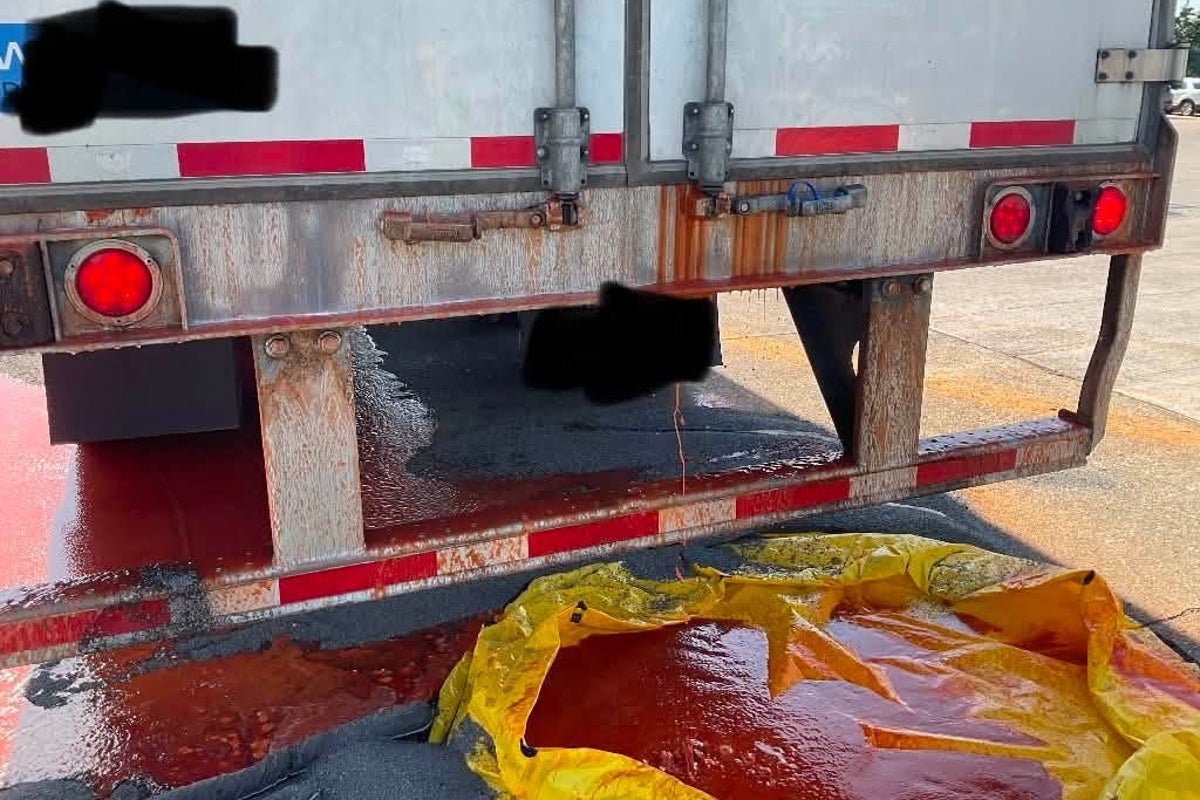
Imagine driving down the interstate in a stifling 100-degree heatwave. The asphalt radiates heat, your air conditioning is struggling, and suddenly the air smells like a stadium kitchen on game day. That became reality for commuters when a semitruck spills 40,000 pounds of Frank’s Hot Sauce across the highway, turning a standard stretch of concrete into a steaming, pungent red river.
It sounds like a joke. The internet immediately treated it as one, flooding social media with memes about giant chicken wings and lifetime supplies of condiments. But if you talk to any state trooper or hazmat cleanup crew, they will tell you a completely different story. A massive liquid food spill during extreme weather is a logistical disaster. It halts supply chains, destroys infrastructure, and creates unique environmental hazards that standard accident responses cannot handle.
The chaos of a Franks Hot Sauce highway spill
When a cargo truck carrying 40,000 pounds of consumer goods crashes, the cleanup depends entirely on what is inside. Solid goods like electronics or clothing can be scooped up with front loaders and thrown into dumpsters. Liquid cargo changes the entire equation.
A standard commercial semi-truck typically hauls up to 80,000 pounds of total weight. The cargo itself usually maxes out around 45,000 pounds to stay within federal legal limits. That means this specific truck was loaded to near-maximum capacity with glass bottles or plastic jugs of hot sauce. When the impact occurred, thousands of individual containers shattered simultaneously under the force of the crash.
The immediate result was an absolute mess. Forty thousand pounds equates to roughly 4,000 to 5,000 gallons of thick, viscous fluid. As the liquid spread across multiple lanes, it created a frictionless coating on the asphalt. Tires cannot grip a road covered in vinegar and pepper mash. The highway had to shut down instantly to prevent a massive multi-vehicle pileup.
Why extreme heat makes liquid food spills worse
Cleanups are never fun. When you add a brutal summer heatwave into the mix, a bad situation turns dangerous. Road temperatures during a heatwave can easily exceed 140 degrees Fahrenheit even if the ambient air is only 95 degrees.
Hot asphalt acts like a giant frying pan. The moment thousands of gallons of hot sauce hit that scorching surface, the liquid began to cook and evaporate rapidly. The air quickly filled with aerosolized capsaicin. Capsaicin is the chemical compound that gives peppers their heat. When it vaporizes in high temperatures, it essentially creates a weak form of pepper spray.
Emergency responders arrived on the scene only to find themselves coughing and coughing. Their eyes watered. They could barely breathe near the wreckage. Instead of wearing standard reflective vests and gloves, crews had to consider respiratory protection just to stand near the spill site. The intense heat also caused the spilled sauce to bake onto the highway surface, creating a sticky, hardened crust that regular street sweepers could not remove.
The environmental threat of thousands of gallons of hot sauce
Most people assume that because food is biodegradable, a food spill is harmless to nature. That is completely wrong. Large-scale food spills can cause massive ecological damage, sometimes worse than minor petroleum leaks.
The primary ingredient in most hot sauces is vinegar, which is highly acidic. Frank's RedHot relies heavily on distilled vinegar and aged cayenne red peppers. When thousands of gallons of this acidic mixture wash off the road, it threatens the surrounding ecosystem.
Acidic runoff and local waterways
State environmental protection agencies worry about the pH balance of local soil and waterways. A sudden influx of highly acidic liquid can ruin the soil chemistry right next to the highway shoulder. If it rains, or if clean-up crews use too much water, the runoff flows directly into storm drains and local creeks.
A rapid drop in water pH levels can kill local fish and aquatic plants. The organic matter in the sauce also triggers a process called eutrophication. As bacteria work overtime to break down the sudden abundance of food sugars and organic compounds, they consume vast amounts of dissolved oxygen in the water. This leaves the fish with nothing to breathe. Environmental crews must deployment containment booms quickly to prevent the sauce from reaching any drainage ditches.
How emergency crews manage massive highway cleanups
Cleaning up 40,000 pounds of a sticky, acidic condiment requires a distinct strategy. You cannot just spray it with water hoses. Flushing the road would only spread the contamination over a larger area and pollute the local water table.
First, crews use absorbent materials. They dump tons of clay-based absorbents, similar to cat litter, directly onto the deepest pools of hot sauce. This material soaks up the bulk of the liquid, converting it into a solid sludge that workers can scrape off the asphalt using heavy machinery.
Next comes the neutralizer. Because the sauce is highly acidic, crews often use agricultural lime or baking soda compounds to neutralize the pH before scrubbing the road surface. Once the bulk of the sludge is removed, high-pressure industrial washers using specialized detergents clean the remaining residue. They must capture the wastewater using vacuum trucks to ensure nothing flows into the environment.
The heatwave accelerated the timeline. If the crew took too long, the sauce would bake into the pores of the asphalt, permanently degrading the road surface and creating a long-term skidding hazard for future drivers.
The harsh reality of summer trucking logistics
This incident highlights a growing problem in the transportation industry. Driving a commercial semi-truck is already difficult, but doing it during extreme weather events introduces massive mechanical risks.
Long-haul trucks face intense strain during heatwaves. Tire blowouts become incredibly common as the internal air pressure spikes due to high road temperatures. Brake fade is another major risk. When a truck operates in triple-digit heat, the braking systems struggle to cool down, reducing their stopping power significantly during sudden traffic slowdowns.
Supply chain managers have to adapt to these weather extremes. Moving heavy liquid freight requires careful route planning and constant maintenance checks. If you are a fleet manager or an independent driver, you cannot afford to skip pre-trip inspections during the summer months.
Check your tire pressure before every trip. Ensure your cooling systems are functioning perfectly. When hauling liquid loads, remember that the liquid moves inside the trailer, creating dynamic weight shifts that can destabilize a truck during an emergency maneuver. Stay alert, slow down during peak heat hours, and always give yourself extra stopping distance. The safety of the road depends on preventing the next bizarre cargo disaster before it happens.