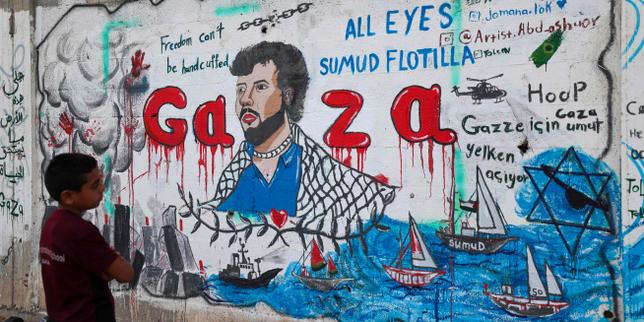
The mainstream media loves a clean, linear narrative of captivity and liberation. When news broke regarding the release of three Italian activists detained in Libya—originally part of a humanitarian flotilla effort—the headlines followed a predictable script: innocent humanitarians caught in the crossfire of a chaotic, failing state, finally freed through diplomatic persistence.
This narrative is not just lazy; it is actively dangerous. It fundamentally misunderstands the brutal, transactional reality of modern Mediterranean geopolitics. Don't miss our recent post on this related article.
Humanitarian groups operate under the assumption that goodwill and international solidarity serve as a shield. In the fractured landscape of post-Qaddafi Libya, goodwill is a liability. It is a soft target. The hard truth nobody wants to admit is that independent activist expeditions into active conflict zones do not alleviate crises—they complicate them, handing asymmetric leverage to militias and rogue factions who view human beings strictly as geopolitical currency.
The Myth of the Neutral Humanitarian Shield
The competitor press framed the month-long detention of these activists as an unfortunate bureaucratic or militant misunderstanding. Let us correct the record immediately. In a theater like Libya, where power is decentralized among competing entities like the Government of National Unity (GNU) in Tripoli and the Libyan National Army (LNA) in the east, there is no such thing as a neutral observer. To read more about the history here, TIME provides an in-depth summary.
When a civilian vessel enters these waters under the banner of political defiance, it is not seen as a mission of mercy. It is seen as an unauthorized intrusion by an unregistered actor.
Activists often rely on the concept of universal human rights to justify their presence in high-risk zones. But international law is only as strong as the entity enforcing it. When state authority collapses, tribal allegiances and localized militias dictate the rules. For these factions, detaining foreign nationals is a highly effective mechanism to force Western governments to the negotiating table. By putting themselves in predictable harm's way, well-meaning activists inadvertently become high-value bargaining chips, draining state department resources and hijacking foreign policy priorities.
The High Cost of Unsanctioned Diplomacy
I have analyzed security regional dynamics across North Africa for over a decade. I have watched state agencies scramble when independent actors bypass standard diplomatic channels, sail into volatile zones, and inevitably get captured. The pattern is always the same.
- The Intrusion: A group ignores maritime warnings and official travel advisories, driven by ideological fervor.
- The Capture: Local factions seize them, not out of ideological hatred, but because a Western passport is worth millions in diplomatic capital.
- The Ransom: Backchannel negotiations begin. Intelligence agencies divert focus from counter-terrorism and state-level stabilization to secure a release.
- The Celebration: The activists return home to a hero's welcome, completely blind to the concessions made behind closed doors to secure their freedom.
What the public never sees are the terms of the trade. Did a European government freeze an investigation into human trafficking to get these three citizens back? Did a militia leader receive implicit legitimacy or access to blocked financial channels? We rarely know the exact price, but make no mistake: a price is always paid.
This creates a severe moral hazard. Every time a Western nation successfully negotiates the release of captive activists without consequences, it incentivizes the next militia to grab the next boat of idealists. The "lazy consensus" views the release as a triumph of diplomacy. In reality, it is a successful extortion racket where the activists served as the product.
Dismantling the Premium on Pure Intentions
People often ask: Shouldn't we support regular citizens taking direct action when governments fail to act?
The premise of the question is flawed because it prioritizes intent over outcome. In high-stakes geopolitics, pure intentions mean absolutely nothing.
Consider the operational reality of the Mediterranean. It is a hyper-monitored, heavily militarized zone involving Frontex, the Italian Coast Guard, the Libyan Coast Guard, and various naval assets. When an unsanctioned flotilla inserts itself into this matrix, it creates operational chaos. Naval commanders must suddenly pivot from intercepting actual human traffickers or monitoring weapon smuggling to managing the safety of ideological tourists.
If your presence requires the deployment of military logistics to save or extract you, you are not solving a crisis. You are a resource drain.
The Strategic Alternative: Institutional Realism
This is the part where idealists get uncomfortable. If you genuinely want to affect geopolitical outcomes or provide aid in highly contested regions, the answer is not rogue maritime expeditions. The answer is unglamorous, highly structured institutional realism.
- Work Through Established Proxies: Aid is most effective when funneled through local networks, the Red Crescent, or entrenched international agencies that have spent decades negotiating access and building institutional immunity.
- Acknowledge Sovereign Realities: If a state is too unstable to guarantee your safety, your unauthorized entry is an act of arrogance, not heroism.
- Accept the Consequences: If activists insist on entering these zones independently, they must do so with the explicit understanding that their home governments will not bail them out, negotiate for them, or validate their capture with diplomatic attention. Only then will the incentive structure for kidnapping collapse.
The hard truth is that the era of the rogue Western activist sailing into a war zone to save the day is over. It died when asymmetric warfare and state fragmentation turned every single foreigner into a commodity. Celebrating these releases as victories ensures that the cycle will repeat.
Stop romanticizing reckless interventions. Stop pretending that ideological zeal overrides geopolitical gravity. The next group that sails into the Mediterranean without a state apparatus backing them isn't embarking on a mission of peace—they are volunteering to be the next piece on a militia’s chessboard.