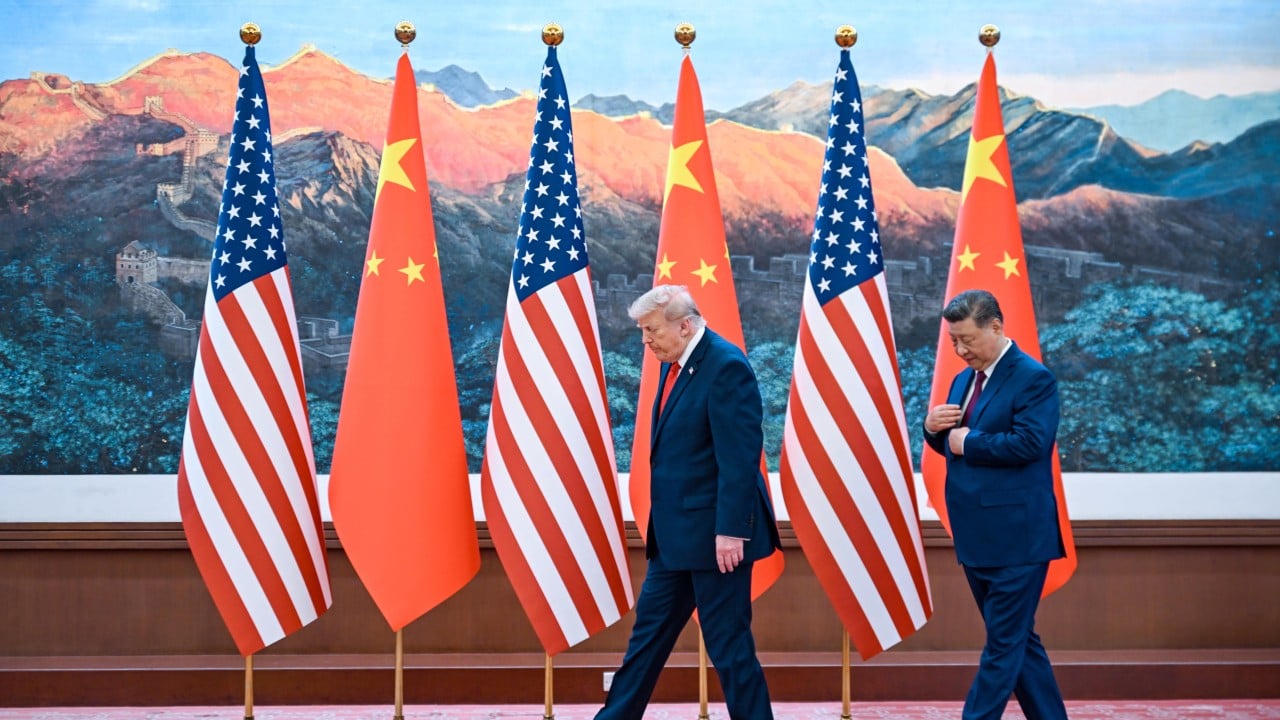
Donald Trump prides himself on being the ultimate dealmaker, a man who views global politics through the lens of leverage, transactions, and personal chemistry. But as his high-stakes Beijing summit with Chinese leader Xi Jinping wrapped up, Trump hit a brick wall on one of the most high-profile human rights cases in the world.
If you thought Trump’s return to the White House would mean a quick, cinematic release for jailed Hong Kong media tycoon Jimmy Lai, it's time for a reality check. Speaking to reporters aboard Air Force One on his flight back from China, Trump admitted he’s "not optimistic" about getting the 78-year-old pro-democracy activist out of prison.
Trump laid it out flatly, quoting Xi Jinping’s direct response to his pitch. According to Trump, while Xi is giving "very serious consideration" to releasing detained underground church pastor Ezra Jin Mingri, the Chinese leader made it clear that Lai's situation is entirely different.
"He told me that would be a tough one," Trump said. In a later interview, Trump went even further, noting that the response to Lai's name was "not positive" and that the vibe in the room shifted instantly.
This shouldn't surprise anyone who understands how Beijing operates. The divergence between the two prisoners tells you everything you need to know about what China considers negotiable versus what it views as an existential threat to its regime.
The Transactional Reality of Political Prisoners
Why would Xi Jinping willingly look into freeing a high-profile Christian pastor while completely locking the door on Jimmy Lai? It's a matter of cold political math.
Pastor Ezra Jin Mingri, who led Beijing’s unregistered Zion Church before being swept up in a massive crackdown on religious freedom, is a domestic issue for China. For Beijing, letting a religious leader go can be framed as an act of state benevolence or a diplomatic favor to please Washington's religious conservative base. It’s a low-cost chip Xi can trade to secure economic concessions, like the massive new deals Trump just scored for Boeing jets, American soybeans, and liquefied natural gas.
Jimmy Lai is a completely different story. The billionaire founder of the now-shuttered Apple Daily newspaper isn’t just a prisoner to Beijing; he’s a symbol of open defiance.
Before his arrest, Lai used his media empire to fiercely criticize the Chinese Communist Party and actively support Hong Kong’s massive pro-democracy protests. Earlier this year, a Hong Kong court handed Lai a crushing 20-year prison sentence under the 2020 National Security Law, convicting him of colluding with foreign forces.
To Xi Jinping, Lai represents the exact "foreign interference" and ideological contagion that the Chinese Communist Party is obsessed with wiping out. If Xi lets Lai walk, it signals to Hong Kong and mainland dissidents that outside pressure works. For a regime obsessed with projecting absolute control, that's a non-starter.
What Most People Get Wrong About Trump Leverage
Before heading to Beijing, Trump faced immense bipartisan pressure from lawmakers in Washington who passed resolutions urging him to confront Xi over political prisoners. Trump even publicly mused about the case, acknowledging that Lai "caused lots of turmoil for China" but adding that "people would like him out, and I'd like to see him out too."
But looking at how the summit actually played out, it's clear that human rights were quickly overshadowed by raw economic and geopolitical interests.
Trump’s two-day visit yielded massive purchase commitments from Beijing, including a potential order of up to 750 Boeing planes with GE Aerospace engines. The two countries also agreed to establish a new "Board of Trade" to manage the flow of non-sensitive goods and even found common ground on Middle East security, agreeing that Iran must never possess a nuclear weapon.
When you have hundreds of billions of dollars in trade, tariff standoffs, and volatile flashpoints like Taiwan on the table, a single political prisoner—no matter how famous—rarely takes top priority.
Even Trump’s own rhetorical framing of the issue shows how complicated the case is for him. In the days leading up to the trip, Trump bizarrely compared Lai’s situation to former FBI Director James Comey, suggesting that both men were essentially troublemakers for their respective executives. "It might be hard because he’s a dirty cop," Trump said when talking about a hypothetical release of Comey, adding, "But Jimmy Lai is in that way... he caused lots of turmoil."
When the American president frames a pro-democracy hero as someone who simply caused "turmoil" for an authoritarian regime, it signals to Beijing that Washington's commitment to the cause might be flexible.
The Clock is Running Out for Jimmy Lai
Despite Trump's bleak assessment, Lai’s family is refusing to give up hope. His daughter, Claire Lai, expressed gratitude that Trump raised the issue at all, stating she remains confident that the administration can eventually secure his freedom. She called the moment an opportunity for Xi to do "the only just and honorable thing."
But international observers and human rights groups are far more cynical. Under Xi Jinping’s rule, Beijing has grown increasingly indifferent to global outrage over its human rights record. The tragic precedent of Nobel laureate Liu Xiaobo, who died in Chinese custody in 2017 despite intense international pressure to let him seek cancer treatment abroad, looms large over Lai’s fate.
At 78 years old and reportedly suffering from prolonged health issues in prison, Lai faces a very real risk of dying behind bars.
If you're watching this space to see if international diplomacy can still save political dissidents in China, the next steps won't happen in a grand summit room. They'll happen in the grueling, quiet negotiations over trade implementation and tech export controls. Activists and legal teams must keep Lai's name explicitly tied to economic talks, forcing Washington to treat his release not as a separate moral issue, but as a core requirement for normalized trade. Because if Lai's freedom remains a standalone favor, Xi Jinping has already given his answer.