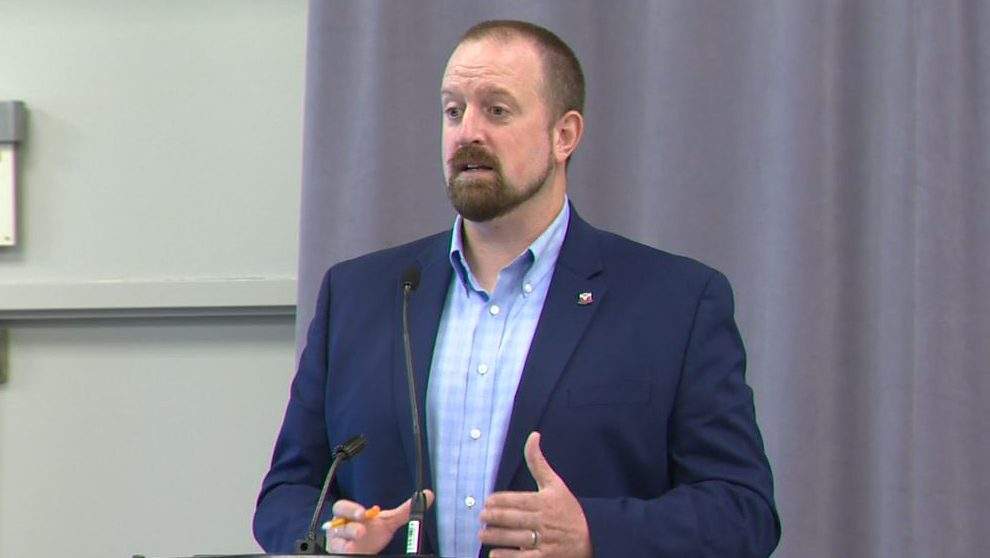
The screen glows cold in a dimly lit office off Hollis Street in Halifax. Outside, the autumn wind coming off the harbour carries the salt smell of North Atlantic seawater, sharp and unforgiving. Inside, fingers hover above a keyboard.
One click. Twenty-eight words. Recently making news in this space: Why Suspending Ex-Candidates Won't Fix the Conservative Party.
“Don't leave it to the courts. Learn from France. Own the streets. Shut government down. Grind the province/country to a halt...”
The thumb presses post. The digital echo travels down fiber-optic cables in a fraction of a millisecond. And just like that, an entire political apparatus shuddered, snapped, and severed one of its own. Further insights on this are detailed by NBC News.
When Nova Scotia NDP MLA Paul Wozney published his infamous social media post invoking the fiery, tear-gas-choked streets of French labor demonstrations, he thought he was invoking solidarity. What he actually touched was the exposed, high-voltage wire of modern institutional anxiety. Within hours, Progressive Conservative rivals smelled blood. Party leader Claudia Chender made the swift, surgical call: Wozney was stripped of his post as caucus whip. He issued the obligatory retraction, expressing regret for his "careless comments" and insisting he never meant to incite violence.
The standard news cycle logged it as a twenty-four-hour storm. A minor scandal. A stray tweet, a swift reprimand, a deleted post, a quiet return to order.
Except order was not restored. What happened in Halifax was not a story about a misfiring social media account. It was a symptom of a far deeper, subterranean fracture opening up inside modern democracy: the total breakdown of trust between labor, the courts, and the halls of state power.
The Mirage of the Gavel
To understand why a politician would look across the Atlantic toward burning barricades in Paris, you have to look at what happened to Nova Scotia’s workers long before Wozney ever touched his phone.
Consider a hypothetical nurse—let's call her Sarah.
In 2015, Nova Scotia passed Bill 148, the Public Services Sustainability Act. For Sarah and roughly 75,000 public sector workers—teachers, civil servants, healthcare aids—the law acted as an iron vault dropped over their earnings. It froze wages, stripped away long-negotiated service awards, and effectively banned collective bargaining on core financial terms.
Sarah did what citizens in a constitutional democracy are told to do. She trusted the system. Her union hired lawyers. The lawyers drafted briefs. Thick, heavy binders filled with legal precedent were carried into quiet, wood-paneled courtrooms.
For eight long years, the machinery of justice ground away at a glacial, unhurried pace. Eight years of rising inflation. Eight years of grocery bills climbing while wages stayed flat on a spreadsheet.
Earlier this year, the Nova Scotia Supreme Court finally handed down its verdict. Bill 148 was unconstitutional. It had illegally trampled on fundamental collective bargaining rights.
The court victory was absolute. It was morally validating. But to Sarah, standing in a crowded hospital hallway after an exhausting twelve-hour shift, the piece of paper felt strangely weightless. The legal victory did not instantly restock her bank account, nor did it undo eight years of forced economic stagnation. The government simply moved on to the prolonged, agonizing negotiation of a remedy.
This is the psychological trap of modern labor law. The courts are slow. The damage is immediate.
When judicial remedies take almost a decade to arrive, the promise of legal justice begins to feel like a legalistic delay tactic. That is the soil in which radicalism grows. When the rules of the house consistently protect the house, people stop asking for a fair deck. They start looking for a way to break the table.
The French Mirror
Why France?
Because France represents the absolute inverse of Anglo-Canadian parliamentary politeness. In North America, political conflict is carefully managed through press releases, committee reports, and controlled outrage. In France, political grievance is visceral, immediate, and physically present in the public square.
When French high school students and working-class youths took to the streets in massive, chaotic demonstrations against rising costs of living and deteriorating school conditions, the world watched more than 2,500 people get dragged away by police. Millions of euros in property damage piled up across Paris, Lyon, and Marseille. Curfews descended on historic city centers.
It was chaotic. It was destructive. And yet, to a frustrated labor movement in North America watching from afar, France looked like something else entirely: a place where the state could not simply ignore the people.
When Wozney urged workers to "learn from France" and "grind the province to a halt," he was reaching for the only lever that seemed capable of bypassing an eight-year judicial delay. He was expressing the unspoken urge of every worker who has ever felt invisible inside a boardroom: make them stop.
But political institutions cannot tolerate that impulse—especially from the man whose job is to enforce party discipline.
The Ghost of the Whip
There is a dark irony in Wozney’s fall.
As party whip, Wozney’s explicit responsibility was to enforce order. The whip is the enforcer, the strategist who ensures every member walks in lockstep, votes along party lines, and never strays from the carefully tested narrative of the caucus.
The whip exists to prevent unguided emotion from disrupting the political strategy.
Yet Wozney succumbed to the exact thing he was meant to restrain: raw, uncurated emotion. By publicly abandoning the slow, polite avenues of judicial recourse, he did not just embarrass his party; he exposed a fundamental division within left-leaning political movements across the Western world.
On one side sits the parliamentary left: refined, institutional, cautious. They speak in terms of constitutional challenges, policy frameworks, and disciplined messaging. They want to reform the system from within the parliamentary chamber.
On the other side sits the movement left: impatient, exhausted, disillusioned. They see institutional politics as an endless polite debate while the foundation rots beneath their feet. They don't want a better policy paper. They want leverage.
When Claudia Chender removed Wozney as whip, she was not just neutralizing a political attack from the Progressive Conservatives. She was declaring which side of that divide the Nova Scotia NDP intended to occupy. She chose the institution over the street. She chose the quiet, methodical path of governance over the explosive, unpredictable energy of the mob.
"Nova Scotians have proven that we can stay true to these values," Chender signaled, emphasizing peaceful, lawful accountability over violent rhetoric.
It was the necessary corporate response. It was politically sensible. It was entirely predictable.
And yet, it leaves a hollow space in the middle of the conversation.
The Real Price of Silence
It is easy to condemn violent rhetoric. It is simple to delete a post, issue a public statement of apology, and pretend the moment has passed.
What is far harder is addressing the underlying despair that made the post resonate in the first place.
When elected officials are forced to speak only in sanitized, media-trained soundbites, the public loses something vital. We lose the ability to see the real stakes. We pretend that workers are content to wait nearly a decade for court judgments. We pretend that the quiet desperation filling breakrooms across the country can be smoothed over with a press conference.
The danger of stripping away every raw voice in politics is not that we create a more civil society. The danger is that we create a dangerous vacuum.
When mainstream political parties purge every impulse toward radical disruption, they do not erase the public’s anger. They simply disconnect themselves from it. They leave that anger unguided, sitting in the dark, waiting for someone far more dangerous than a provincial MLA to come along and light the match.
The wind off the Halifax harbour still blows cold. The court rulings will eventually be settled in quiet offices with fountain pens and signed releases. The politicians will stand before microphones, poised and disciplined, speaking in smooth, unblemished prose.
Everything will look orderly. Everything will seem calm.
But beneath the surface of that quiet city, the unspoken tension remains, gathering weight in the dark, waiting to see what happens when the courts are no longer enough.