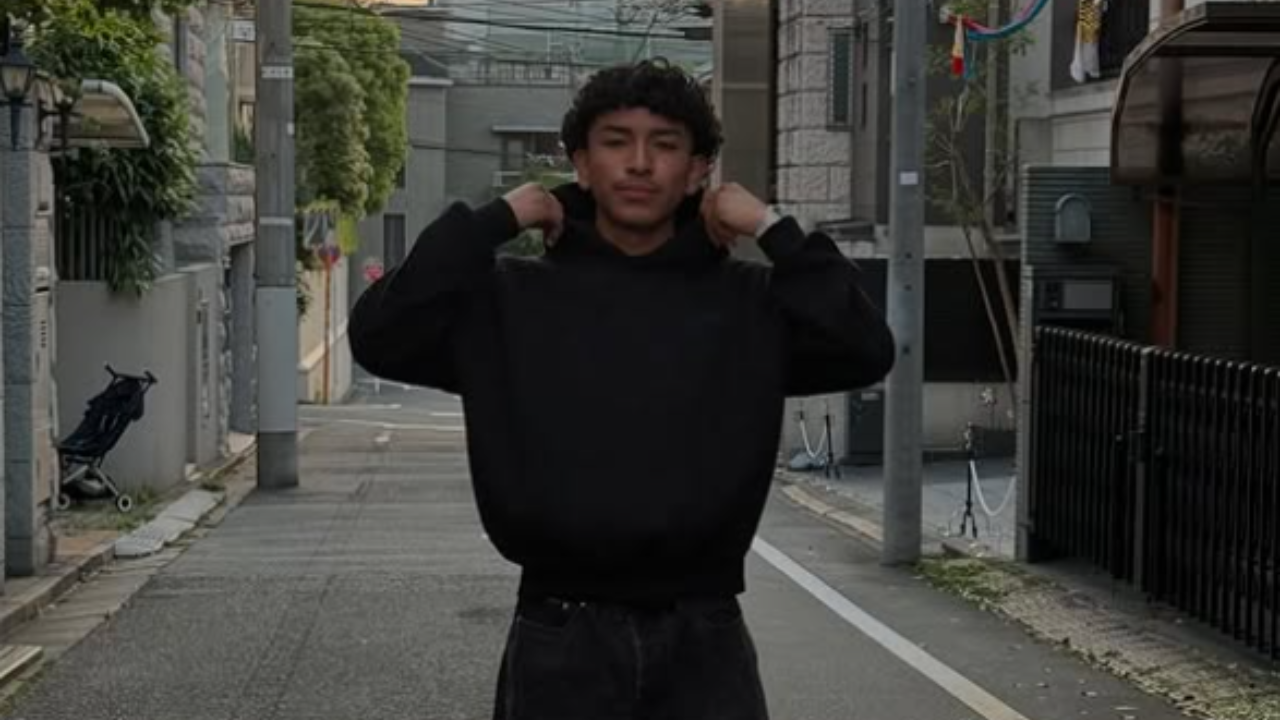
The unit economics of In-Real-Life (IRL) livestreaming rely on a highly volatile asset: uncompensated public attention. When an international content creator enters a private commercial space in a foreign jurisdiction to extract this attention, the immediate result is not a cultural misunderstanding, but an acute friction between mismatched operational frameworks.
The June 2026 altercation inside a Tokyo FamilyMart involving Kick streamer Oblivion and boxer Ryan Garcia exposes the systemic failure of the "engagement at all costs" creator model when forced to interact with highly rigid civic systems. The incident—where a store employee forcibly removed the production crew within seconds of entry and detained the creator until local law enforcement arrived—illustrates why the operational friction between live broadcast models and local retail environments is rapidly escalating from a minor nuisance into an uninsurable business risk.
The Incentives Matrix: Engagement Optimization vs. Asset Protection
To understand why these structural clashes occur, one must map the conflicting optimization functions of the platform creator and the brick-and-mortar operator.
[Platform Algorithmic Incentives] -> Maximizes Shock/Novelty -> High Friction Entry
[Retail Operational Framework]    -> Maximizes Throughput/Privacy -> Zero Tolerance Exclusion
The creator operates on a monetization model tied entirely to viewership density, retention metrics, and real-time donor conversion. On platforms with loose moderation frameworks like Kick, financial rewards correlate directly with boundary-pushing or disruptive behavior in public settings. The strategic goal of the creator is to introduce novelty or artificial tension into mundane environments to prevent audience churn.
Conversely, the retail operator optimized within the Japanese convenience store architecture functions under a strict set of efficiency constraints:
- Throughput Maintenance: Minimizing transit delays for high-volume foot traffic within restricted square-footage formats.
- Brand Liability Mitigation: Preventing unconsented commercial utilization of the corporate trademark, premises, and employee likeness.
- Customer Preservation: Protecting patrons from ambient distress or physical obstruction, which directly impacts the store’s basket-size metrics and lifetime value.
When a multi-person production crew enters a convenience store footprint without prior commercial synchronization, they instantly trigger a security override. The store manager’s aggressive escalation—physically ejecting the crew and invoking state police power—is a rational defense mechanism designed to preserve the commercial integrity of the space.
The Legal and Cultural Cost Functions of Japanese Privacy Architecture
The immediate assumption among Western digital media commentators is that these altercations stem from simple breach-of-etiquette issues. This diagnosis misses the underlying statutory framework. The friction is driven by two distinct structural mechanisms: the civil right to portrait protection (shozoken) and the physical boundary laws governing property rights (jokyo).
The Mechanics of Shozoken (Portrait Rights)
Unlike jurisdictions influenced by U.S. common law—where individuals in public spaces possess a highly restricted expectation of privacy—Japanese judicial precedents recognize a robust right to one's own image.
Under established tort theory, capturing an individual's likeness without explicit consent and broadcasting it to a global commercial audience for monetization constitutes a direct infringement. The store employee’s demand to delete the recorded footage reflects an acute awareness of this legal exposure. For the corporation, allowing unredacted livestreams to originate from within their premises creates a compounding liability chain regarding customer privacy violations.
Trespass Dynamics in Semi-Public Commercial Real Estate
A convenience store presents an open invitation to the public for the express purpose of economic transaction. However, this license is highly conditional.
- Entering a commercial facility with an active, unannounced broadcast apparatus fundamentally alters the nature of the entry from a consumer interaction to an uncompensated commercial filming production.
- Once the implied license to enter is revoked by an authorized agent of the property (the employee), any refusal to vacate the premises instantly satisfies the statutory elements of criminal trespass (futsai taijo-zai) under Article 130 of the Penal Code of Japan.
The structural breakdown occurs because the streamer’s business model depends on keeping the camera rolling during the confrontation to capture the maximum financial payout from the resulting drama. This structural delay in vacating the premises converts a routine commercial refusal into a police matter.
The Operational Legacy of the Nuisance Arbitrageur
The severe, near-instantaneous escalation by the FamilyMart worker cannot be analyzed in a vacuum. It is the direct consequence of an operational ecosystem contaminated by previous bad actors, creating a high-alert defensive posture among corporate staff nationwide.
Historical Nuisance Events (e.g., Johnny Somali, Trespass Incidents)
                   │
                   ▼
   Generalized Foreigner Profiling
                   │
                   ▼
  Pre-emptive Retail Defense Actions
                   │
                   ▼
Systemic Deplatforming / Geofencing Pressures
The systemic behavior of creators like Johnny Somali, who weaponized targeted public harassment for metrics, has fundamentally altered the risk assessment calculations for Japanese business owners. Retail staff are no longer trained to view unusual camera configurations as benign tourist eccentricities. Instead, they classify unpermitted filming as an incoming threat vector capable of disrupting operations or causing brand damage.
The financial reality is that high-profile disruptions leave a permanent cultural debt that subsequent foreign creators must pay. The operational margin for error has dropped to zero, and the threshold for invoking law enforcement intervention has been dramatically lowered.
The Structural Dead End of Unregulated IRL Monetization
The core vulnerability of the current IRL streaming model is its total lack of scalable infrastructure. It relies on a parasitic relationship with environments that the creator does not own, control, or compensate.
As corporate entities deploy automated surveillance, strict access control policies, and geofenced platform complaints, the physical territory available for friction-based streaming will inevitably contract. Creators who fail to transition toward clear, permission-based operational structures will find their access blocks, legal fees, and physical security risks compounding to a point where the business model becomes fundamentally insolvent.
The structural solution for platforms and large-scale management agencies requires moving away from spontaneous exploitation toward explicit institutional frameworks. This involves establishing formal clear-site protocols: acquiring advance location permits, implementing real-time blur/redaction software to respect local portrait rights automatically, and respecting corporate properties as strictly off-limits boundaries. Without these institutional guardrails, the market will naturally correct through state-level immigration restrictions, platform-level geofencing, and aggressive local prosecution.
JAPAN HAS A STREAMER PROBLEM | Nuisance content creators in Japan
This video provides critical cultural and historical context regarding the escalating tensions between international content creators and local businesses in Japan, illustrating the exact operational friction points that led to the FamilyMart confrontation.


