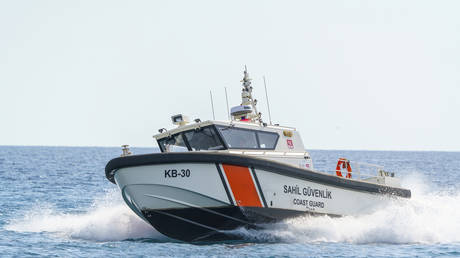
The security architecture of the Persian Gulf has shifted from a state of managed deterrence to a high-frequency kinetic equilibrium. Traditional media narratives characterize the simultaneous U.S. interceptions of Iranian assets and Israeli kinetic operations in Lebanon as an unpredictable flare-up. This assessment is fundamentally incomplete. The current theater dynamics reflect a highly calculated, mathematically structured optimization problem where all participants execute actions bounded by strict tactical constraints and divergent strategic timelines.
The immediate operational objective of the United States and its regional partners is to decouple the Levant conflict from the maritime security of the Strait of Hormuz. Conversely, Tehran seeks to enforce an interconnected cost function, tying the cessation of maritime disruption directly to Israeli concessions in Lebanon. This collision of strategic frameworks forms the basis of the ongoing diplomatic deadlock. For a closer look into similar topics, we recommend: this related article.
The Maritime Cost Function and Kinetic Chokepoints
The escalation sequence observed in the Strait of Hormuz is driven by a stark economic asymmetry. The closure or severe constriction of this maritime corridor introduces an exponential penalty to the global supply chain, a variable that Iran leverages as a primary instrument of asymmetric warfare.
- Traffic Degradation: In typical operational baselines, the Strait of Hormuz accommodates an average of over 130 merchant vessels per day. Active enforcement of a U.S. blockade on Iranian ports, paired with retaliatory actions by the Islamic Revolutionary Guard Corps (IRGC), has reduced this figure to a weekly total of roughly 36 vessels—a structural contraction of approximately 96% in daily throughput.
- Energy and Agricultural Tail Risks: While crude oil and refined petroleum products comprise one-third of the surviving transit volume, the remaining cargo represents highly sensitive chemical inputs. The Persian Gulf region produces roughly 30% of globally traded chemical fertilizers. Constricting this supply does not merely induce localized energy price spikes; it creates a lagging inflationary bottleneck in global agricultural yields.
Iran’s tactical execution relies on cheap, expendable kinetic vectors to impose high-cost defensive requirements on U.S. Central Command (CENTCOM) forces. The deployment of one-way attack drones in the Strait of Hormuz functions as a low-cost screening mechanism. By forcing the deployment of advanced U.S. shipborne interception systems, Tehran tests radar response times and mapping capabilities while attempting to oversaturate local defense nets. To get more background on this development, comprehensive analysis can be read on USA Today.
The U.S. response operates on a doctrine of proportional degradation. Rather than initiating broad structural targeting inside Iran, CENTCOM has localized its kinetic counter-strikes to peripheral sensor nodes. The targeting of Iranian coastal surveillance radar sites in Goruk and on Qeshm Island serves a dual purpose: it blinds the IRGC’s shore-to-ship targeting capabilities and degrades the ground control stations directing one-way drone assets over international waters.
Ballistic Math: The Attrition of Regional Air Defenses
When peripheral maritime assets are neutralized, the escalatory ladder progresses to theater ballistic missiles. The targeting of sovereign infrastructure in Kuwait and Bahrain highlights the shift from maritime interdiction to regional coercion.
[Iranian Ballistic Launch]
       │
       ├──► Vector A: Ali Al Salem Airbase (Kuwait) ──► Target: US Army Central Forward Command
       │
       └──► Vector B: Kingdom of Bahrain ──────────────► Target: US Navy 5th Fleet Headquarters
This targeting matrix is designed to stress the defensive capabilities of the two smallest Gulf states, both of which host critical nodes of U.S. power projection: U.S. Army Central in Kuwait and the 5th Fleet Headquarters in Bahrain. The recent firing of seven ballistic missiles provides a clear dataset for evaluating interception efficiency and terminal effects:
| Variable | Metric Value / Status | Operational Significance |
|---|---|---|
| Total Fired Vectors | 7 Ballistic Missiles | Medium-density salvo designed to test theater defense limits. |
| Interception Rate | 85.7% (6 Vectors Destroyed) | Validates the readiness of localized Patriot and Integrated Air and Missile Defense (IAMD) systems. |
| Systemic Failure | 14.3% (1 Vector Failed) | Reflects the persistent internal failure rate of aging or unoptimized liquid-fuel Iranian missile components. |
| Residual Arsenal | 21% - 22% Remaining | U.S. executive estimates indicate Iran retains roughly one-fifth of its pre-conflict ballistic capability. |
The attrition of these assets reveals a critical vulnerability in Iran's escalatory logic. While the IRGC attempts to project complete maritime control—even demanding transit fees and forced compliance from commercial hulls—it faces diminishing returns. The physical destruction of airport infrastructure in Kuwait demonstrates that the threshold for acceptable collateral damage has passed, eroding Iran's diplomatic leverage among neutral regional actors.
The Lebanon Linkage and the Limits of Decoupling
The secondary friction point destabilizing the U.S.-led diplomatic track is the operational reality in southern Lebanon. The Trump administration’s strategic framework assumes that a localized truce between the Lebanese government and Israel can be executed independently of the broader U.S.-Iran negotiations. This assumption is currently failing to hold.
The June 3 agreement sought to establish an explicit security framework:
- The enforcement of Hezbollah-free zones south of the Litani River.
- The transfer of full security control to the Lebanese Armed Forces (LAF).
- The eventual demilitarization of non-state actors to restore nominal state sovereignty.
However, this framework ignores the structural dependence of Hezbollah on Iranian strategic depth. Because Hezbollah has explicitly rejected the Washington-brokered agreement, the Israeli military has maintained its kinetic optimization campaign, executing strikes across southern Lebanon and issuing mandatory evacuation orders for multiple displacement corridors.
Iran uses this ongoing bombardment to justify its diplomatic freeze. By halting direct communication with ceasefire mediators, Tehran leverages the violence in Lebanon to demand a holistic package: any permanent maritime truce in the Persian Gulf or reopening of the Strait of Hormuz is conditional upon the absolute cessation of Israeli operations in the Levant. This linkage functions as a defensive shield for Iran’s primary proxy, preventing the political isolation and military degradation of Hezbollah.
The Diplomatic Gridlock: Capital Assets vs. Sanctions Relief
Beneath the kinetic exchanges lies a fundamental breakdown in economic negotiation. The bilateral talks are locked in an asymmetric deadlock where neither party can accept the other’s core prerequisites.
The Iranian negotiating position is dictated by acute capital starvation. Tehran’s willingness to extend temporary ceasefires or discuss limits on its nuclear enrichment program is contingent upon the immediate unfreezing of approximately $24 billion in overseas oil revenues, alongside comprehensive sanctions relief. For the Iranian regime, front-loaded capital injection is a domestic political necessity to stabilize an economy hollowed out by naval blockades and asset freezes.
The U.S. executive branch, however, operates under an entirely different political calculus, further complicated by upcoming midterm congressional elections in November. The Trump administration’s strategy relies on maximum economic leverage; releasing liquid assets prior to verified Iranian compliance would be perceived domestically as an unacceptable concession. This explains the stark contrast between official presidential optimism—claiming the situation is "going quite well"—and the tactical realities on the ground. The U.S. calculation assumes that the combination of port blockades, energy sanctions, and the seizure of illicit tankers in the Indian Ocean will eventually force an economically exhausted Tehran to sign a highly restrictive deal.
Strategic Play: Executing the Security Transition
The current kinetic equilibrium is unsustainable over a multi-month horizon. To break the deadlock without triggering a generalized regional war, U.S. and allied planners must transition from passive interception to a strategy of asymmetric cost imposition.
The United States must formally reject the holistic negotiation framework demanded by Tehran. Attempts to solve the Levant conflict and the Persian Gulf maritime crisis through a single, all-encompassing diplomatic instrument grant Iran a permanent veto over global commerce. The maritime security of the Strait of Hormuz must be established as an absolute red line, divorced entirely from the territorial status of southern Lebanon.
To achieve this, CENTCOM should shift its response doctrine from reactive, point-defense interceptions to proactive counter-battery operations. If Iranian-manufactured ballistic missiles or one-way drones cross a defined maritime threshold, the defensive response must automatically target the specific IRGC logistics chains and assembly facilities responsible for the vectors, rather than merely striking isolated coastal radar outposts. Concurrently, the deployment of multinational naval escorts must be accelerated to protect non-aligned commercial vessels, systematically undermining Iran’s self-proclaimed right to levy transit fees. By increasing the direct material cost of each launch while maintaining a rigid blockade on Iran's energy exports, the U.S. can compress Tehran's remaining 22% missile capacity timeline, forcing an economic and military capitulation before the November political window closes.
Analysis of Middle East military strategies
This video provides an essential look at the operational realities of the regional conflict, mapping the specific territorial overlaps between the Persian Gulf naval theater and the ongoing bombardment campaigns in southern Lebanon.