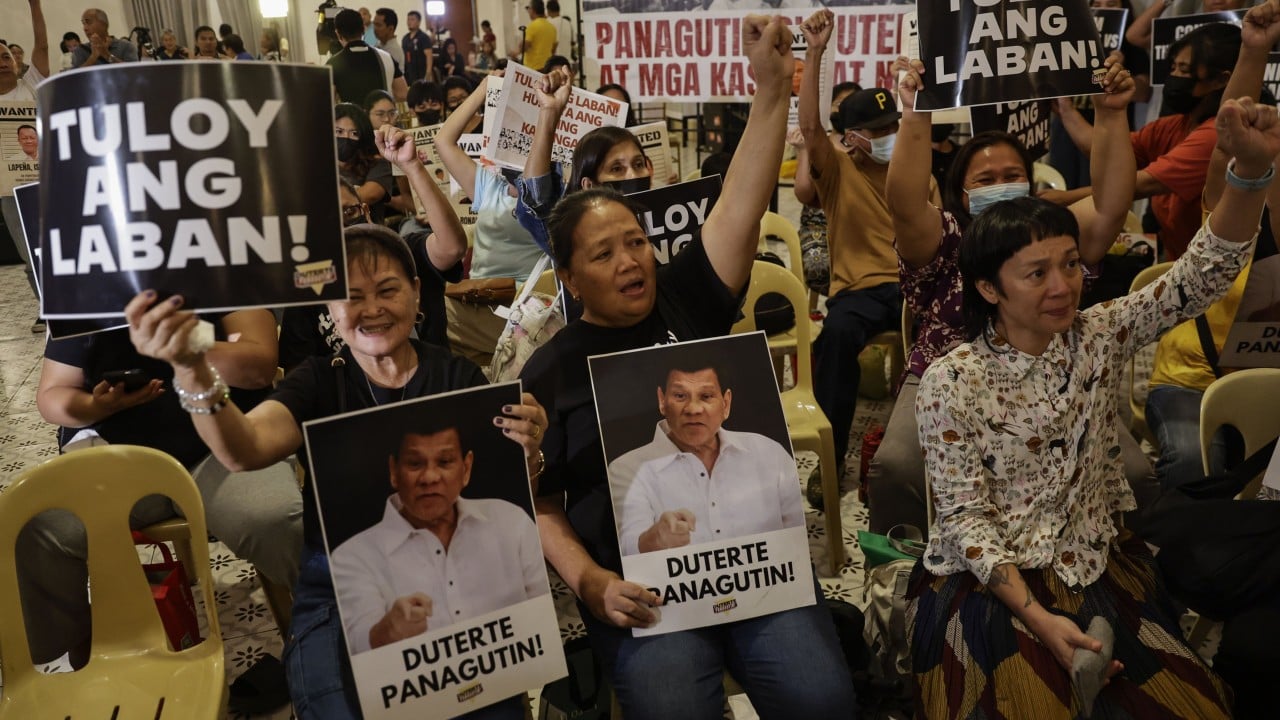
The air in the courtroom in The Hague is filtered, climate-controlled, and unnervingly quiet. It is a world away from the humid, metallic-smelling alleys of Manila where, for years, the primary currency was lead and silence. In these sterile European halls, the International Criminal Court (ICC) has just made a decision that feels like a tectonic shift beneath the feet of a former president. The judges have ruled that the investigation into Rodrigo Duterte’s "War on Drugs" will proceed.
For the families left behind, this isn't about legal jurisdictional technicalities or Article 18 of the Rome Statute. It is about a knock on the door that never stopped echoing.
The Architect of the Night
To understand why a panel of international judges is obsessed with a man halfway across the globe, you have to look at the numbers—and then look past them. The official government tally suggests over 6,000 people were killed in police operations during Duterte’s six-year term. Human rights organizations, however, whisper a number closer to 30,000.
Numbers are easy to ignore. A single pair of slippers left in a gutter is not.
Imagine a hypothetical teenager named Jun. He isn't a kingpin. He isn't a dealer. He’s a kid who once held a bag for a friend. Under the policy of Tokhang—a portmanteau of "knock" and "plead"—Jun’s name ends up on a list. It’s a literal list, compiled by local officials, often based on hearsay, grudges, or the desperate need to meet a quota. One Tuesday, the knock comes. There is no warrant. There is no lawyer. There is only a "struggle" that the police will later claim forced them to use lethal force.
This was the pattern. The ICC calls it "crimes against humanity." Duterte called it "cleaning the streets."
The Sovereignty Shield
The legal battle currently unfolding is a masterclass in high-stakes evasion. When the ICC first began sniffing around in 2018, Duterte didn't just argue his innocence; he withdrew the Philippines from the court entirely. He slammed the door and locked the deadbolt.
His argument was simple: The ICC has no business here. We have our own courts. We are a sovereign nation.
But international law has a memory like an elephant. The ICC’s Appeals Chamber recently reaffirmed that because the alleged crimes happened while the Philippines was still a member, the court retains jurisdiction. You can’t commit a crime in a house, move out the next day, and claim the police have no right to look at the bloodstains on the carpet.
The current Philippine administration, led by Ferdinand Marcos Jr., has found itself in a delicate political dance. Marcos initially signaled he would not cooperate with the "foreigners" in The Hague. Yet, as the political alliance between the Marcos and Duterte families begins to fray, the ICC investigation has become a shadow hanging over the country’s future. It is a lever of power that no one wants to pull, but everyone is staring at.
The Mechanics of Fear
Why did it work for so long? Because fear is an effective sedative.
Duterte’s rhetoric wasn't a bug; it was the feature. He spoke in the cadence of an exhausted father who had run out of patience with his wayward children. "If you are into drugs," he famously said, "I will kill you." He didn't use the passive voice. He used the first person.
This created a culture of impunity that trickled down from the Malacañang Palace to the lowliest precinct in Quezon City. If the President says it's okay, the officer thinks, then the trigger is lighter. The law becomes a suggestion. The constitution becomes a piece of paper that doesn't stop bullets.
Consider the "nanlaban" narrative. It’s a Filipino word meaning "he fought back." In thousands of police reports, this single word served as a magical incantation that vanished the need for an investigation. It didn't matter if the victim was in his underwear or if the gun found near his hand was rusted and jammed. If he nanlaban, the case was closed.
The Ghost of Davao
The ICC isn't just looking at the presidential years. They are digging deeper, back to the mid-1980s in Davao City, where Duterte served as mayor for decades. This is where the blueprint was drafted.
The "Davao Death Squad" (DDS) was, for a long time, treated like an urban legend or a dark fairy tale told to keep people off the streets at night. Men on motorcycles. No plates. Sharp shooters. It was a localized version of the national bloodletting that would follow. By investigating the Davao killings alongside the national war on drugs, the ICC is attempting to prove a "widespread and systematic" attack against a civilian population.
They are looking for a thread. They want to show that the violence wasn't a series of unfortunate accidents by overzealous cops, but a deliberate, orchestrated policy of state-sponsored execution.
The Weight of International Justice
Critics of the ICC often call it a "paper tiger." They point to the years it takes to reach a verdict and the difficulty of actually arresting a former head of state. And they aren't entirely wrong. The court doesn't have its own police force. It relies on the cooperation of member states to hand over the accused.
But justice isn't always about a jail cell. Sometimes, it’s about the record.
When a formal investigation proceeds, it means witnesses are being heard. It means the testimonies of mothers who scrubbed their sons' blood off the pavement are being transcribed into the permanent annals of human history. It means the "invisible" people—the ones living in the slums of Tondo or the backstreets of Cebu—are suddenly visible to the world.
The ICC is a slow-moving machine, but its gears are heavy. Once they start turning, they are incredibly difficult to stop. The ruling to proceed isn't a conviction, but it is a declaration that the world is watching. It is a refusal to accept the "he fought back" excuse as a final answer.
The Empty Chair
There is a specific kind of silence that follows a period of extreme violence. It’s not the silence of peace, but the silence of exhaustion. In the Philippines, the streets are quieter now, but the trauma is baked into the soil.
The legal maneuvering will continue for years. There will be appeals, jurisdictional challenges, and fiery speeches about Western imperialism. Lawyers in expensive suits will debate the nuances of "complementarity"—the idea that the ICC should only step in when national courts are "unwilling or unable" to prosecute.
The ICC argues the Philippines is "unwilling." The Philippine government insists it is "able."
But while the men in robes argue, the ghosts remain. They are the invisible stakes in this game of international chess. They are the reason the ICC refuses to let go. Every piece of evidence gathered, every witness protected, and every ruling handed down is a brick in a wall designed to ensure that "sovereignty" can never again be used as a synonym for "immunity."
In the end, the case isn't just about one man or one country. It is a test of a global promise made after the horrors of the 20th century: that no one is so powerful that they are above the reach of the law, and no one is so small that they are beneath its protection.
The gavel has fallen. The investigation moves forward. Somewhere in a darkened room in Manila, a list is being tucked away, and for the first time in a decade, the people who wrote it are the ones feeling the chill.
The shadows are long, but the light is starting to find the corners.