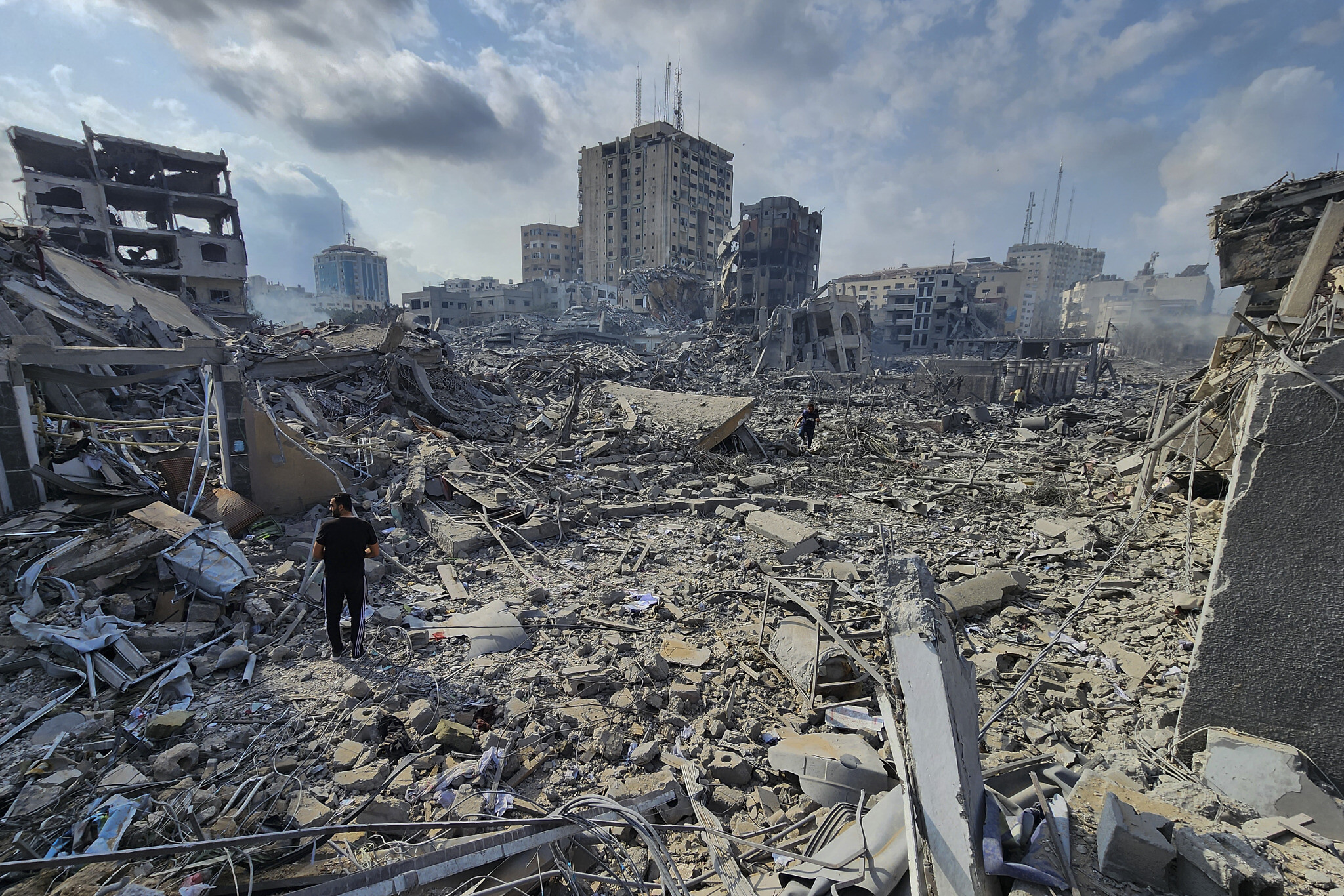
Fatal Israeli strikes in Gaza alongside journalists wounded in the occupied West Bank underscore how violence in both territories operates on distinct operational tracks while feeding into the same political and information crisis. Even when a single lethal strike in Gaza and injuries to reporters in the West Bank appear in the same headline, the mechanisms driving each event differ sharply. In Gaza, military operations center on urban combat, air and drone strikes, and ongoing displacement. In the West Bank, press injuries often occur amid crowd control, military raids, checkpoints, and clashes between armed actors, security forces, and settlers.
Veteran conflict observers have seen this pairing countless times across decades of reporting. Two events land in the same wire roundup. Readers treat them as two chapters of one identical scene. They are not. Treating Gaza and the West Bank as interchangeable flattens distinct command structures, legal frameworks, and survival risks for civilians and reporters alike. Expanding on this theme, you can also read: Why Returning 22 Stolen Ancient Artefacts to Greece Changes Nothing.
Why Separate Fronts Collide in One Headline
Conflict coverage frequently bundles Gaza and the West Bank under a single label because both territories sit at the center of the Israeli-Palestinian struggle. That editorial shorthand hides real structural differences. Gaza is a densely packed coastal strip shaped by prolonged warfare, severe destruction of civilian infrastructure, and tight movement restrictions. The West Bank is a sprawling patchwork of areas under varying degrees of Palestinian civil or security administration and Israeli military control, marked by dense checkpoints, military operations, and expanding settlements.
When a lethal strike takes place in Gaza on the same day reporters are hurt in the West Bank, the connection is rarely a single unified tactical operation. Instead, it reflects a broader environment of high tension where military pressure in one arena and enforcement or unrest in another reinforce each other politically and emotionally. Analysts at Al Jazeera have also weighed in on this trend.
Consider a hypothetical example from a newsroom desk. Suppose an editor receives an alert about a fatal strike in Gaza and a separate alert about two reporters hit by rubber-coated metal bullets or tear gas canisters during a West Bank raid. A rushed desk might merge both alerts into one broad summary of regional escalation. A careful desk separates the operational mechanics while examining how both stories shape public perception abroad.
Newsroom shorthand saves space. It often costs precision when readers mistake two very different theaters of friction for one uniform battleground.
Observers who track both fronts closely look at several recurring dynamics before drawing conclusions:
- Command and rules of engagement: Air and artillery strikes in Gaza involve heavy munitions and urban targeting debates, whereas West Bank incidents frequently involve ground patrols, arrest raids, arrest-evasion clashes, and crowd-dispersal gear.
- Access and visibility: Foreign and local reporters face severe access barriers in Gaza, making independent verification slow and reliant on local correspondents, medical officials, and military statements. In the West Bank, journalists often operate closer to street-level friction where crowd control happens in plain sight.
- Political spillover: Events in Gaza inflame streets and political rhetoric in the West Bank. Unrest or security crackdowns in the West Bank reverberate through domestic Israeli politics and diplomatic calculations.
What Wounded Journalists Signal About Information Control
When journalists are wounded in the occupied West Bank, the immediate harm is physical. Reporters face concussions, shrapnel, tear gas exposure, or impact injuries while trying to document arrests, protests, or raids. The secondary effect is informational. Every injured or intimidated reporter alters what cameras capture and what testimony reaches the outside world.
Press freedom groups have warned for years that covering protests, military operations, and settler-related friction in the West Bank carries acute hazard. Reporters wear press markings, yet markings do not guarantee safety in fast-moving clashes, chaotic crowds, or low-visibility operations. Sometimes reporters are caught in crossfire or hit by stray projectiles. Sometimes disputes arise over whether forces aimed at crowd control or acted recklessly near visible media crews.
Verification after an incident is rarely instant. Medical reports arrive first. Eyewitness accounts from fellow journalists follow. Military spokespeople may release their own account of stone-throwing, armed suspects, or crowd-control protocols hours later.
A seasoned reporter learns to treat the first hour of any clash with skepticism. Adrenaline runs high. Smoke and noise distort distances. Accurate reconstruction requires checking timestamps, hospital records, video angles, and multiple independent accounts rather than relying on the loudest early claim.
The Strain on Local Correspondents
International correspondents rotate in and out of assignments or rely heavily on local fixers, drivers, and stringers who know the terrain and languages. Local journalists bear disproportionate risk. They live in the environment day after day. They navigate checkpoints constantly. When a local reporter is wounded, the loss hits both personal networks and local reporting capacity.
How Lethal Strikes in Gaza Reshape Calculations on the Ground
A single fatal strike in Gaza may look small on a casualty ledger compared with large-scale bombardments. On the ground, it carries heavy weight. Families grieve. Neighborhoods absorb another shock. Local emergency services respond under strain.
Even a limited or targeted strike raises sharp questions about intelligence, proportionality, and civilian proximity. Militaries typically describe strikes in terms of neutralizing threats, militant infrastructure, or specific operatives. Residents, rights monitors, and health workers often point to struck homes, streets, tents, or shared civilian spaces where people have nowhere left to flee.
Decades of conflict reporting show a hard truth about military explanations and civilian realities. Both can be argued fiercely in public statements while ordinary families pay the price in ruined lives. Neither side's press release captures the full human cost inside a crowded neighborhood.
Diplomatic Friction and Shifting Leverage
Reports of lethal strikes in Gaza alongside wounded journalists in the West Bank land in diplomatic capitals at moments when governments are already balancing competing pressures. Foreign ministries issue statements urging restraint, protection of civilians, and safety for press workers. Yet diplomatic language often travels faster than policy shifts.
Allies weigh security commitments, hostage or ceasefire negotiations, domestic constituencies, and regional alliances. Criticism from partner governments can sharpen rhetorical pressure without immediately altering operations on the ground. Meanwhile, domestic political coalitions often reward toughness and security firmness over compromise, narrowing room for rapid de-escalation.
External mediators face a stubborn reality. Leverage is uneven. Parties to the conflict view survival, security, and sovereignty through fundamentally different lenses, making outside formulas fragile whenever gunfire resumes.
Gray Areas That Resist Easy Narratives
Anyone covering this conflict for long enough learns where neat moral boxes break down. Acknowledging gray areas is not moral indifference. It is basic honesty.
In Gaza, armed groups operate among dense civilian populations and infrastructure, complicating targeting and accountability debates while civilians bear severe hardship. In the West Bank, Palestinian communities face military raids, movement restrictions, and settler violence, while Israeli authorities cite security threats, militant activity, and attacks on soldiers and civilians.
Even around press safety, facts can be contested. Reporters may stand near active clashes where projectiles fly from multiple directions or where crowd-control munitions are fired into dense streets. Determining intent versus negligence or collateral harm requires careful evidence, not assumptions made miles away.
Public debates often demand instant certainty. Real conflicts rarely offer it.
Practical Ways Readers Can Read Conflict Coverage Critically
When headlines pair fatal strikes in Gaza with journalists wounded in the West Bank, casual readers can easily get whiplash or tune out altogether. A few practical habits help separate signal from noise without requiring a degree in Middle East diplomacy.
- Check the exact location: Distinguish between incidents inside the Gaza Strip and incidents in the West Bank, including East Jerusalem or specific towns and refugee camps.
- Separate confirmed facts from claims: Note clearly what medical authorities, eyewitnesses, reporters on scene, and military officials each state, and watch for updates as details are verified.
- Look for context on press incidents: When journalists are injured, look for details on the equipment or munition involved, the nature of the clash or raid, and whether press credentials were visible.
- Watch for proportion and pattern: One headline is a snapshot; tracking patterns over weeks reveals whether violence, raids, or media restrictions are rising, plateauing, or shifting geography.
Good journalism does not tell readers what to feel. It gives them accurate bearings so they can see what is actually happening and why it matters.
Watch closely how events in Gaza and the West Bank interact over the coming days, because pressure in one territory rarely stays sealed off from the other.


