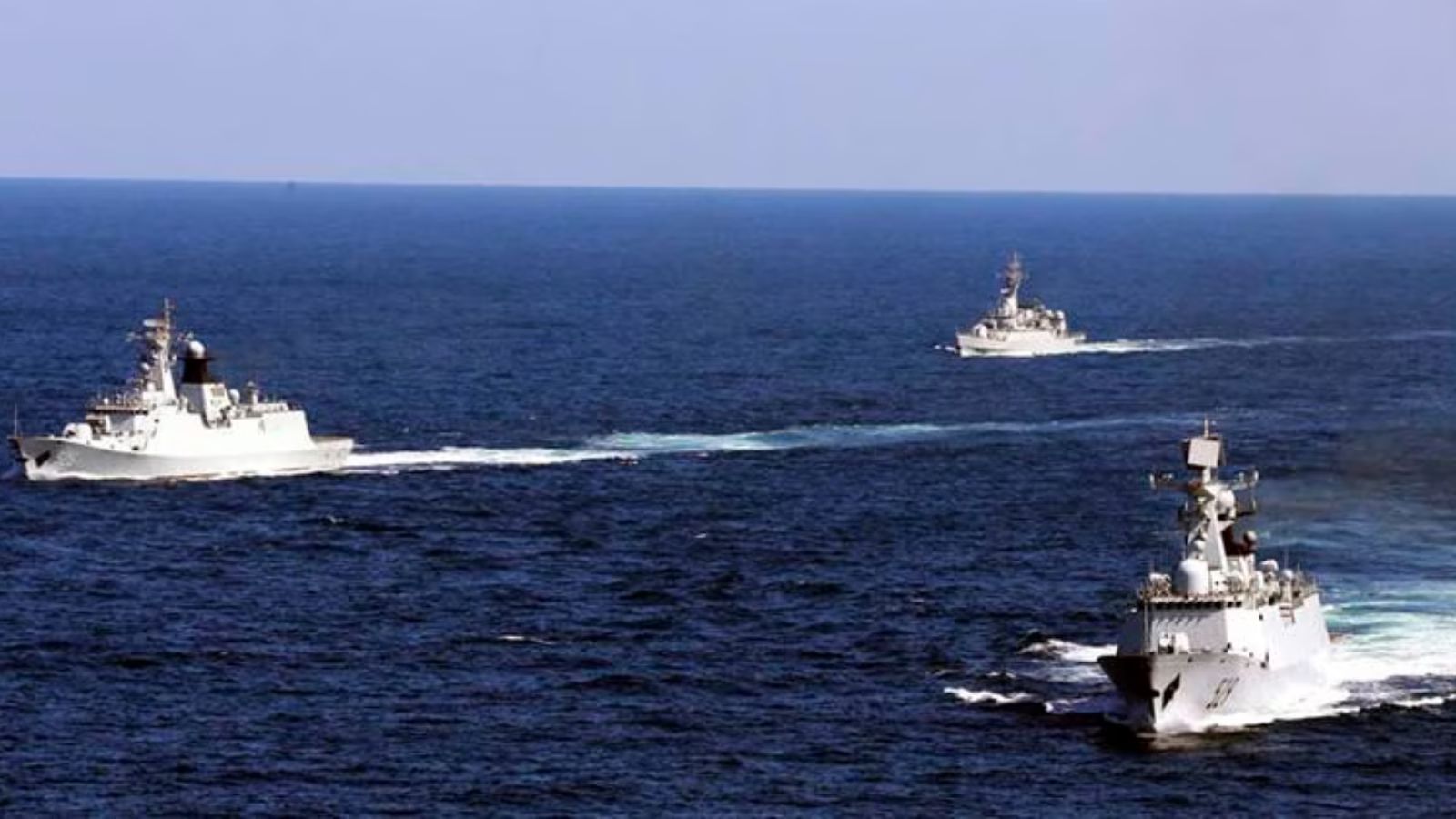
Bilateral naval exercises between Jakarta and Beijing do not represent a sudden departure from Indonesia's foundational foreign policy doctrine, but rather an operational stress-test of active neutrality under conditions of mounting Indo-Pacific polarization. Observers who interpret these maritime drills through a binary lens of alignment fail to account for the structural incentives driving middle-power hedging. Indonesia operates under a strict constitutional mandate of an independent and active foreign policy, known locally as bebas aktif. This doctrine prohibits permanent military alliances with major powers while compelling diplomatic engagement across competing blocs. Bilateral exercises with the People's Liberation Army Navy must be evaluated not as a pivot toward China, but as a calibrated exercise in risk mitigation and capability calibration within a contested maritime theater.
The strategic anxiety surrounding these exercises stems from a fundamental misunderstanding of how middle powers manage asymmetric security dependencies. Indonesia faces a dual-pressure environment. Economically, China functions as its primary trading partner and a dominant source of infrastructure investment. Geopolitically, Beijing's expansive maritime claims in the South China Sea—specifically the overlap between the nine-dash line and Indonesia's Exclusive Economic Zone near the Natuna Islands—create acute territorial friction. To decode Jakarta's naval strategy, analysts must isolate the operational mechanics from the diplomatic signaling.
The Three Structural Drivers of Maritime Hedging
Middle powers caught between competing hegemons rely on structured ambiguity to preserve strategic autonomy. Indonesia's decision to conduct joint naval maneuvers with China is governed by three distinct structural variables.
First, capability calibration requires direct operational exposure to potential adversaries. Military planners in Jakarta must understand the tactical signatures, communication protocols, and technological capabilities of the People's Liberation Army Navy. Conducting exercises under controlled conditions provides empirical data that theoretical modeling cannot replicate. This is intelligence gathering through operational engagement.
Second, economic insulation demands diplomatic synchronization. A sudden rupture or overt hostility toward Beijing carries immediate punitive costs across trade, supply chains, and infrastructure financing. By maintaining regularized military exchanges, Jakarta signals predictability and cooperation, lowering the probability of economic coercion while preserving freedom of action.
Third, domestic political signaling reinforces regime stability. Indonesian leadership must project strength and diplomatic independence to domestic constituencies. Engaging in military diplomacy with both Beijing and Washington prevents domestic opposition factions from framing the administration as subservient to either external power.
The Cost Function of Non-Alignment
Maintaining active neutrality is not a cost-free strategy. It introduces structural friction and operational inefficiencies that conventional alliance systems avoid.
When Indonesia invites the People's Liberation Army Navy for bilateral drills, it simultaneously complicates its interoperability frameworks with traditional partners like the United States and Australia. Standardized communication codes, shared tactical doctrines, and joint intelligence platforms cannot be shared seamlessly when a military maintains operational proximity to a strategic competitor. This creates a friction cost within the armed forces, forcing Indonesia to compartment its naval assets and training schedules.
Furthermore, these exercises introduce signaling ambiguity to regional security architectures. Association of Southeast Asian Nations member states look to Indonesia for regional leadership. When Jakarta engages in bilateral military optics with Beijing, claimant states in the South China Sea dispute often interpret the move as a dilution of collective bargaining power. The cost here is the erosion of regional cohesion, as bilateral pragmatism undermines multilateral deterrence.
Operational Realities in the Natuna Theater
Geographic proximity dictates tactical reality. The northern approaches of Indonesia's Exclusive Economic Zone, particularly around the Natuna Islands, represent the primary flashpoint of Sino-Indonesian friction. Beijing's coast guard vessels and fishing militias routinely violate Indonesian sovereign waters, prompting quiet pushback from Jakarta's naval corvette fleets.
Joint naval drills do not resolve these territorial disputes; rather, they serve as a de-escalation valve. By engaging in search-and-rescue or humanitarian assistance and disaster relief scenarios during bilateral exercises, both navies establish communication channels that can be activated during accidental maritime collisions. This operational safety valve reduces the risk of tactical miscalculation escalating into a broader military crisis.
The distinction between alignment and engagement is critical. Alignment implies a subordination of national security objectives to a dominant partner's strategic framework. Engagement, conversely, is an instrument of constraint. By keeping Beijing within a structured diplomatic and military framework, Indonesia seeks to socialize China into accepted norms of maritime conduct, even as compliance remains marginal.
Strategic Execution and Future Positioning
The efficacy of Indonesia's active neutrality will be tested by the speed of regional polarization. As the security architecture of the Indo-Pacific hardens into rigid security pacts, the middle-space available for hedging contracts.
To sustain this posture without degrading national deterrence, Jakarta must accelerate the modernization of its domestic defense industrial base and expand naval surveillance architecture around its northern maritime boundaries. Bilateral drills with external powers must be strictly counterbalanced by indigenous capability development and expanded minilateral patrols with regional partners who share concerns over maritime sovereignty. The ultimate measure of success for Indonesian naval strategy is not the absence of external pressure, but the preservation of sovereign decision-making authority when that pressure peaks.