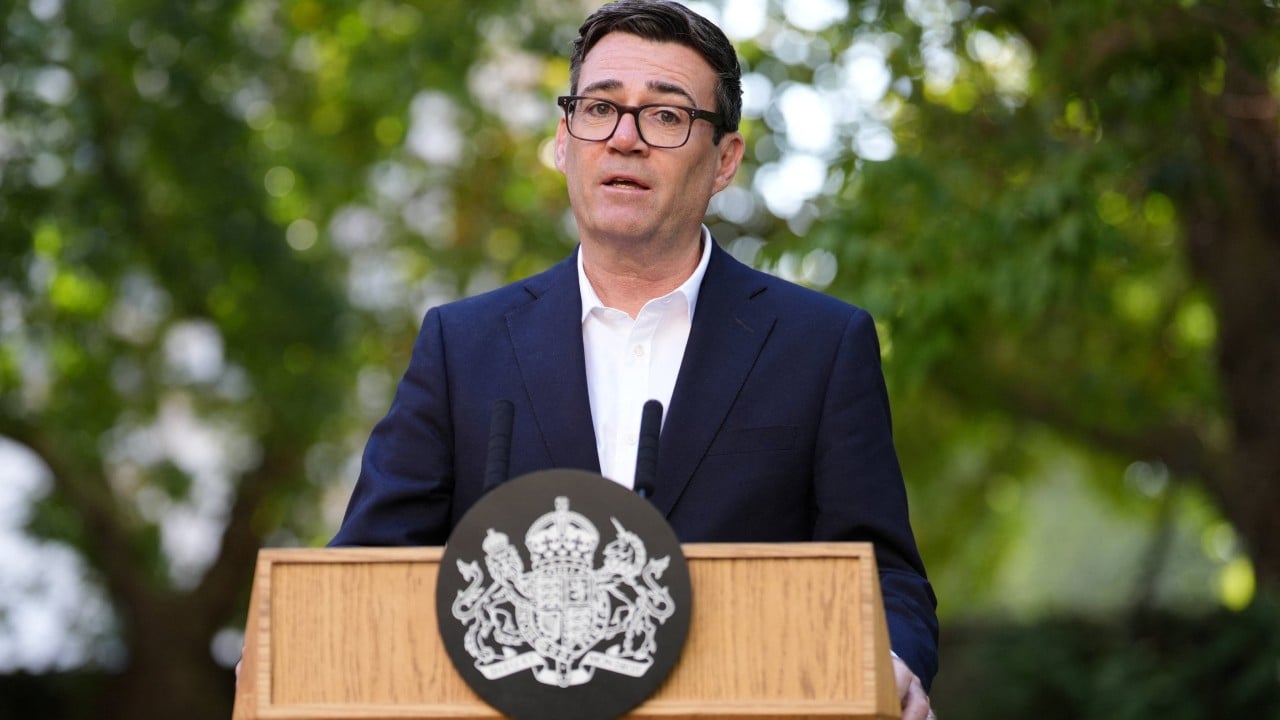
Foreign policy shifts are rarely born out of ideological consistency. Instead, they are calculated trade-offs governed by constrained resources, inflationary pressures, and the structural necessity of alliance management. The decision by British Prime Minister Andy Burnham to deploy Royal Air Force air-to-air refuelling support to Saudi Arabia, occurring concurrently with his inaugural United Nations appearance and high-stakes meetings with US President Donald Trump, represents a textbook study in kinetic signaling and economic risk mitigation.
Evaluating this diplomatic maneuver requires stripping away partisan rhetoric and analyzing the underlying variables: energy transit choke points, inflationary transmission mechanisms, and transatlantic signaling.
The Energy Transmission Channel
The primary driver behind the deployment of an RAF Voyager refuelling asset to assist Saudi air operations against Houthi forces is not abstract solidarity. It is an exercise in domestic price protection.
When Houthi forces advanced toward the Bab el-Mandeb strait, forcing maritime traffic away from traditional routes and threatening Red Sea energy corridors, the structural risk to global hydrocarbon logistics multiplied. While the Strait of Hormuz faced closures and disruptions, the Bab el-Mandeb alternative became vital for Saudi oil exports.
The economic transmission mechanism operates through three distinct stages:
- Supply Disruption: Kinetic attacks on Saudi energy infrastructure and shipping lanes constrain output delivery timelines and inflate marine insurance premiums.
- Commodity Price Spikes: Physical scarcity and perceived supply vulnerability drive up global crude benchmarks.
- Domestic Inflationary Shock: Imported energy costs ripple through the British economy, elevating consumer price indices, depressing discretionary spending, and driving government borrowing costs to multi-year highs.
By providing defensive refuelling support to keep Saudi defensive patrols airborne, the British government sought to stabilize a critical node in the global energy supply chain. The calculus is transactional: a low-cost, targeted military deployment designed to prevent a high-cost domestic energy shock.
Transatlantic Signaling and the Trump Variable
A neophyte executive entering office faces an immediate credibility test when interfacing with an established, transactional US administration. Diplomatic analysts often describe such maneuvers as "leading from behind", but a more accurate structural description is anticipatory compliance combined with burden-sharing.
The Trump administration had previously demurred on direct military involvement in certain aspects of the regional campaign, creating a security vacuum. By stepping in with tactical refuelling assets, the UK achieved two strategic objectives:
- Alliance Relevance: Demonstrating operational utility to Washington by actively securing partner infrastructure, thereby preventing the perception of European free-riding.
- The Diplomatic Reset: Providing Burnham with immediate leverage ahead of his first face-to-face bilateral meeting with Trump, transforming a potential liability into a tangible display of alliance commitment.
This dynamic alters the bargaining space. When leaders meet on the sidelines of the UN General Assembly, tangible operational support replaces theoretical alignment, smoothing over historical political friction and insulating bilateral trade and security discussions from wider transatlantic divergence.
The Strategic Trade-Offs and Second-Order Effects
Every geopolitical intervention carries an opportunity cost and exposes the actor to operational blowback. The Burnham administration's calculus involves severe trade-offs that critics and opposition figures have been quick to highlight.
First, the deployment deepens British entanglement in a protracted regional conflict, tying UK military readiness to the defensive requirements of a foreign state. While an RAF Voyager does not constitute a heavy combat deployment, it alters the legal and political baseline of UK neutrality.
Second, the move invites domestic political friction. Opponents point to the inconsistency of lecturing on de-escalation while simultaneously facilitating kinetic operations. However, from a pure realist perspective, domestic political capital is often spent to hedge against macroeconomic instability. A spike in home heating and fuel prices poses a far immediate electoral threat to a new government than strategic criticism from anti-war coalitions.
Strategic Outlook
The intersection of energy security, military logistics, and executive diplomacy dictates that foreign policy will remain subordinate to economic resilience. As long as key maritime trade corridors remain vulnerable to asymmetric disruption, middle powers with high import dependencies will find themselves forced into tactical interventions. The deployment to Saudi Arabia is a symptom of a fractured global trade architecture where economic survival forces states to project power far beyond their immediate borders.