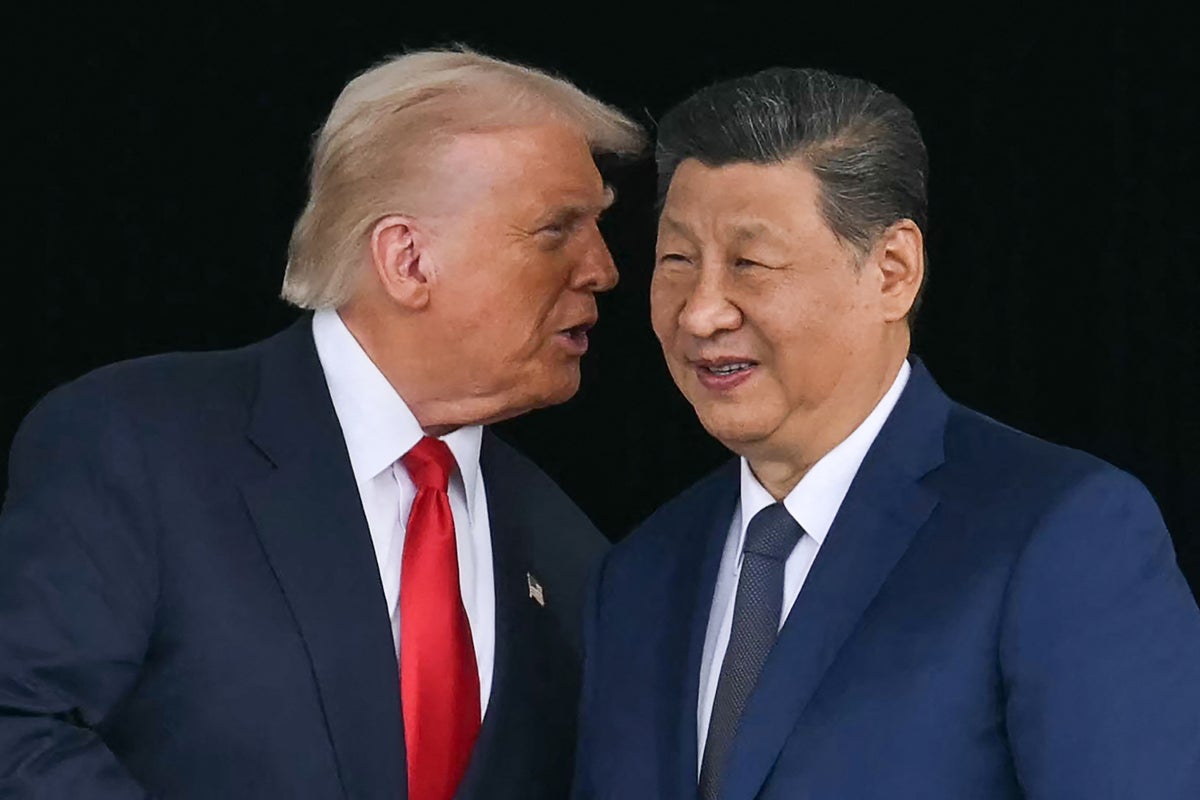
The May 2026 summit between Donald Trump and Xi Jinping functions not as a diplomatic reset, but as a high-stakes compliance checkpoint within a broader strategy of selective decoupling. The bilateral relationship has moved beyond the era of aspirational integration into a rigid framework of escalation dominance and chokepoint management. As of Q2 2026, the primary objective for the United States is to enforce the Busan trade truce and stabilize the Hormuz-driven energy shock, while China seeks to insulate its domestic economy from a deepening 145% tariff ceiling and secure its dominance in the rare earth supply chain.
The Hormuz Variable and Energy Arbitrage
The most immediate pressure on the Beijing talks is the Iran-Hormuz crisis. The current conflict in the Middle East has created a strategic bottleneck that disproportionately affects China’s industrial inputs. Half of China’s crude oil passes through the Strait of Hormuz. While Beijing has maintained a diversified energy mix and significant strategic reserves, the threat of a global recession—triggered by the sustained closure of the strait—poses a direct risk to the 20% of Chinese GDP derived from exports.
This creates a specific lever for the Trump administration: the U.S. is positioning its influence in the Middle East as a tradeable commodity. If China utilizes its diplomatic weight with Tehran to restore maritime flow, Washington may offer a calibrated reduction in the "fentanyl-related" tariff bracket, which was recently lowered from 20% to 10% as a gesture of tactical cooperation.
The Three Pillars of Selective Decoupling
The 2026 summit is structured around three non-negotiable friction points that define the current cost function of the relationship.
- Chokepoint Resilience: Washington’s strategy has shifted from blanket trade restrictions to the "Small Yard, High Fence" approach. This focuses on preventing China from accessing advanced chipsets and AI diffusion frameworks. Conversely, China’s 2025 restrictions on rare earth exports remain the primary counter-measure, exposing a critical vulnerability in U.S. defense manufacturing.
- Managed Trade Compliance: The Busan agreement mandated that China purchase 25 million metric tons of U.S. soybeans annually through 2028. For the U.S., these figures are the primary metric of success. For China, these purchases are a low-cost mechanism to maintain a "predictable" tariff environment, even as they simultaneously increase imports from Brazil to avoid over-reliance on U.S. agriculture.
- Security Deconfliction: The absence of established crisis communication channels regarding AI-driven kinetic systems is a recognized flashpoint. The U.S. seeks "deconfliction" protocols to prevent technological misunderstandings—particularly in the South China Sea—from escalating into a full-scale maritime confrontation.
The Taiwan Arms Sale Deadlock
The $11 billion arms sale package approved by Congress in 2025 remains the most volatile element of the discussion. Beijing’s objective is to extract a rhetorical shift from the White House, moving from "does not support" Taiwan independence to "opposes" it. This is not merely a linguistic preference; it is a strategic attempt to remold the international legal interpretation of the Taiwan Strait’s status.
The U.S. position, however, is constrained by the domestic "Board of Trade" proposal, which seeks to institutionalize tariff measures to prevent "snap-back" vulnerabilities. Any concession on Taiwan would likely face immediate legislative opposition, as the 2026 budget for domestic weapons production is already under-funded, and any perceived weakness is framed as a concession to the Chinese Communist Party.
The Nexperia and Legacy Chip Bottleneck
A secondary but critical conflict involves Nexperia, the Dutch-based semiconductor firm. The dispute over legacy chip supply chains—essential for the automotive and electronics sectors—represents a new front in the technology war. China aims to protect its market access for electric vehicles (EVs) and legacy chips, which are increasingly targeted by U.S. regulatory and investment restrictions.
The U.S. auto sector views Chinese EV penetration as an existential threat. Consequently, any easing of restrictions on Chinese cars is improbable, as the Trump administration is committed to a policy of "home-shoring" all sectors with national security implications.
Strategic Recommendations for Global Operations
For organizations navigating this environment, the 2026 summit confirms that "stability" is a euphemism for "managed friction." The following tactical adjustments are required:
- Diversify Input Geographies: Do not interpret the "soybean truce" as a return to normalcy. The long-term trend is a 50% decline in bilateral trade by 2030.
- Audit Tech Stacks: Move away from any hardware or software dependent on "Entity List" firms, as the AI diffusion framework will likely expand to cover more affiliates in late 2026.
- Hedge for Energy Volatility: The Strait of Hormuz remains a binary risk; should the summit fail to produce a de-escalation roadmap in the Middle East, energy prices will remain structurally higher throughout the fiscal year.
The Beijing summit will not end the trade war; it will merely refine the rules of engagement. Success is measured not by the signing of a comprehensive treaty, but by the avoidance of a catastrophic miscalculation in the South China Sea or the global energy markets.