Capitalism Meets the Hermit Kingdom
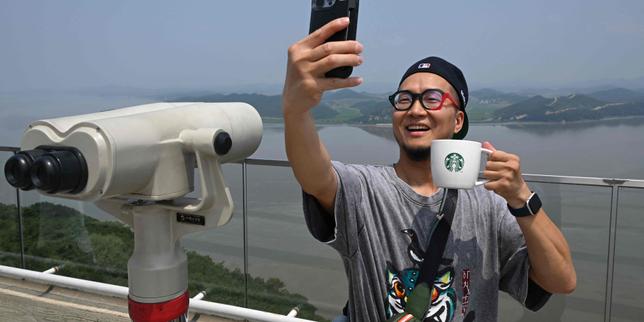
A venti Americano costs 4,500 won, roughly three and a half dollars. For that price, consumers at the Aegibong Peace Ecopark in Gimpo can sit in a climate-controlled glass pavilion, sip their espresso, and peer through high-powered binoculars directly into North Korea.
This is the reality of South Korea’s latest border attraction. Nestled right up against the Demilitarized Zone, a newly opened Starbucks franchise provides a panoramic view of the North Korean village of Jogang-ri. The contrast is jarring. On one side of the Han River estuary lies a multi-billion-dollar corporate juggernaut serving oat-milk lattes to weekend sightseers. On the other side sits a bleak, underdeveloped collective farm where electricity is a luxury and citizens scrape together a living under an authoritarian regime.
This venue represents the ultimate evolution of what academics call dark tourism. It commodifies one of the most volatile geopolitical fault lines on Earth into a casual Sunday afternoon excursion. For decades, the South Korean state managed border tourism as a solemn exercise in national security education. Today, municipal governments and corporate entities have transformed it into a lifestyle brand.
The Economics of the DMZ Buffers
Municipalities along the border face a severe economic crisis. Depopulation is gutting rural South Korea, and towns bordering the DMZ suffer the worst of it due to strict development regulations intended to protect military infrastructure. Local leaders view these high-concept tourist attractions as their only viable lifeline.
Gimpo City poured significant capital into upgrading the Aegibong Peace Ecopark, converting an old, rundown security observatory into a sleek architectural marvel. Bringing in a massive multinational brand like Starbucks was a deliberate strategy to attract younger demographics who traditionally ignore state-sponsored history lessons.
+---------------------------+-----------------------------------------+
| Border Site Typology      | Primary Consumer Draw                   |
+---------------------------+-----------------------------------------+
| Traditional Observatory   | Binoculars, static educational plaques  |
| The New Wave (Starbucks)  | Retail consumerism, lifestyle tracking   |
+---------------------------+-----------------------------------------+
The strategy works. Young couples take selfies with the barren North Korean mountains serving as a backdrop, tagging their location on social media while holding green branded cups. Corporate logos now frame the scenery where bloody battles occurred during the Korean War. The local government generates revenue through park admission fees and increased regional foot traffic, creating a blueprint that neighboring border districts are already looking to copy.
The Corporate Risk Matrix
For the corporate entity operating the franchise, the venture is a double-edged sword. On one hand, the publicity is priceless. The location guarantees a steady stream of domestic influencers and international travelers eager to experience the bizarre juxtaposition.
On the other hand, the security risks are tangible. The site sits well within the striking distance of North Korean conventional artillery. Tensions between Seoul and Pyongyang fluctuate wildly, and a sudden escalation could turn a profitable tourist asset into a liability overnight. The corporate willingness to set up shop here proves that the allure of viral marketing outpaces geopolitical anxiety.
Sanitizing the Grim Reality of Totalitarianism
The true cost of this consumerist pivot is the sanitization of human suffering. When you view a totalitarian state through the lens of a cozy cafe window, the severity of the situation diminishes.
North Korea is not a theatrical backdrop. It is a nation state defined by systematic human rights abuses, widespread food insecurity, and political prison camps. When visitors treat the view as a novel photo opportunity while munching on croissants, the ongoing tragedy of the Korean division turns into a spectacle. The binoculars do not show the labor camps or the systemic deprivation; they show distant, tiny figures walking through fields, reduced to characters in a live-action diorama for the affluent south.
"The view turns a human rights tragedy into a weekend distraction."
Defector communities express deep ambivalence about these developments. Some argue that any initiative drawing attention to the border helps keep the issue of reunification alive in the public consciousness. Others contend that making a afternoon hangout out of the border trivializes the trauma of families separated by the wire. The cafe structure creates an artificial layer of safety, making a nuclear-armed neighbor look like a quaint theme park attraction.
Psychological Disconnection in the South
This commercialization highlights a widening generational divide within South Korean society. Older generations, who remember the war or grew up in its immediate aftermath, view the border with genuine sorrow and anxiety. To them, the division is an open wound.
For the younger populace, North Korea is an abstract concept. They have spent their entire lives under the umbrella of Southern economic prosperity and Western cultural dominance. They do not expect reunification, nor do they particularly desire the massive tax burden that would accompany it. The cafe on the edge of the abyss perfectly serves this mindset. It offers an encounter with the forbidden zone without requiring any deep emotional or political engagement.
Security Theatre for the Masses
The entire experience relies heavily on security theatre. Visitors must pass through military checkpoints to enter the Ecopark area, presenting identification and undergoing screening by South Korean soldiers. This process instills a thrilling sense of controlled danger.
Yet, the danger is carefully curated. The military allows the operation because the site is heavily fortified and poses no actual strategic vulnerability. The soldiers at the gates act as props in a larger narrative of high-stakes tension, enhancing the consumer's feeling that they are participating in something daring. It gives the visitor a cheap thrill of proximity to conflict, completely detached from the messy reality of actual military engagement.
The Future of Commodified Conflict Zones
The success of the Gimpo location ensures this trend will expand. Plans are already circulating in various regional administrative offices to build luxury glamping sites, high-end restaurants, and arts complexes within sight of the DMZ. The border is no longer a scar to be healed; it is prime real estate waiting for development.
As long as the guns remain silent, the cash registers will keep ringing. Tourism boards will continue to push the boundaries of what is acceptable, transforming spaces of historical trauma into engines of regional economic growth. The consumer wins a unique social media post, the local government fills its coffers, and the corporate entity secures its market share.
Meanwhile, just across the water, the people of Jogang-ri continue to live in a closed world, entirely unaware that their daily struggle for survival has become the hottest new view in global retail tourism.