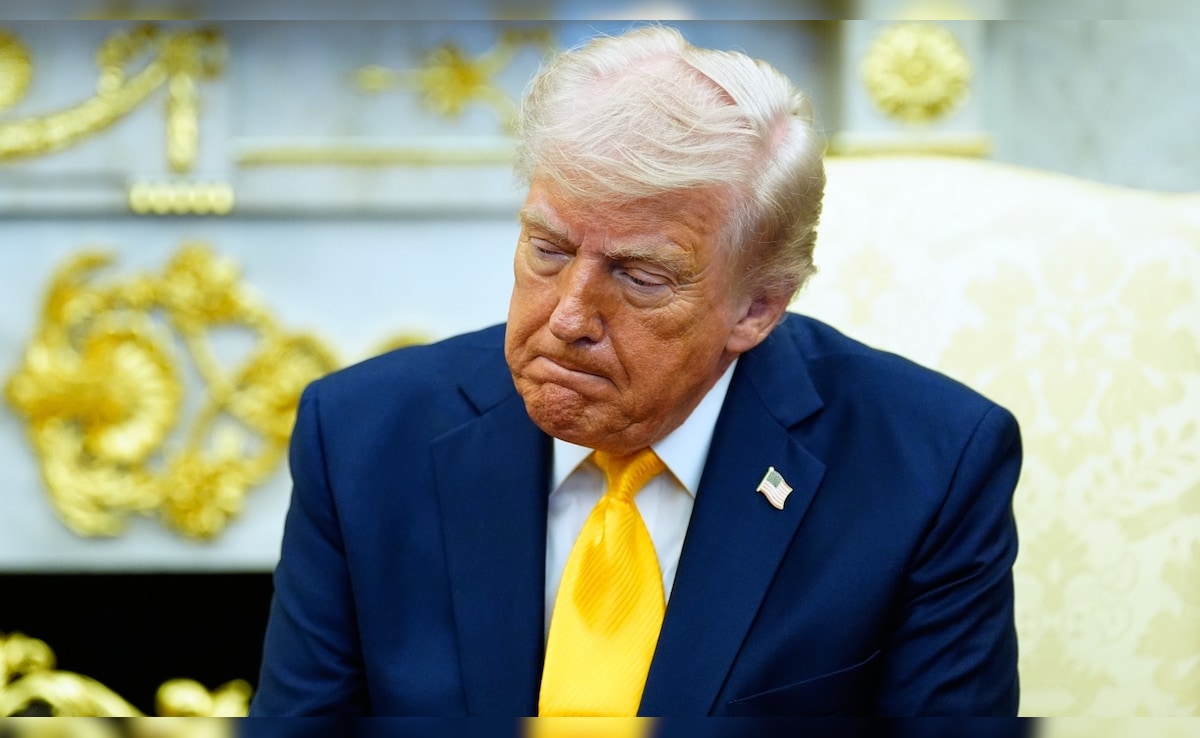
The intersection of high-level diplomacy and domestic retail energy pricing creates a high-stakes volatility trap for the United Kingdom. When Prime Minister Keir Starmer clarifies his communications with Donald Trump regarding the latter’s impact on UK energy bills, he is navigating more than just a diplomatic faux pas. He is managing the structural tension between national energy security and the geopolitical alliances that dictate global supply chains. The core conflict rests on a singular reality: the UK’s energy price cap is increasingly sensitive to American trade policy and global fossil fuel extraction rates, making any friction between 10 Downing Street and the White House a direct threat to domestic economic stability.
The Transmission Mechanism of Diplomatic Friction to Retail Bills
To understand why a Prime Minister’s private conversations with a US President-elect matter to a household in Manchester, one must map the transmission mechanism from geopolitical rhetoric to the Office of Gas and Electricity Markets (Ofgem) price cap.
UK energy prices are not set in a vacuum. They are a byproduct of the marginal cost of natural gas on the global market. Because the UK transitioned away from coal and has seen declining North Sea production, it relies heavily on Liquefied Natural Gas (LNG) imports. The United States is currently the world’s largest exporter of LNG. Therefore, any policy shifts or diplomatic breakdowns that influence US export volumes or introduce tariffs create an immediate pricing floor for UK wholesalers.
The Elasticity of Geopolitical Risk
Market speculators price in "diplomatic risk" months before a policy is enacted. If the UK government is perceived to be at odds with an incoming US administration that favors "America First" energy dominance, the risk premium on long-term LNG contracts rises.
- Supply Side Volatility: Trump’s historical preference for bilateral trade dominance suggests that energy exports could be used as a lever for broader trade concessions.
- The Tariff Multiplier: If the US imposes broad 10% to 20% tariffs on imports, the resulting inflationary pressure on the global dollar-denominated energy market forces the Bank of England to maintain higher interest rates, which indirectly increases the capital expenditure (CAPEX) for UK renewable projects.
- The Infrastructure Lag: UK energy resilience depends on diversifying away from gas, yet the transition requires global components often caught in the crosshairs of US-China trade wars—wars that the Trump administration is expected to escalate.
The Three Pillars of UK Energy Vulnerability
The Prime Minister’s refusal to confirm "fed up" rhetoric highlights a defensive posture designed to mitigate three specific structural vulnerabilities in the British economy.
1. The Marginal Price Dependency
The UK electricity market operates on a "marginal pricing" system. This means the most expensive fuel source needed to meet demand—usually natural gas—sets the price for all electricity generated, including wind and solar. Because the UK is a price-taker in the global gas market, domestic bills are tethered to the volatility of US energy policy. Starmer’s diplomatic caution is a recognition that the UK cannot afford to be on the wrong side of an energy superpower when its own internal pricing mechanism is so exposed.
2. The Transatlantic Investment Gap
The UK’s "Clean Energy Superpower" ambition requires hundreds of billions in private investment. A significant portion of this capital flows from US-based private equity and institutional investors. Diplomatic cooling translates to a higher "Country Risk Premium." If investors perceive a hostile or unstable relationship between the UK and its primary security and economic partner, the cost of capital for North Sea wind farms or nuclear projects increases. This cost is ultimately passed down to the consumer through higher strike prices in Contracts for Difference (CfD) auctions.
3. Regulatory Divergence and Carbon Leakage
The UK’s commitment to Net Zero and its Carbon Border Adjustment Mechanism (CBAM) stands in stark contrast to the deregulatory agenda likely to define a second Trump term. This divergence creates a "Competitive Wedge." If the US lowers its domestic energy costs through massive deregulation and the abandonment of climate targets, UK industry becomes less competitive. Starmer’s challenge is to protect UK climate goals without triggering a flight of industrial capital to a lower-cost, lower-regulation US market.
Quantifying the Trump Effect on UK Inflation
While the Prime Minister avoids direct attribution, the "Trump Effect" on UK energy can be categorized through specific economic vectors.
- Currency Devaluation: The British Pound (GBP) traditionally weakens against the US Dollar (USD) during periods of global trade uncertainty or when US yields rise due to deficit-funded tax cuts. Since oil and gas are priced in dollars, a 5% drop in the GBP/USD exchange rate results in a near-linear increase in the landed cost of energy in the UK.
- The SPR Lever: The US Strategic Petroleum Reserve (SPR) is a global price-shaping tool. An administration that uses the SPR aggressively to lower domestic US prices while restricting exports to "unfriendly" or "unaligned" nations would create a bifurcated energy market, leaving the UK in a high-cost "European zone."
- Deregulation Paradox: Increased US drilling ("Drill, Baby, Drill") theoretically lowers global prices by increasing supply. However, if this is coupled with protectionist export policies, the global supply remains tight while the US enjoys a domestic surplus. The UK would see no benefit from increased US production if that production is not accessible on equitable terms.
The Logical Framework of Diplomatic Avoidance
Starmer’s communication strategy follows a "Minimized Surface Area" logic. By declining to confirm past criticisms of Trump’s energy impact, the Prime Minister is attempting to decouple domestic political theater from state-level economic necessity.
The strategy operates on the following axioms:
- Axiom A: The UK cannot stabilize energy prices through domestic production alone in the short to medium term.
- Axiom B: The US is the primary guarantor of the global energy liquidity upon which the UK depends.
- Conclusion: Any diplomatic friction that risks the "Special Relationship" carries an inherent "Energy Tax" that the UK government is currently unwilling to pay.
This explains the shift from the populist rhetoric of the campaign trail to the clinical pragmatism of governance. The "fed up" sentiment, while popular with a domestic base struggling with the cost of living, provides zero utility in a negotiation with a transactional US administration.
Strategic Constraints of the Ofgem Price Cap
The Ofgem price cap is often misunderstood as a subsidy; it is actually a lagging indicator of wholesale market performance. It protects consumers from sudden spikes but ensures that suppliers can remain solvent by eventually passing through high wholesale costs.
The bottleneck in the UK's strategy is the "Adjustment Period." If a US policy shift triggers a gas price surge in November, the UK price cap may not reflect this until January or April. This creates a period of extreme fiscal risk for the Treasury, which may feel pressured to step in with subsidies—further inflating the national debt and putting downward pressure on the Pound.
Starmer's primary objective is to avoid "Systemic Shocks" that force the Treasury into reactive spending. Maintaining a functional, if not warm, relationship with the Trump administration is a prerequisite for this stability.
Divergent Energy Archetypes: US vs UK
The friction also stems from two fundamentally different views of energy as a geopolitical tool.
| Feature | US Strategy (Trump Paradigm) | UK Strategy (Starmer Paradigm) |
|---|---|---|
| Primary Goal | Energy Dominance / Low Domestic Cost | Energy Security / Net Zero Transition |
| Primary Fuel | Hydrocarbons (Fracking/LNG) | Renewables / Nuclear / Transitional Gas |
| Market Philosophy | Unregulated Expansion | Regulated Decarbonization |
| Trade View | Energy as a Bilateral Lever | Energy as a Global Commodity |
This misalignment means that every UK diplomatic move must be screened for its impact on "Energy Interoperability." If the UK moves too far toward the EU’s regulatory orbit (e.g., aligning with EU carbon taxes), it risks alienating a US administration that views such regulations as trade barriers.
The Bottleneck of North Sea Transition
A critical missed connection in the current political discourse is the role of the North Sea. The Labour government’s decision to increase the Energy Profits Levy (windfall tax) and stop new drilling licenses is predicated on the idea that the UK can leapfrog the gas dependency era. However, this creates a "Transition Gap" where the UK is more dependent on US LNG in the interim.
If North Sea production declines faster than renewable storage capacity (batteries and hydrogen) scales, the UK’s "Energy Import Ratio" increases. This makes the Prime Minister’s relationship with the US President not just a matter of foreign policy, but the primary variable in the UK’s inflation equation.
The "fed up" comment—whether said or not—is an emotional response to a structural reality: the UK has outsourced its energy price stability to the geopolitical whims of its allies.
Strategic Recommendation for Sovereign Energy Resilience
To move beyond the cycle of diplomatic damage control, the UK must execute a three-stage decoupling from global gas volatility.
First, the government must move electricity pricing away from the marginal cost of gas. Implementing the Review of Electricity Market Arrangements (REMA) to allow "Locational Pricing" would decouple the price of wind and solar from the global price of LNG. This would effectively insulate domestic bills from US policy shifts.
Second, the UK must formalize long-term "Security of Supply" agreements with the US that are insulated from political turnover. These "Ironclad Energy Contracts" should be treated with the same diplomatic weight as the AUKUS defense pact, ensuring that energy flows remain a constant regardless of the rhetoric coming from the White House or Downing Street.
Finally, the Treasury must reclassify energy storage infrastructure as a national security priority, providing the same level of capital guarantees as nuclear power. Reducing the "Import Volume" is the only way to reduce the "Diplomatic Risk Premium." Until these structural changes are made, the British public's energy bills will remain a hostage to the interpersonal chemistry between a Prime Minister and a President. The clinical reality is that Starmer cannot afford to be "fed up" until he is energy independent.