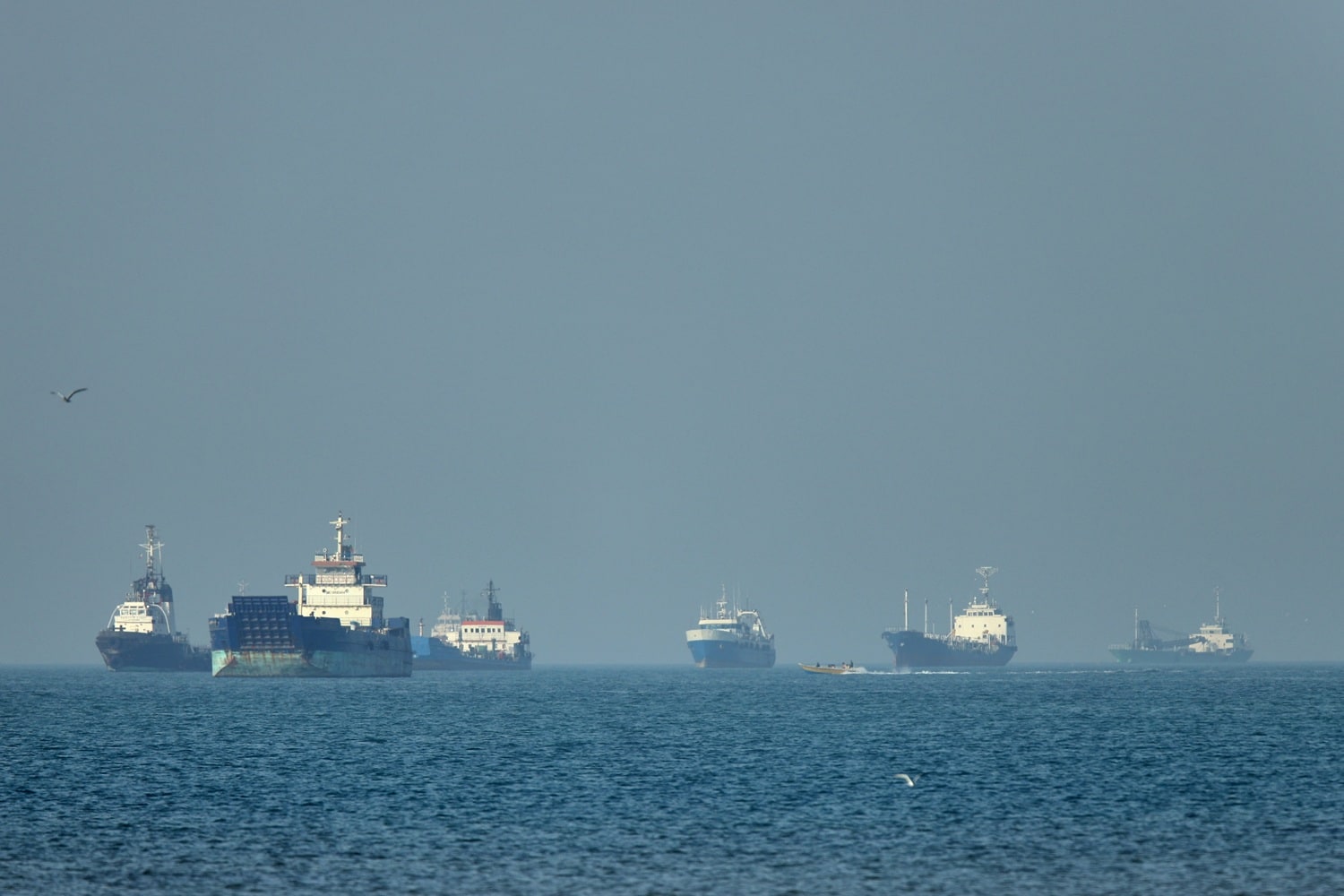
The proposed 30-day timeline to reopen the Strait of Hormuz following a bilateral agreement between the United States and Iran is constrained by operational variables, mine-clearance mechanics, and structural distrust. While capital markets responded with a 5% drop in global Brent crude prices and a historic surge in the Nikkei 225 past the 65,000 threshold, a clinical assessment reveals that a diplomatic handshake cannot instantly clear an international chokepoint. The framework of the emerging deal relies on a 60-day extension of the April ceasefire to facilitate broader nuclear negotiations. However, the physical execution of the de-escalation plan introduces significant sequencing bottlenecks that standard market sentiment metrics systematically overlook.
To understand the viability of this diplomatic off-ramp, the agreement must be broken down into its three component pillars: operational remediation, regulatory normalization, and economic concessions. Meanwhile, you can read related stories here: The Price of Peace in La Paz.
The Operational Remediation Phase: Mine Clearance Mechanics
The primary physical constraint to restoring free navigation through the strait is the presence of naval mines. The diplomatic framework allocates a strict 30-day window for Iran to clear these hazards. This period cannot be compressed due to the specific technical requirements of mine countermeasures (MCM).
The calculation of mine-clearance velocity depends on three distinct operational variables: To understand the complete picture, check out the recent article by BBC News.
- Hazard Density and Bathymetry: The Strait of Hormuz features narrow shipping lanes (two miles wide in each direction) flanked by shallow waters, which complicate acoustic and magnetic signatures.
- Asset Deployment Capacity: The speed of operations is dictated by the number of active Iranian MCM vessels and airborne sweeping platforms dedicated to the sector.
- Verification Protocols: Free navigation cannot resume based on unilateral declarations; international maritime insurers require verified clearance patterns to underwrite transit risk.
This creates an immediate operational bottleneck. If the initial mining utilized sophisticated influence mines (reactive to acoustic, magnetic, or pressure signatures) rather than basic contact mines, the 30-day window is mathematically tight. A single unexploded ordnance remains a catastrophic risk for Very Large Crude Carriers (VLCCs). Consequently, the 30-day timeline functions less as a guaranteed operational reality and more as a political forcing function designed to establish a baseline of compliance before secondary negotiation phases begin.
The Regulatory and Fiscal Transition: Eradicating Transit Fees
The second pillar requires Tehran to cease the collection of arbitrary transit fees imposed during the hostilities. The structural mechanism of these fees served a dual purpose: generating emergency state revenue and establishing a de facto regulatory tariff on international energy supply lines.
The unwinding of this mechanism introduces a direct trade-off between immediate fiscal relief and long-term legal precedent. Under the United Nations Convention on the Law of the Sea (UNCLOS), the Strait of Hormuz is subject to the regime of transit passage, which prohibits coastal states from suspending or taxing innocent transit. By explicitly agreeing to stop collecting transit fees, Iran implicitly acknowledges a return to pre-conflict legal norms.
The transition will not occur seamlessly. Shipping consortia face a verification lag. Fleet operators will not re-route vessels from alternative, longer paths (such as the Cape of Good Hope) until the elimination of fees is codified in maritime notices and verified by early-mover transits. This introduces an administrative delay that will extend the shipping industry's risk-premium pricing well into the 60-day ceasefire window.
The Sequencing Bottleneck: Sanctions Relief vs. Nuclear Compliance
The broader diplomatic framework links the reopening of the chokepoint directly to the resumption of talks regarding Iran’s nuclear program, specifically its highly enriched uranium stockpile. The United States has signaled a willingness to execute a phased release of frozen Iranian assets, but this creates a fundamental sequencing problem.
The structural tension can be modeled as a sequential game with asymmetric risk:
[Phase 1: Bilateral Agreement Signed]
                 │
                 ▼
[Phase 2: 30-Day Mine Clearance & Continued US Blockade]
                 │
                 ▼
[Phase 3: Reopening of Hormuz / Verification Lag]
                 │
                 ▼
[Phase 4: 60-Day Ceasefire Window / Nuclear Negotiations]
                 │
                 ▼
[Phase 5: Phased Sanctions Relief / Asset Release]
The United States maintains that its naval blockade of Iranian shipping will remain in full force and effect until an agreement is formally certified and signed. Washington’s leverage depends on keeping sanctions active until compliance is verified. Conversely, Tehran’s leverage peaks while it maintains tactical control over the strait's operational status.
The second limitation of this framework is the compressed timeline. Conducting comprehensive negotiations on a highly enriched uranium stockpile within a 60-day pause in hostilities is historically unprecedented. Nuclear verification regimes administered by the International Atomic Energy Agency (IAEA) typically require months to establish baseline verifications. If the nuclear talks stall within the 60-day window, the mechanism for snapping back sanctions—or worse, reinstating the maritime blockade—threatens to instantly reverse any operational progress made during the initial 30-day clearance phase.
Market Mispricing and the Reality of Maritime Insurance
Global equity and commodity markets have priced in this development with optimistic certainty, yet maritime insurance markets remain highly skeptical. Lloyd’s Joint War Committee currently maintains the Persian Gulf and Gulf of Oman as high-risk areas.
The reduction in Brent crude prices below $100 per barrel reflects speculative futures trading rather than immediate changes in spot physical supply. Underwriters calculate hull and machinery war risk premiums based on actuarial probability, not diplomatic intent. Even if Iran ceases hostilities and begins mine clearance, insurance premiums will remain elevated until three conditions are met:
- Independent verification of mine clearance by neutral third-party maritime authorities.
- A minimum of 14 days of incident-free commercial transits by tier-one shipping companies.
- Formal bilateral de-escalation protocols between the US Navy's Fifth Fleet and the Islamic Revolutionary Guard Corps Navy (IRGCN) to prevent localized miscalculations.
Until these conditions materialize, the economic cost of transiting the strait will not return to pre-conflict baselines. The reduction in transit fees will initially be offset by these sustained insurance premiums, meaning global supply chain relief will lag behind the political timeline by several weeks.
The Strategic Path Forward
The path to a durable cessation of hostilities requires a hard decoupling of the immediate operational reopening from the long-term nuclear dispute. Attempting to resolve both within a overlapping 60-day window creates an unstable equilibrium where a failure in complex nuclear technicalities triggers an immediate return to a maritime chokepoint crisis.
The optimal operational playbook requires the establishment of a Joint Maritime Safety Commission involving regional stakeholders—such as Oman and Saudi Arabia—alongside international maritime bodies. This commission must oversee the 30-day mine clearance phase, providing the objective data needed to lower global insurance premiums independently of Washington and Tehran’s political posture.
The definitive forecast for this arrangement points to a volatile implementation phase. While the 30-day window will likely see a reduction in kinetic exchanges, the structural bottlenecks of mine verification and the phased nature of US sanctions relief mean that true, uninhibited commercial traffic volume will not normalize until late in the second month of the extended ceasefire. Strategic operators must maintain alternative logistics hedges until the 60-day nuclear negotiation window produces a certified, signed treaty.