The decision to relocate Iran’s FIFA World Cup training base from Tucson, Arizona, to Tijuana, Mexico, exposes a structural friction point in the execution of modern, multi-host mega-sporting events. While FIFA’s institutional objective relies on the fiction of geopolitical neutrality, the operational reality of the 2026 World Cup is inextricably bound to state-level security frameworks and foreign policy. The refusal of the United States to permit the Iranian national team to stay overnight on American soil—forcing a cross-border commuting model for Group G matches—demonstrates how national security priorities can override the hosting agreements of international sports federations.
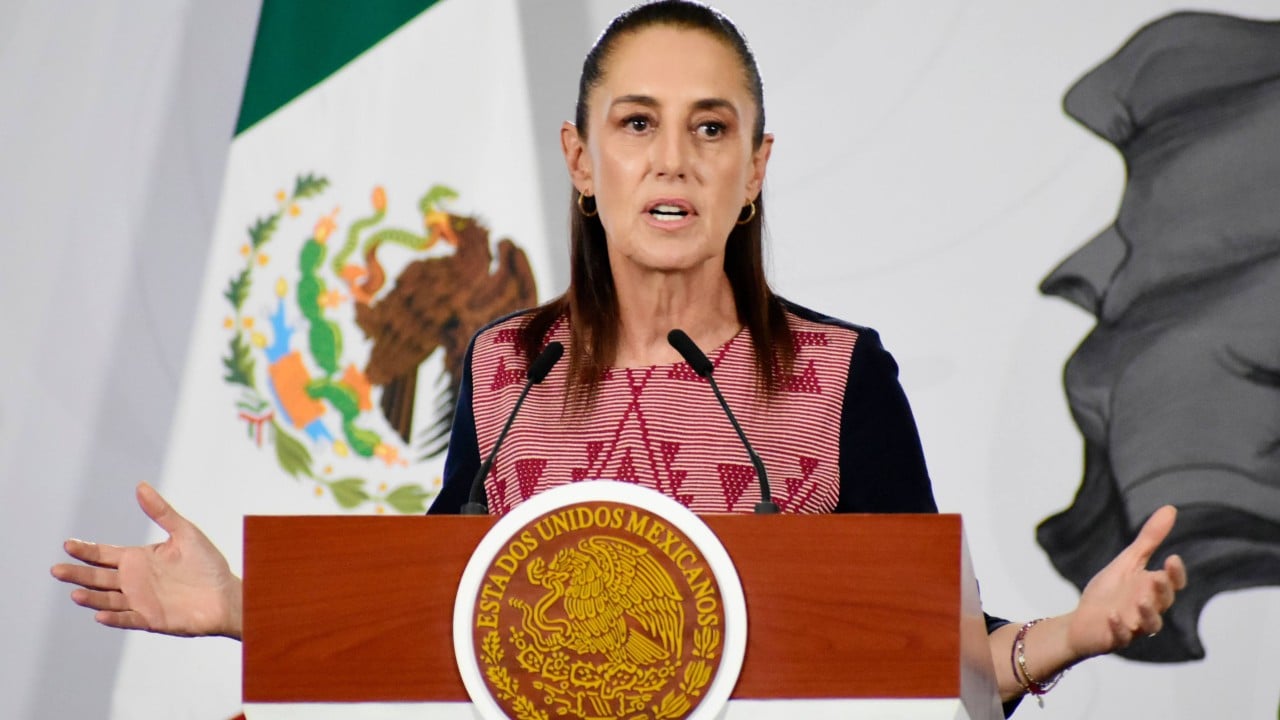
Mexican President Claudia Sheinbaum’s declaration that her government sees "no issue" with hosting the Iranian squad is not merely a gesture of diplomatic hospitality. It is a calculated, low-risk strategic positioning that capitalizes on a logistical bottleneck created by the United States. By analyzing the variables driving this relocation, we can isolate the core operational, legal, and political mechanisms governing this cross-border sporting dynamic.
The Operational Mechanics of Cross-Border Commuting
The relocation creates a unique operational friction function for the Iranian national team. In a standard tournament format, teams maximize performance by minimizing transit times and optimizing biological recovery cycles within a stable localized ecosystem (the Base Camp). The 2026 arrangement introduces an unprecedented variable: international border-crossing mechanics embedded into a competitive match schedule.
[Tijuana Base Camp]
       │
       ▼ (International Border Crossing / Customs Bottleneck)
[U.S. Transit Pipeline]
       │
       ├─► Los Angeles (Inglewood) ──► Match 1 (vs. New Zealand, June 15) & Match 2 (vs. Belgium, June 21)
       └─► Seattle ──────────────────► Match 3 (vs. Egypt, June 26)
The Iranian federation's strategy relies on establishing its base in Tijuana, Baja California, directly adjacent to San Diego, California. The squad must execute three distinct travel phases for its group stage matches:
- Phase 1 (June 15): Transit from Tijuana to Inglewood, California, for the opening match against New Zealand.
- Phase 2 (June 21): Transit from Tijuana to Inglewood, California, for the match against Belgium.
- Phase 3 (June 26): Long-range transit from Tijuana to Seattle, Washington, for the final group match against Egypt.
This structural arrangement introduces a clear athletic disadvantage. While their Group G opponents operate within a closed domestic logistical loop, the Iranian team faces compounding physical depreciation from security screenings, customs clearances, and international air travel via Iran Air immediately prior to elite competition.
Legal and Visa Bottlenecks Under Counter-Terrorism Frameworks
The core driver of the U.S. refusal to host the Iranian team overnight stems from statutory conflicts within American immigration and national security law. The United States and Canada designate the Islamic Revolutionary Guard Corps (IRGC) as a foreign terrorist organization. This designation triggers strict admissibility bars under domestic immigration frameworks.
Because athletic delegations from Iran frequently include technical staff, security personnel, and executive board members with mandatory past or present links to the IRGC—such as Iranian Football Federation President Mehdi Taj—the U.S. executive branch faced a legal impasse. Granting extended residency visas to an entire delegation containing individuals tied to a designated entity presents severe domestic statutory hurdles.
By contrast, the U.S. State Department’s compromise allows for specialized, limited-entry visas that permit entry solely for the duration of the matches under strict federal surveillance, expiring immediately upon the conclusion of the 45-minute post-match window. This legal decoupling allows the United States to fulfill its baseline commitment to FIFA to allow qualified teams to play, while strictly enforcing its domestic counter-terrorism mandates by denying overnight residency.
The Asymmetrical Incentives of the Mexican State
President Sheinbaum's swift acceptance of the FIFA request to house the Iranian team in Tijuana represents an astute deployment of asymmetrical diplomacy. For Mexico, the calculation involves three primary benefits weighed against minimal sovereign risk.
Diplomatic Non-Intervention as a Sovereign Shield
Mexico’s foreign policy is historically anchored in the Estrada Doctrine, which prioritizes national sovereignty and non-intervention in the internal affairs of foreign states. By accepting Iran, Mexico reinforces its identity as an independent diplomatic actor capable of resolving global logistical crises without violating its core tenets.
Economic and Infrastructure Utilization
The selection of Tijuana directs international media attention, security infrastructure investment, and support-staff spending into a major Mexican border economy. It converts a diplomatic vacuum left by the U.S. into immediate economic activity within the state of Baja California.
Leverage with FIFA
By acting as the operational safety valve for the tournament, Mexico gains substantial institutional credit within FIFA. This positions the Mexican organizing committee favorably for future tournament bidding cycles, demonstrating that Mexico can manage high-security risks that the U.S. infrastructure cannot accommodate without political fallout.
Risk Allocation and Security Protocols in Tijuana
The execution of the Tijuana base camp strategy shifts the primary physical security burden from U.S. federal agencies to the Mexican military and federal forces. Hosting a state currently engaged in an active, undeclared conflict with U.S. and Israeli forces requires a highly dense, multi-layered security apparatus.
The security protocol will logically follow a tri-centric isolation model to mitigate potential intelligence operations or kinetic threats:
- The Perimeter Cordons: The Mexican Secretariat of National Defense (SEDENA) and the National Guard must establish a hardened physical perimeter around the team's training facility and hotel, transforming the zone into a temporary diplomatic enclave.
- The Transit Pipeline: Protecting the team during the movement from the Tijuana base to the General Abelardo L. Rodríguez International Airport, or via ground transport through the San Ysidro Port of Entry, requires synchronized bilateral coordination between Mexican federal forces and U.S. Customs and Border Protection (CBP).
- The Ideological Flashpoints: FIFA's proactive ban on the pre-revolutionary Iranian flag at matches signals an acute awareness of diaspora protests. The Mexican state will be forced to police external political friction points around the Tijuana camp to prevent clashes between anti-government expatriates and state security details.
Strategic Forecast: The Viability of the Cross-Border Model
The cross-border hosting model forced upon Iran and Mexico establishes a dangerous precedent for future multi-national sporting events. As geopolitical fragmentation accelerates, the assumption that co-hosting states share identical threat matrices or diplomatic alignments is fundamentally broken.
If the Iranian national team advances past the group stage, the logistical and legal framework will experience immediate strain. Knockout round venues are determined by group standings, meaning the team could be routed to eastern U.S. hubs, exponentially increasing the transit-induced performance degradation.
The ultimate success of this operational pivot depends entirely on whether the United States maintaining a fragile ceasefire can prevent domestic political pushback from disrupting the strict transit corridors established at the border. Mexico has successfully demonstrated tactical agility, but the underlying systemic risk remains: when international sport collides with active state conflict, the physical and legal borders of the nation-state will always dictate the terms of play.