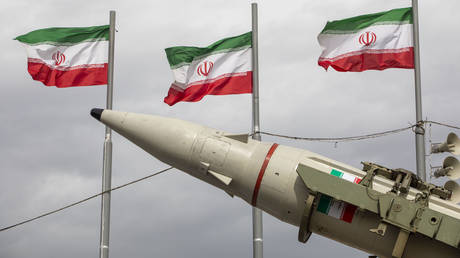
The mainstream media is panicking over a standard Tuesday.
With predictable clockwork, the headlines are screaming that the latest exchange of strikes between the US and Iran has "broken" the recently brokered ceasefire. Analysts are television studios, wringing their hands over the "unprecedented escalation" and the "collapse of diplomatic progress."
They are fundamentally misreading the board.
The lazy consensus asserts that a ceasefire is a fragile state of peace that fails the moment kinetic action occurs. This view is naive. In modern asymmetric warfare, kinetic exchanges are not the failure of a ceasefire. They are the language in which the ceasefire is negotiated.
I have spent years tracking Middle Eastern defense procurement and proxy funding networks. If there is one thing the data shows, it is that paper agreements never rewrite structural regional anxieties. The US and Iran did not shatter a peace treaty this week. They used controlled violence to recalibrate their boundaries within it.
The Myth of the Absolute Ceasefire
Western commentators love to treat ceasefires like light switches—either the lights are on or they are off. But statecraft in the Persian Gulf operates on a dimmer.
When the US strikes an Iranian-backed militia facility, or when an Iranian loitering munition targets a logistics hub, the untrained eye sees a return to open hostilities. The reality? Both sides are establishing what defense intellectuals call "the rules of the road."
A ceasefire is not an agreement to stop fighting. It is an agreement on the allowable parameters of the fight.
Consider the mechanics of the recent exchange. The targets chosen by both Washington and Tehran were highly specific, low-value logistics nodes, intentionally devoid of high-ranking personnel. If either nation genuinely intended to scrap the diplomatic framework, the target selection would have looked entirely different. We would see strikes on command-and-control infrastructure or major shipping lanes.
Instead, we got a choreographed theater of violence.
A Lesson from Cold War Friction: During the height of the Cold War, the US and the Soviet Union routinely intercepted each other's bombers and expelled diplomats. Nobody claimed the basic framework of deterrence had collapsed; they understood it was the friction required to maintain equilibrium.
Dismantling the "Accidental Escalation" Panic
Go to any mainstream news site right now and you will find a version of this question: Will this accidental escalation lead to a regional war?
The question itself is flawed. It assumes that these strikes are accidental or emotional reactions. They are not. They are calculated, bureaucratic decisions.
- The US Objective: The Pentagon needs to signal to domestic audiences and regional allies (like Israel and the Gulf states) that diplomacy has not made Washington soft. The strike is a branding exercise.
- The Iranian Objective: Tehran needs to prove to its axis of proxies that it remains the regional hegemon, undeterred by American military presence.
To believe that a localized strike will automatically spiral into total war ignores the massive economic and political disincentives for both regimes. Iran’s economy is heavily constrained by inflation and sanctions; it cannot afford a direct conventional conflict. The US administration is hyper-focused on domestic economic pressures and avoiding protracted foreign entanglements.
The escalation is tightly capped because both sides want it capped. The violence is a pressure valve, not a fuse.
The Downside of My Argument (An Honest Admission)
Being a contrarian does not mean ignoring risk. While the mainstream media invents a fake crisis, they miss the actual, systemic danger of this status quo.
The danger is not a sudden shift to total war. The danger is strategic normalization.
When we accept that "minor" missile strikes are just part of a ceasefire, we normalize a permanent state of low-level conflict. Shipping insurance rates stay elevated. Regional integration stalls. Local populations remain trapped in a cycle of perpetual anxiety.
By treating these strikes as a regular cost of doing business, Washington and Tehran are locking the region into a grey-zone trap. It is stable, yes, but it is a stability built on violence.
Stop Looking at the Missiles; Look at the Budgets
If you want to know where a conflict is actually going, ignore the press releases from the Pentagon or the Iranian Revolutionary Guard Corps. Follow the money.
A real escalation requires massive logistics shifts. You look for ammunition prepositioning, fuel supply chain mobilization, and sudden shifts in central bank reserves. Right now, neither country is moving the capital required to wage a real war.
Iran is still actively negotiating backdoor banking channels. The US is still maintaining its standard rotational deployment schedules. The hardware being expended in these headline-grabbing strikes is rounding-error material—excess inventory meant to be used or scrapped.
The Real Question We Should Be Asking
Instead of asking whether the ceasefire is dead, the public should ask: Why do our leaders require a theater of violence to maintain diplomatic cover?
The answer is political cowardice. Neither side can afford to look like they blinked. So, they trade a few millions dollars' worth of ordnance, claim victory to their respective bases, and go right back to the negotiating table.
Stop falling for the breathless breaking news alerts. The ceasefire is not broken. It is working exactly as intended: as a license to fight without starting a war.
The rockets fired this week were not the beginning of a new war. They were the punctuation marks on the current peace.