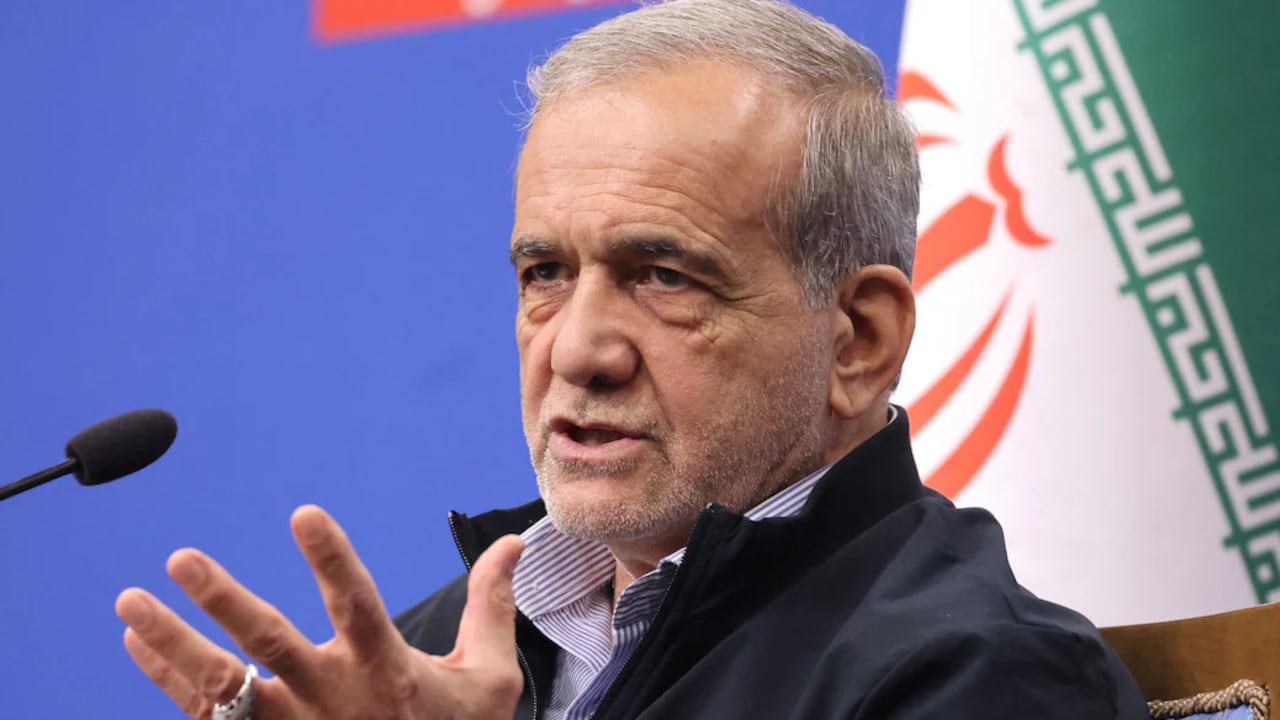
International sports tournaments function as closed regulatory ecosystems where the host nation’s domestic power inevitably collides with the theoretical neutrality of global governing bodies. The friction escalating at the 2026 FIFA World Cup—marked by Iranian President Masoud Pezeshkian accusing the United States government of manipulating tournament outcomes through "cheating" and "bending rules"—is not merely a rhetorical dispute. It represents a sophisticated case study in regulatory arbitrage. When a host country utilizes sovereign leverage to influence the administrative and disciplinary frameworks of an international sports federation, it exposes a systemic structural vulnerability: international sports organizations operate with systems of rules, but entirely lack the independent structural insulation required to uphold the objective rule of law.
To analyze this breakdown systematically, the controversies must be stripped of political grandstanding and categorized into three distinct operational mechanisms: executive intervention in disciplinary codes, asymmetrical enforcement of stadium code of conduct protocols, and the use of structural vetoes by a host nation.
Executive Intervention and the Suspension of Disciplinary Norms
The primary structural failure in tournament integrity occurred via direct political intervention within FIFA’s judicial framework, specifically concerning the player eligibility of United States forward Folarin Balogun. Under standard operational protocols outlined in the FIFA Disciplinary Code, a direct red card incurs an automatic, non-appealable one-match suspension for the subsequent fixture. This mechanism is designed to prevent tactical delays and maintain uniform competitive equity across all participating member associations.
The variance from this baseline establishes the mechanism of regulatory distortion:
- The Catalyst: Following Balogun's dismissal in the Round of 32 fixture against Bosnia and Herzegovina, executive communication bypassed traditional sporting appeals channels. The host nation's executive branch initiated a direct request to FIFA leadership to review the judicial outcome.
- The Mechanism: FIFA invoked Article 27 of its Disciplinary Code to suspend the execution of the automatic one-match ban, rendering the player eligible for the critical Round of 16 match against Belgium.
- The Structural Imbalance: While FIFA’s disciplinary committee defended its autonomy by citing technical provisions for conditional suspensions, the timing and unilateral nature of the intervention created a distinct asymmetry. Member nations lacking comparable geopolitical or commercial leverage do not possess the diplomatic channels necessary to trigger accelerated extraordinary reviews.
This intervention establishes a dangerous precedent for international sporting governance. When the formal disciplinary code is altered through external political pressure, the competitive integrity of the tournament becomes variable rather than fixed. The European football governing body, UEFA, underscored this operational breakdown by designating the decision as unprecedented and a direct threat to the systemic integrity of the game.
Asymmetrical Enforcement of Stadium Codes of Conduct
The second vector of friction lies in the codification and enforcement of spectator policing, specifically regarding Article 3.1.243 of the FIFA Stadium Code of Conduct. The regulation explicitly prohibits any materials—including banners, flags, apparel, and related paraphernalia—that are political, offensive, or discriminatory. However, the operational execution of this rule during the 2026 tournament reveals an enforcement asymmetry driven by the host nation's legal and cultural infrastructure.
[FIFA Stadium Code of Conduct: Article 3.1.243]
       │
       ├─► Pre-Revolutionary Iranian Flag (Lion & Sun) ──► STRICT BAN ENFORCED
       │   (Upheld via US Domestic Court & Private Property Logic)
       │
       └─► Nation-State Approved Flags (e.g., Palestine) ──► PERMITTED
           (Classified under Member Association Protocols)
The dichotomy between banned and permitted political expression manifests in two distinct policies:
- The Exclusion of Historical Identifiers: FIFA issued a strict ban on the pre-revolutionary Iranian flag (featuring the lion and sun emblem), identifying it as an unapproved political symbol associated with opposition to Tehran's current government. When challenged in Los Angeles County Superior Court by civil liberties groups claiming free speech protections, the host nation's judiciary ruled in favor of the restriction. The legal rationale treated the stadium operators and FIFA as private actors managing private property, thereby nullifying constitutional protections for public assembly.
- The Inclusion of Geopolitical Symbols: Simultaneously, official guidelines permitted the display of other highly charged geopolitical symbols, such as the Palestinian flag. The institutional justification hinges on technical classification: because Palestine is a formally recognized member association within the FIFA framework, its flag is categorized as an official sporting identifier rather than a political statement.
This creates a distinct operational bottleneck. For a diaspora population within a host country, the stadium becomes a contested space where domestic judicial structures are leveraged to enforce international sporting edict, while corporate-bureaucratic classifications dictate which geopolitical narratives are permissible inside the venue.
Officiating Variances and the Exploitation of Anti-Racism Protocols
The structural stress on the tournament's operational frameworks is further compounded by on-field refereeing variances, notably illustrated during Egypt’s Round of 16 elimination by Argentina. While refereeing errors are an inherent variable in sport, the systemic vulnerability emerges when teams attempt to leverage macro-level governance protocols to counteract perceived micro-level officiating bias.
During the critical phases of the match, officiating decisions directly impacted the competitive outcome, leading to volatile protests from the Egyptian technical staff. The structural breakdown culminated in the utilization of the anti-racism protocol gesture—the crossing of arms in an "X" shape—introduced by FIFA in 2024. This protocol was designed as a high-authority mechanism to allow players and officials to report objective on-field discrimination, carrying the ultimate sanction of match suspension or abandonment.
When this high-threshold protocol is deployed by a team during moments of acute tactical frustration or officiating disputes, it indicates a breakdown in institutional trust. Players and coaches are incentivized to weaponize existential disciplinary frameworks when they perceive that standard sporting remedies—such as the Video Assistant Referee (VAR) system—are being applied unevenly or lack sufficient transparent oversight.
The Financial and Operational Interdependence of Sports Bodies
To understand why international sports federations yield to the preferences and pressures of a powerful host nation, one must examine the cost function of hosting modern mega-events. A multi-city, expanded international tournament requires an unprecedented scale of infrastructural, logistical, and financial underwriting that only a major global economic power can provide.
This reliance creates a clear transactional imbalance:
- Revenue Maximization: The governing body relies on the host nation’s commercial ecosystem to generate record-breaking corporate sponsorships, broadcast rights valuations, and ticket sales receipts.
- Logistical Sovereignty: The host country retains absolute control over visa issuance, border security, security clearings for visiting delegations, and stadium operational mandates.
- The Autonomy Trade-off: To secure these commercial outcomes and guarantee operational continuity, the international federation must frequently accommodate the political preferences of the host government, sacrificing its theoretical stance of strict political neutrality.
Consequently, international sports federations operate not as sovereign global entities, but as corporate entities operating under a lease granted by the host nation. The host nation can alter the terms of this lease through subtle regulatory shifts, bureaucratic delays, or direct executive interventions.
Strategic Realignment for International Sporting Governance
For international sports governance to survive the current era of heightened geopolitical polarization without fracturing into fragmented regional sub-federations, governing bodies must structurally reform their legal and operational frameworks. The current model of asserting absolute neutrality while remaining financially and logistically dependent on superpower hosts has proven to be structurally unsustainable.
The following structural adjustments are required to mitigate host-nation regulatory capture:
- Insulate Disciplinary Mechanisms: Establish an absolute, legally binding firewall around the execution of on-field disciplinary actions. Executive or political requests for the suspension of standard automatic bans must be explicitly barred from consideration by the independent judicial bodies of the federation, with mandatory transparency logs published for every query received from government officials.
- Standardize Spectator Material Protocols: Replace subjective, politically contingent definitions of "political paraphernalia" with binary, objective criteria. If a governing body intends to restrict symbols to avoid localized civil unrest, the restrictions must apply uniformly to all non-participating national identifiers, rather than creating arbitrary exemptions based on formal member association status.
- Decouple Tournament Allocation from Geopolitical Monopolies: Mitigate the structural leverage of superpower hosts by distributing future expanded tournaments across more diverse, multi-national geographic cohorts. By reducing the reliance on a single dominant host nation's economic and infrastructure network, international federations can restore the balance of power, ensuring that sporting regulations are enforced universally rather than modified via external political intervention.
The systemic issues detailed in this analysis are further exemplified by the legal challenges mounting against international sports bodies. For a detailed breakdown of the ongoing courtroom battles over stadium speech codes, the report by The Independent on the FIFA World Cup Flag Lawsuit explains the specific legal friction points between California constitutional protections and FIFA's private property restrictions.
.png?width=1200&auto=webp&trim=0%2C0%2C0%2C0)