The Kinetic Threshold: Why Escalation Surpasses Conventional Utility
A full-scale military confrontation between the United States and Iran represents a systemic failure of deterrence that would redefine global energy security and maritime logistics. While political rhetoric often oscillates between hyperbole and dismissiveness, the underlying mechanics of such a conflict are governed by a brutal cost-benefit math. Vladimir Putin’s characterization of a potential US-Iran war as a "very difficult conflict" is a rare moment of understatement in modern diplomacy. To understand the gravity of this friction, one must look past the headlines and evaluate the three structural pillars that prevent a clean military resolution: geographic constraints, asymmetric capability gaps, and the verification of nuclear intent.
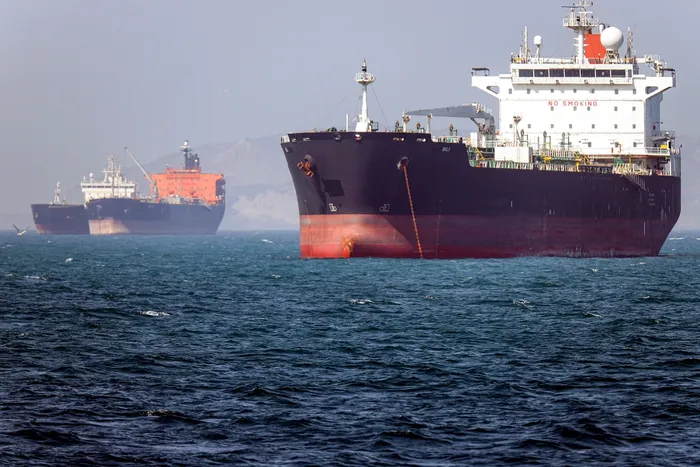
The fundamental bottleneck of this entire geopolitical theater is the Strait of Hormuz. This is not merely a shipping lane; it is a global economic artery where approximately 21% of the world’s petroleum liquids consumption passes daily. In a high-intensity conflict, the Iranian military does not need to defeat the US Navy in a blue-water engagement. They only need to achieve "sea denial" through the deployment of naval mines, fast-attack craft, and shore-based anti-ship cruise missiles (ASCMs).
The Asymmetric Cost Function
Traditional military analysis often fails when comparing the US and Iranian defense budgets because it ignores the Efficiency of Disruption. The United States operates on a high-cost, high-tech power projection model. Iran operates on a low-cost, high-attrition model designed to make the occupation or neutralization of its territory economically and politically unviable for any foreign power.
The Logic of Layered Defense
The Iranian defense architecture is built on three distinct layers of resistance:
- Strategic Depth and Proxy Integration: Iran utilizes a "forward defense" strategy. By supporting non-state actors across the Levant and the Arabian Peninsula, Tehran ensures that any strike on Iranian soil triggers a multi-front response. This decentralizes the conflict, forcing the United States and its allies to defend hundreds of high-value targets—ranging from embassies to oil refineries—simultaneously.
- The Missile Umbrella: Iran possesses the largest and most diverse missile arsenal in the Middle East. While US missile defense systems (such as the Patriot or THAAD) are technologically superior, they face a "saturation problem." The cost of a single interceptor missile significantly outweighs the cost of the incoming drone or short-range ballistic missile. In a sustained exchange, the defender’s magazine depth becomes the primary vulnerability.
- Topographical Resistance: Iran’s geography is a natural fortress. Unlike the flat plains of Iraq, Iran is dominated by the Zagros Mountains. This terrain negates many advantages of armored warfare and necessitates a reliance on air power, which, while effective at destroying infrastructure, is historically incapable of forcing a regime change or a total surrender without boots on the ground.
The Nuclear Verification Paradox
A central point of contention in the current discourse—highlighted by recent Kremlin statements—is the lack of "hard evidence" regarding Tehran’s active pursuit of a nuclear weapon. To analyze this accurately, we must distinguish between Nuclear Capability and Nuclear Intent.
Defining the Breakout Period
The "breakout period" is the time required to produce enough weapons-grade uranium ($U^{235}$ enriched to approximately 90%) for a single nuclear device. Since the erosion of the Joint Comprehensive Plan of Action (JCPOA), this window has shrunk from months to weeks. However, possessing fissile material is not the same as possessing a deliverable warhead.
The technical hurdles of "weaponization" include:
- Miniaturization: Designing a warhead small enough to fit atop a ballistic missile.
- Re-entry Shielding: Ensuring the device can withstand the thermal and mechanical stresses of re-entering the atmosphere.
- Triggering Mechanisms: Developing high-speed electronic firing sets to initiate the conventional explosives that compress the core.
Current intelligence assessments, including those referenced by Russian leadership, often hinge on the fact that while enrichment levels have spiked, there is no public evidence that Supreme Leader Ali Khamenei has issued a formal fatwa or directive to proceed with the final weaponization phase. Russia’s stance serves a dual purpose: it maintains a diplomatic bridge to Tehran while positioning Moscow as a "rational" mediator that demands empirical proof over preemptive assumptions.
The Bottleneck of Intelligence and Miscalculation
The primary risk in the US-Iran relationship is not a planned invasion, but a Feedback Loop of Miscalculation. In game theory, this is often modeled as the "Stag Hunt" or the "Chicken Game." Each side takes a provocative step (seizing a tanker, increasing enrichment, imposing sanctions) to signal resolve. If the other side interprets this signal as a prelude to an attack rather than a negotiating tactic, they may launch a preemptive strike.
The lack of a direct de-confliction line—similar to the Red Phone used during the Cold War—increases the "noise" in the system. When intelligence is filtered through multiple layers of ideological bias, the probability of an accidental kinetic event increases exponentially.
The Economic Radius of Contrition
The global financial system is currently ill-equipped for a major disruption in the Persian Gulf. While the United States has increased domestic production and moved toward energy independence, the global oil market is fungible. A spike in prices caused by a conflict in the Strait of Hormuz would result in a global inflationary shock.
The Domino Effect on Global Markets
- Insurance Premiums: Marine insurance rates for vessels operating in the Gulf would skyrocket, effectively halting commercial traffic even before any physical damage occurs.
- Supply Chain Contraction: The manufacturing hubs of East Asia (China, Japan, South Korea) are heavily dependent on Middle Eastern crude. A disruption here leads to a slowdown in global manufacturing, impacting everything from semiconductors to consumer electronics.
- The Russian Benefit: Ironically, a US-Iran conflict would likely drive oil prices to levels that would significantly benefit the Russian treasury, providing a windfall that offsets the costs of its own regional engagements.
Structural Realities of the Diplomatic Path
For a diplomatic resolution to hold, it must address the "Sunset Clauses" that plagued previous agreements. A durable framework requires a verification regime that is both intrusive and perceived as neutral.
The limitations of the current strategy are clear: "Maximum Pressure" via sanctions has crippled the Iranian economy but failed to change its strategic calculus. Conversely, unconditional engagement is viewed by regional US allies (specifically Israel and Saudi Arabia) as a security risk.
The second limitation is the Domestic Political Cycle. In both Washington and Tehran, hardline factions benefit from the existence of an external enemy. This creates a "political floor" below which neither side can descend without appearing weak to their internal constituencies.
The Strategic Playbook for the Next 24 Months
The most likely path forward is not a "Great Bargain" or a "Great War," but a continued state of Managed Friction. This involves:
- Precision Deterrence: Moving away from broad economic sanctions toward targeted interdiction of dual-use technologies and specific financial nodes.
- Regional Security Architecture: Encouraging local powers to handle maritime security, thereby reducing the "American footprint" that serves as a lightning rod for Iranian provocation.
- The Intelligence Threshold: Establishing clear, transparent "red lines" regarding enrichment levels. If Iran crosses the 90% threshold, it triggers an automatic, pre-negotiated international response that includes non-Western powers like China and Russia.
The strategic priority must remain the prevention of a "breakout" while avoiding the "breakdown" of global trade. Any actor—whether a superpower or a regional player—that ignores the asymmetric costs of this conflict is operating on an obsolete map of 20th-century warfare. The next phase of this standoff will be won or lost not in a desert dogfight, but in the precision of the verification protocols and the stability of the global energy markets. Ensure that the diplomatic machinery remains faster than the kinetic escalation cycle, or the cost of the "difficult conflict" will be paid by the global economy for a generation.