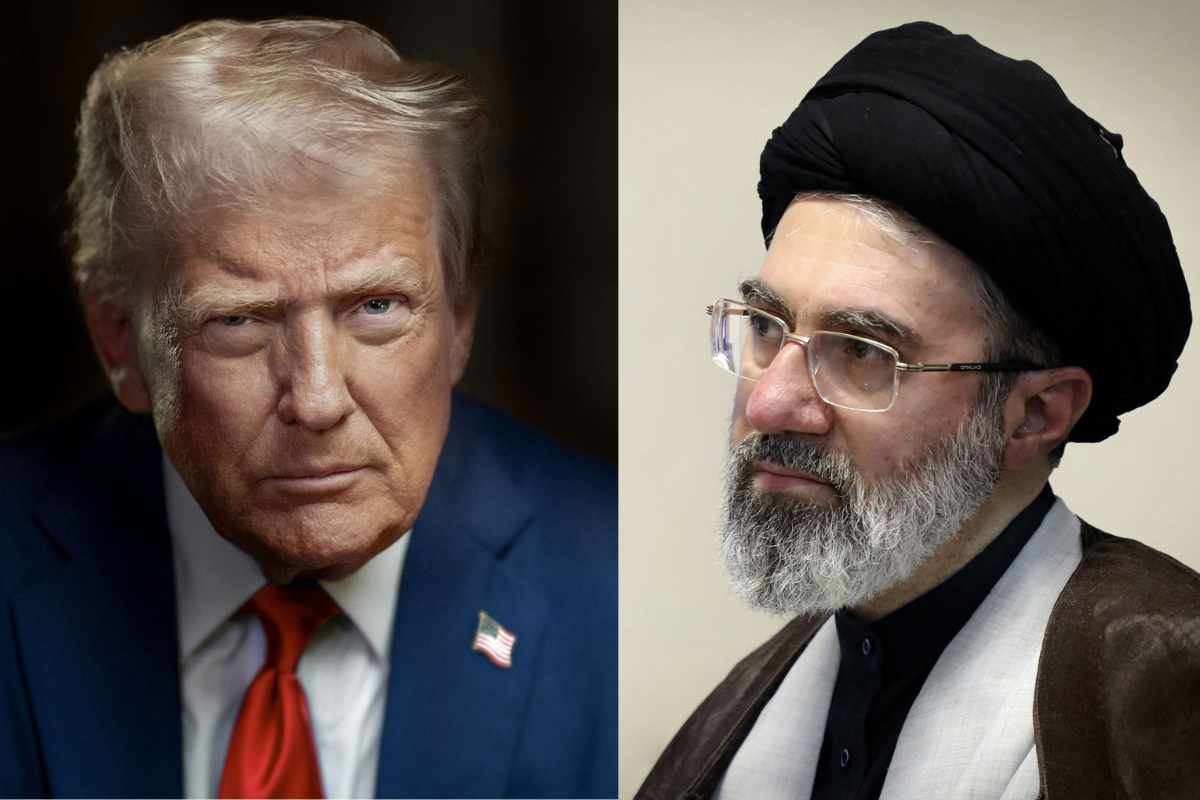
The Strait of Hormuz functions as the primary choke point in global energy logistics, rendering any unilateral shift in its legal or operational status an immediate threat to international trade stability. Recent assertions of absolute sovereignty over the strait by Iranian authorities, positioned deliberately ahead of international diplomatic negotiations, represent a calculated effort to alter the baseline of maritime law. This strategic maneuver attempts to trade tactical shipping vulnerabilities for structural diplomatic leverage. Understanding the mechanics of this assertion requires breaking down the geopolitical architecture into three distinct operational vectors: legal jurisdiction frameworks, maritime interdiction capabilities, and the economic friction imposed on global shipping lanes.
The Legal Friction of Transit Passage vs Innocent Passage
The core of the conflict rests on a fundamental disagreement regarding the United Nations Convention on the Law of the Sea (UNCLOS). The global maritime regime operates under the principle of transit passage through international straits. This framework guarantees continuous and expeditious navigation for all vessels, including warships, without coastal state interference.
Iran signed but never ratified UNCLOS. Instead, Tehran recognizes the more restrictive regime of innocent passage under the 1958 Geneva Convention on the Territorial Sea and the Contiguous Zone. This distinction is not academic; it dictates operational rules of engagement. Under innocent passage, a coastal state retains the right to suspend or regulate transit if a vessel’s actions are deemed prejudicial to the peace, good order, or security of that state.
By asserting absolute rights over the Strait of Hormuz, Iranian strategists are attempting to operationalize the following legal levers:
- Jurisdictional Creep: Treating the international transit corridor as domestic territorial waters to justify mandatory prior notification or authorization for foreign state vessels.
- Subjective Security Thresholds: Defining the mere presence of specific foreign naval elements or compliance with international sanctions as a non-innocent activity, creating a legal pretext for boarding actions.
- Regulatory Asymmetry: Implementing localized environmental, customs, or safety regulations designed to selectively disrupt the commercial shipping of adversarial nations.
This legal posture creates an intentional ambiguity. Commercial operators are forced to weigh the risk of non-compliance with local Iranian demands against the broader principle of international freedom of navigation, often defaulting to local compliance to avoid costly operational delays.
The Cost Function of Maritime Interdiction
The threat to shipping within the Strait of Hormuz is defined by asymmetric geography. At its narrowest point, the shipping lanes consist of two-mile-wide inbound and outbound corridors separated by a two-mile buffer zone. This extreme confinement subjects large commercial vessels—specifically Very Large Crude Carriers (VLCCs)—to a highly condensed vulnerability window.
Iran’s maritime strategy does not rely on matching the blue-water naval capabilities of Western powers. Instead, it utilizes an anti-access/area-denial (A2/AD) model optimized for the narrow geography of the Persian Gulf. The operational cost function of this strategy is highly efficient, leveraging low-cost assets to disrupt high-value targets.
[Layer 1: Coastal Anti-Ship Cruise Missiles (ASCM)]
       ↓ (Forces standoff distance for foreign naval escorts)
[Layer 2: Fast Inshore Attack Craft (FIAC) Swarms]
       ↓ (Executes rapid boarding actions and vessel seizures)
[Layer 3: Smart Sea Mine Deployments]
       ↓ (Creates structural deterrence and halts commercial traffic)
The primary tactic for asserting sovereignty during periods of diplomatic friction is the targeted interdiction of commercial tankers. These operations are typically executed by the Islamic Revolutionary Guard Corps Navy (IRGCN) using Fast Inshore Attack Craft (FIAC). These maneuvers are timed to exploit gaps in naval escort architectures. When an interdiction occurs, the immediate economic fallout is calculated through insurance risk premiums rather than physical destruction.
Quantification of Maritime Risk and Economic Friction
When a coastal state asserts unilateral control over a vital choke point, the global shipping market prices in the risk immediately. The economic friction manifests across three distinct financial layers, fundamentally altering the operating cost of maritime logistics.
War Risk Insurance Premiums
The moment the Strait of Hormuz is designated an active risk zone, underwriters adjust additional premium rates. For a standard VLCC carrying two million barrels of crude, a spike in war risk premiums from 0.01% to 0.5% of the hull value translates to hundreds of thousands of dollars in unbudgeted costs per single transit. These costs are directly passed down the supply chain, inflating the landed cost of energy.
Operational Delay and Rerouting Logistics
If threats of vessel seizure escalate, maritime operators face a binary choice: proceed through the volatile choke point under elevated risk profiles or utilize alternative, longer supply routes. For Gulf exporters, rerouting means utilizing overland pipelines to terminals outside the strait, such as Saudi Arabia's East-West Pipeline or the UAE's Habshan–Fujairah pipeline. However, these pipelines possess finite throughput capacities that cannot fully absorb the daily volume typically transiting Hormuz, creating an immediate structural supply bottleneck.
The Freight Rate Cascade
The risk of seizure or detention reduces the active pool of vessel charterers willing to enter the Persian Gulf. A contraction in available tonnage drives up spot freight rates globally. Shipowners demand higher baseline charter rates to compensate for the risk of asset immobilization, disrupting global refinery schedules far beyond the immediate geographic boundaries of the Middle East.
Diplomatic Leverage and the Timing Matrix
The timing of these sovereignty declarations is rarely decoupled from broader geopolitical negotiations. Asserting control over the strait serves as a non-linear bargaining tool designed to force concessions from international interlocutors in unrelated diplomatic tracks, such as nuclear agreements or sanctions relief frameworks.
This strategy relies on a calibrated escalation ladder. The opening move is verbal revisionism—publicly redefining the legal status of the strait to gauge international reaction and signal resolve. If the diplomatic baseline remains stagnant, the posture shifts to kinetic demonstrations, including naval exercises, drone surveillance integration, and localized electronic warfare interference, such as GPS spoofing to manipulate commercial vessel positioning.
The structural limitation of this strategy is its binary nature. If Iran escalates to a total physical closure of the strait, it triggers an overwhelming international military response under freedom of navigation mandates. Furthermore, a total closure would choke off Iran's own economic lifeblood, as its domestic economy remains dependent on maritime energy exports. Therefore, the optimal strategic play for Tehran is the maintenance of a perpetual gray-zone state: high enough tension to command diplomatic premiums, but low enough to avoid triggering a decisive kinetic conflict.
Strategic Operational Countermeasures
To counter the weaponization of the Strait of Hormuz without escalating to open kinetic warfare, international maritime coalitions and commercial operators must deploy a synchronized framework of defensive and legal countermeasures.
Naval forces must expand the architecture of the International Maritime Security Construct (IMSC) to provide continuous, visible overwatch of the shipping lanes. This involves the deployment of unmanned surface vessels (USVs) and aerial reconnaissance assets to create a persistent digital twin of the strait's maritime traffic, ensuring that any unauthorized approach or boarding attempt by fast attack craft is detected and logged in real-time. This transparency strips away the deniability of gray-zone operations.
Commercial operators must enhance their passive defense protocols. This includes the implementation of hard-ended routing protocols within the designated traffic separation schemes, the utilization of private maritime security teams trained in non-lethal deterrence, and the integration of secure, redundant communication systems capable of bypassing localized electronic jamming. Shipmasters must be legally and operationally briefed to refuse unauthorized boarding commands when in international transit corridors, relying on the immediate protective umbrella of nearby coalition warships.
Ultimately, managing the volatility of the Strait of Hormuz requires recognizing that assertions of sovereignty are exercises in psychological and economic leverage. By solidifying the international legal consensus, hardening commercial vessels against low-level interdiction, and maintaining a credible, proportional naval escort capability, the international community can neutralize the strategic utility of treating global energy choke points as localized diplomatic bargaining chips.