The rain in London doesn’t just fall; it slickens the grey Portland stone of Westminster, blurring the sharp edges of the buildings where power is bartered. Inside a wood-paneled room just a short walk from the Thames, a junior political staffer named Sarah stares at a spreadsheet. The numbers are flashing red. Outside, the news cycle is eating itself alive. A leadership crisis is no longer a looming threat; it is the atmosphere, thick and suffocating.
Sarah represents thousands of people who form the actual spine of a political party. They are the door-knockers, the policy drafters, the idealists who survived on lukewarm coffee and five hours of sleep because they believed a change in government meant a change in human lives. But lately, the text messages from voters on her phone have grown cold. Indifferent. That is the real terror in politics. Not anger. Anger means they still care enough to shout. Indifference is the sound of a coffin closing.
Then, the old ghost spoke.
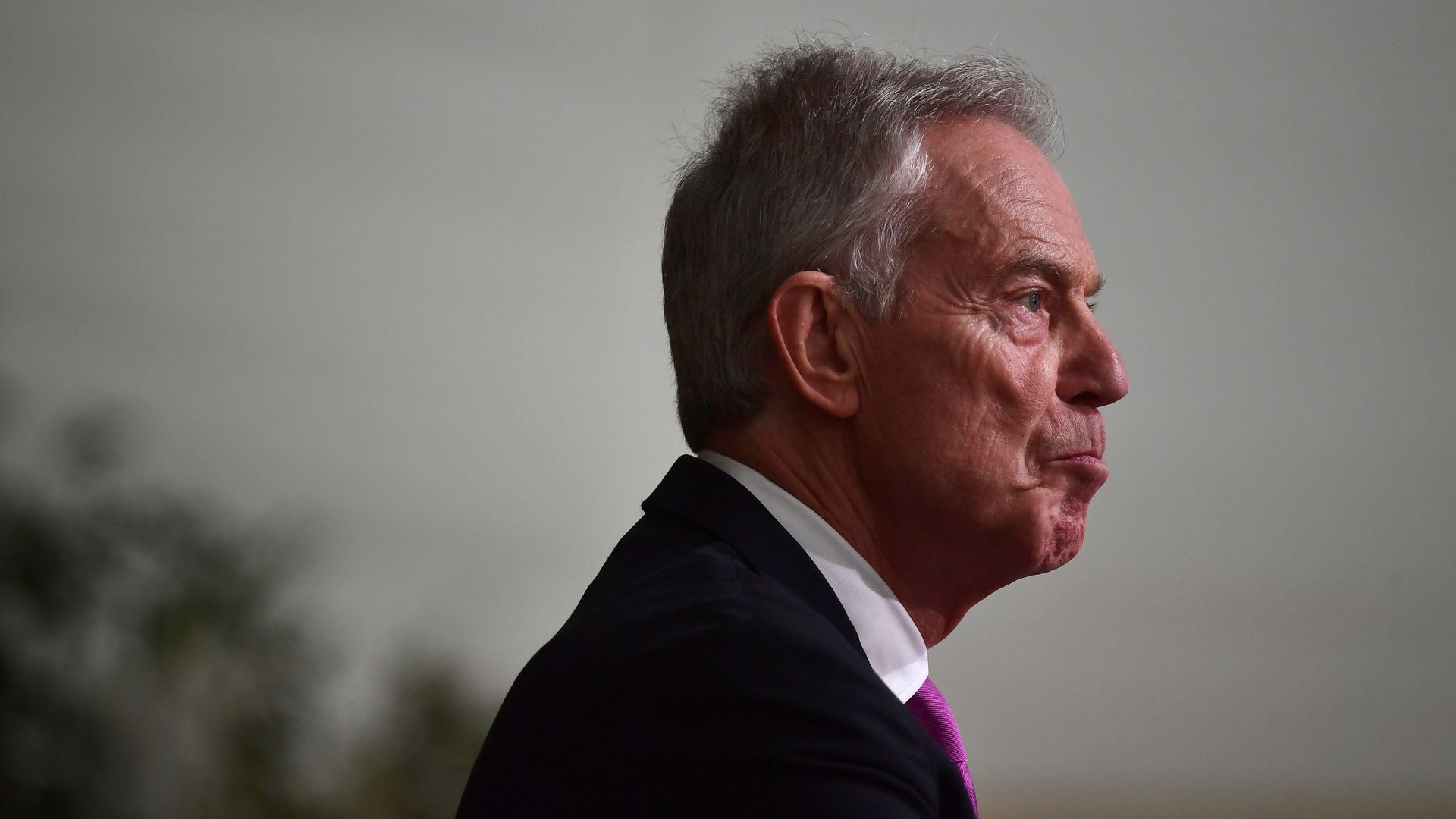
When Tony Blair stepped into the fray to declare that the Labour Party required a fundamental reset, it wasn't just another quote for the evening bulletins. It was an echoing strike from the past, a reminder of the last time the party found itself stranded in the wilderness, staring at the map upside down. Blair’s intervention arrived like an unexpected slap to the face of a hysterical patient.
To understand why a man who left office nearly two decades ago can still freeze the blood in a politician's veins, you have to look past the policy papers. You have to look at the anatomy of a political collapse.
The Illusion of the Safe House
Political parties often treat their core voters like old furniture. They assume it will always be there, sitting in the corner, dependable and unchanging. For years, the traditional working-class towns of Britain were the bedrock of Labour's identity. But the world shifted beneath their feet while the architects in London were looking at national polling data.
Consider what happens when a town loses its main employer. The factory closes, the high street fills with charity shops, and the young people leave on the first train they can afford. The people left behind do not think in terms of macroeconomic targets or constitutional reform. They think about the bus route that just got cancelled. They think about whether their grandchildren will be able to afford a home within fifty miles of them.
When a political party responds to that raw, existential anxiety with bureaucratic jargon, a profound disconnect occurs. The party talks about structures. The voter feels abandonment.
Blair’s argument for a reset is born from a specific historical trauma. In 1997, he dragged a reluctant, traditionalist party into the modern era by recognizing that the world had changed fundamentally since the 1970s. Today, the argument is that the party has fallen into the exact same trap, fighting the battles of the early 2000s in a world shaped by algorithms, shifting global alliances, and a domestic population that feels utterly invisible to the metropolitan elite.
The crisis of leadership currently dominating the headlines isn't just about who sits in the top office. It is about what that person sees when they look out the window.
The Anatomy of an Identity Crisis
Step back from the immediate chaos of the Westminster bubble and look at the mechanics of how a political movement loses its way. A party in crisis usually splits into two distinct, warring tribes.
The first tribe believes the answer is purity. They argue that if the voters rejected the message, it is because the message wasn't shouted loudly or clearly enough. They want to double down on traditional doctrine, clinging to historical symbols like protective amulets.
The second tribe believes the answer is capitulation. They want to poll-test every syllable, reshaping the party’s identity into a mirror of whatever focus groups in marginal seats said they wanted twenty-four hours ago. This approach results in a hollowed-out politics, a bland technocracy that inspires no one and stands for nothing.
Both approaches are fundamentally flawed because they treat the public as an audience to be managed rather than a community to be understood.
The real problem lies elsewhere. It lies in the failure to construct a compelling national story. Humans are narrative creatures. We do not live our lives by data points; we live them through the stories we tell ourselves about who we are and where we are going. When a political party stops telling a coherent story about the country's future, someone else will fill that vacuum with a much darker tale.
Blair’s warning is that Labour has lost the ability to speak to the aspirational voter. It is an uncomfortable truth for many within the movement. It requires admitting that people do not just want a safety net; they want a ladder. They don't just want the state to protect them from failure; they want the freedom and the infrastructure to succeed on their own terms.
The Modern Wilderness
The mechanics of modern politics have made a fundamental reset incredibly difficult to execute. In Blair’s heyday, a leader could deliver a major speech, dominate the next morning’s newspapers, and set the agenda for a week. The communication channels were centralized and manageable.
Today, the terrain is fragmented. A leader faces a relentless, 24-hour meat grinder of social media commentary, instant punditry, and internal party rebellion carried out via encrypted messaging apps. Every minor policy tweak is dissected instantly by thousands of amateur commentators. Every compromise is branded a betrayal.
This environment breeds caution. Caution leads to paralysis.
But a crisis of this magnitude cannot be solved by caution. A fundamental reset means taking immense risks. It means telling your own supporters things they do not want to hear. It means looking at the structure of the British economy and admitting that old solutions will no longer work in an era defined by artificial intelligence and shifting demographic realities.
Sarah, looking at her spreadsheet in that Westminster office, feels this paralysis every day. She sees the policy proposals that come across her desk—safe, incremental, focus-grouped to within an inch of their lives. They are designed to avoid giving offense, but in doing so, they also avoid giving hope.
The Cost of Waiting
The danger of a leadership crisis is that it consumes all the oxygen in the room. The party spends months looking inward, debating rules, thresholds, and internal balances of power. Meanwhile, the world outside continues to spin.
While the politicians argue in committee rooms, a nurse finishes a twelve-hour shift and wonders if she can afford the petrol for her commute home. A small business owner sits up at 2 AM, looking at an energy bill that threatens to wipe out his life savings. A teenager in a neglected coastal town looks at his prospects and realizes his best option is to leave everything he knows behind.
These are the invisible stakes. Politics is not a game played by pundits on Sunday morning television. It is the framework within which human lives are either allowed to flourish or condemned to struggle.
When a major political party fails to function as a viable alternative government, it doesn't just harm its own members; it damages the fabric of democracy itself. Voters lose faith not just in a specific leader, but in the entire system's ability to deliver meaningful change. They turn to populism, to easy answers that promise to burn down the old structures without building anything better in their place.
That is the true urgency behind the call for a reset. It is not about winning the next news cycle or stabilizing a leader's polling numbers. It is about preventing a total collapse of faith in democratic politics.
The rain continues to beat against the windows of Westminster. The leadership crisis will eventually find a resolution; names will change on office doors, and new press releases will be drafted. But the ghost in the committee room remains, watching to see if anyone has the courage to stop managing the decline and start rewriting the story.
The junior staffer closes her laptop, grabs her coat, and steps out into the cold London air. The streets are busy with people heading home, entirely oblivious to the political drama unfolding a few hundred yards away. They are living their lives, facing their own quiet battles, waiting for someone to speak a language they actually understand.