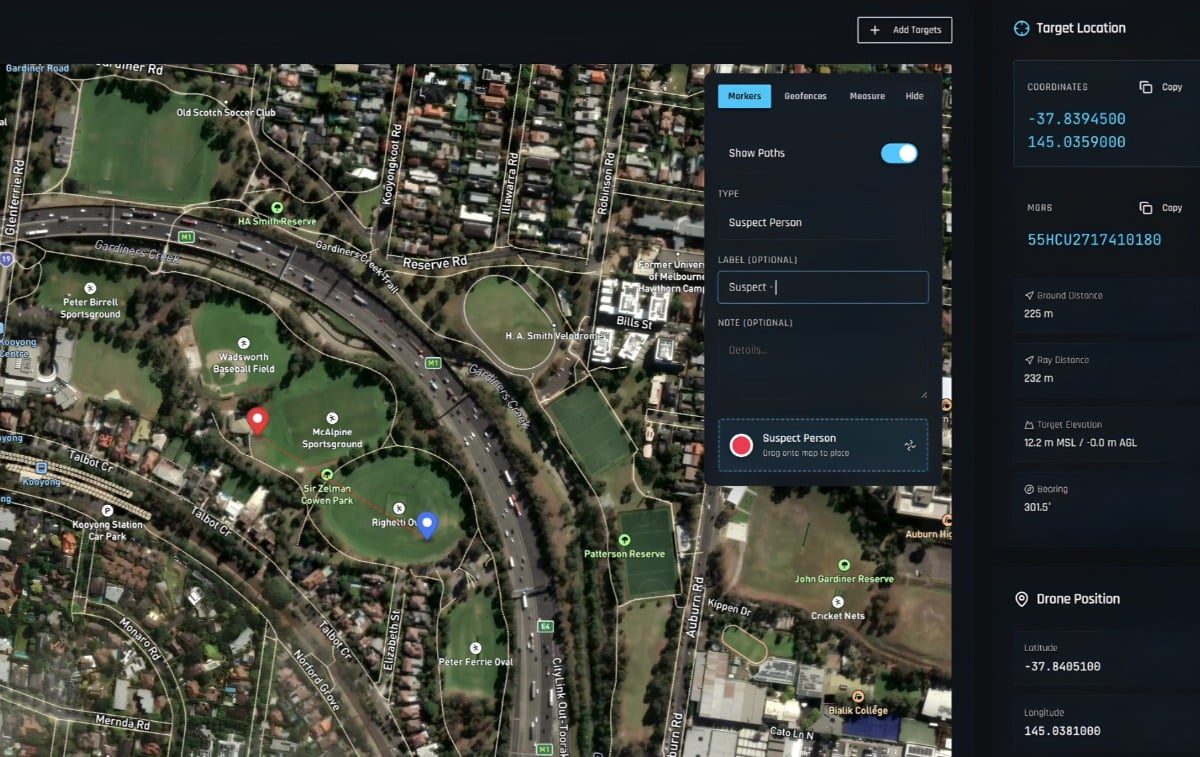
Autonomous military drones can now track and lock onto targets from a distance of 43 kilometers entirely without GPS signals. This development shifts the reality of electronic warfare, effectively rendering traditional jamming defense systems obsolete. By relying on onboard optical tracking and terrain-mapping algorithms instead of satellite networks, these aircraft bypass the electronic shields that currently protect critical infrastructure. The implications are clear. The electronic warfare landscape is no longer about blocking signals, but about deceiving the eyes of the machine itself.
The Illusion of the Electronic Shield
For the past decade, military defense strategies leaned heavily on electronic jamming. If you could flood the local airspace with noise, a drone lost its connection to GPS satellites, veered off course, and crashed harmlessly. This was the standard operating procedure.
It worked well because drones were essentially remote-controlled vehicles that required constant telemetry. They needed a digital hand to hold. When that hand was severed by electronic warfare rigs, the threat died.
That era has ended. The latest generation of long-range drones treats GPS as a luxury, not a necessity. When a drone crosses into a jammed zone, it does not panic. It switches to an internal map, matches the topography below with its onboard database, and continues its journey. The 43-kilometer lock-on milestone demonstrates that a machine can identify a specific vehicle or building from a staggering distance without a single byte of external data feeding into its receiver.
Optical Navigation Meets Edge Computing
To understand how a machine navigates without satellites, look at how early mariners used coastal landmarks. Modern autonomous systems use a high-tech version of this method called optical terrain referencing.
The process relies on three interconnected systems.
- High-Resolution Optical Sensors: Infrared and thermal cameras scan the ground below, cutting through smoke, haze, and darkness.
- Onboard Neural Networks: Compact, hardened microprocessors sit inside the fuselage, running complex image-recognition software without needing a cloud connection.
- Pre-loaded Topographical Databases: Before launch, engineers load detailed 3D maps of the target area onto the drone.
Consider a hypothetical example where a drone flies over a valley where all GPS signals are blocked. Instead of wandering, the drone's cameras look at the ridgelines, riverbeds, and highways below. The internal computer compares these shapes to its pre-loaded map at a rate of sixty frames per second. It calculates its exact position based on the geometry of the earth.
Once it nears the target area, the system switches from navigation mode to targeting mode. At a distance of 43 kilometers, a target looks like a tiny cluster of pixels. The onboard AI monitors these pixels, tracks their movement patterns, and confirms the target's identity against known thermal profiles. The drone locks on. No radio signals are emitted, leaving the target with no warning that it has been spotted.
The Fragility of Visual Independence
This technology is impressive, but it is far from perfect. Heavy reliance on optics introduces vulnerabilities that did not exist with satellite-guided munitions.
If a thick blanket of fog rolls in, or if an adversary deploys persistent, specialized smoke screens, the drone's eyes are effectively blinded. Without a clear view of the terrain or the target, the optical algorithms begin to accumulate errors. A small miscalculation in mapping at the start of a run can compound into a miss by hundreds of meters by the time the drone reaches its destination.
Furthermore, these systems are vulnerable to visual deception. Camouflage nets that disrupt thermal signatures can trick the machine's neural network into misidentifying a target. Mock targets made of cheap canvas and heating elements can draw a multimillion-dollar drone away from its actual objective. The battle has shifted from the electromagnetic spectrum to the visual spectrum.
The Supply Chain Bottleneck
Developing the software for autonomous, GPS-free flight is a math problem that many nations have solved. Manufacturing the hardware to run that software is a different story.
These drones require high-performance, low-power computing chips capable of processing massive amounts of visual data in real time. These are not the chips found in standard consumer electronics. They are specialized components that are difficult to produce and subject to strict international trade controls.
+---------------------------+-----------------------------------+
| Component                 | Strategic Vulnerability            |
+---------------------------+-----------------------------------+
| Edge AI Accelerators      | Limited global foundries          |
| Thermal Imaging Cores     | High manufacturing defect rates   |
| Hardened Inertial Units   | Complex calibration requirements  |
+---------------------------+-----------------------------------+
A secondary issue is the creation of the 3D maps themselves. A drone cannot navigate via terrain matching if its maps are outdated. This creates a dependency on continuous satellite reconnaissance to feed fresh data into the mission planning software. If an adversary reshapes the landscape by digging massive trenches or erecting temporary structures, the drone's internal map no longer matches reality.
The Blind Spot in Modern Air Defense
Current air defense grids are built to detect incoming threats via radar and disable them via electronic spoofing. They are designed for an enemy that communicates. When faced with an autonomous glider or a low-flying drone that emits zero radio frequencies and ignores GPS corruption, these systems sit silent.
To counter this threat, defense infrastructure must pivot toward kinetic interception and physical obscuration. This means deploying rapid-fire cannon systems, automated net-launchers, or lasers capable of burning through optical lenses before the drone can lock on. The era of clean, electronic victories is giving way to messy, physical confrontations in the sky.