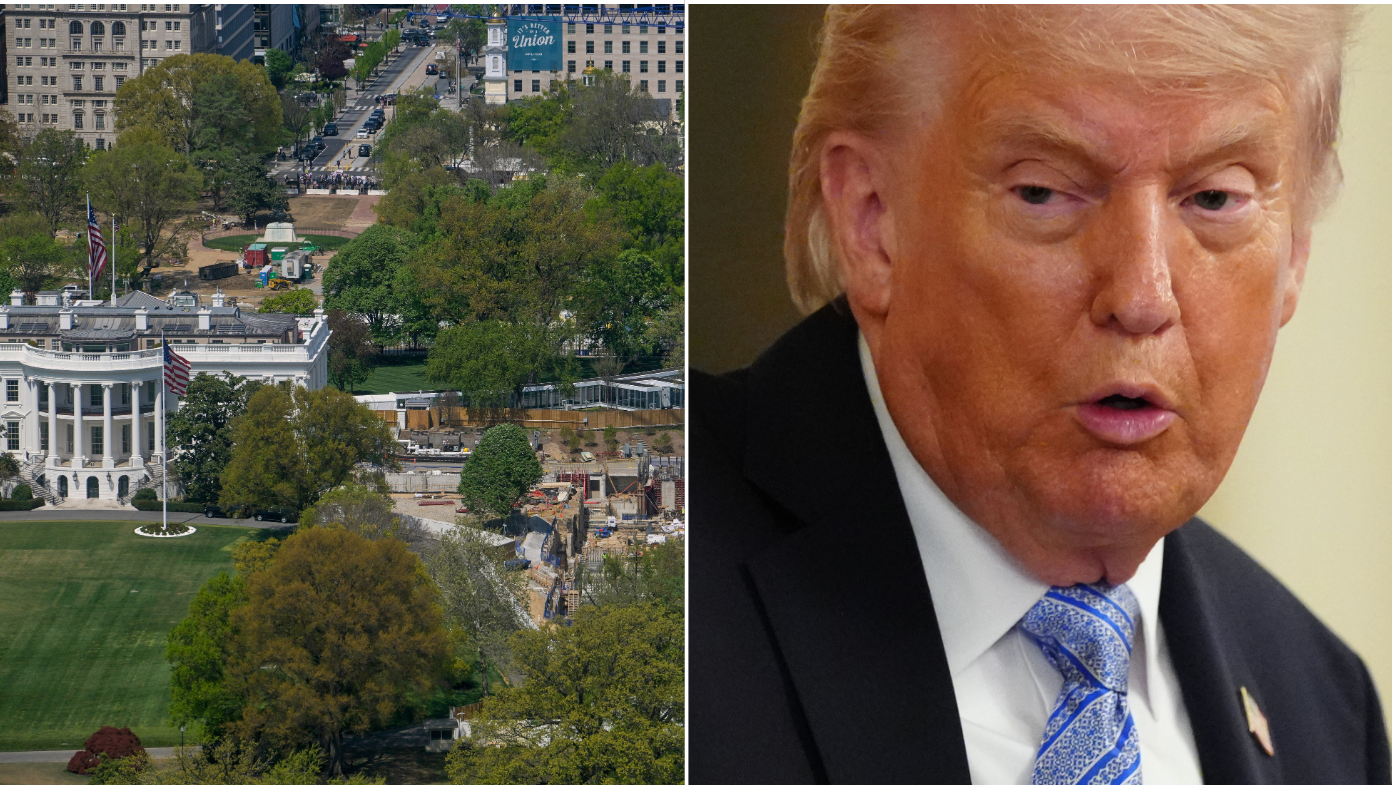
The federal government is currently moving to finalize a billion-dollar earmark for the restoration and expansion of a high-profile ballroom and event space tied to the Trump Organization properties. While early reports framed this as a simple infrastructure project, the reality is a tangled web of specialized tax incentives, federal grants, and zoning maneuvers that funnel massive amounts of public wealth into a private asset. It is not just about a room for galas. It is a case study in how the machinery of the state can be tuned to serve the interests of the few under the guise of "economic revitalization."
Taxpayers are being asked to foot the bill for a project that offers almost no public utility. When the government spends $1 billion on a bridge, people drive over it. When it spends it on a private ballroom, the only people who benefit are the owners who see their property value soar and the wealthy clients who book the space. The funding mechanism relies on a series of obscure federal carve-outs intended for "blighted" areas—a designation that, in this instance, has been stretched beyond all recognition.
The Mechanics of a Billion Dollar Handout
To understand how a sum of this magnitude gets greenlit, you have to look past the press releases and into the fine print of the Department of Commerce’s discretionary funds. The capital is being redirected from several pools: urban development grants, historic preservation credits, and local infrastructure bonds. By bundling these sources, the project avoids the scrutiny that a single, massive line item in a budget would normally attract.
It works like this. A developer identifies a project as a "multi-use community hub." They then apply for federal subsidies that are technically available to any business in the district. However, the requirements for these subsidies—such as having a pre-existing footprint of a certain acreage or a specific historical designation—are often so narrow that only one entity can realistically qualify. This isn't a competition. It is a coronation.
The "ballroom" in question is slated to be a 150,000-square-foot facility capable of hosting world summits and high-security corporate retreats. Proponents argue that the influx of international visitors will provide a "trickle-down" effect for local hotels and restaurants. History tells a different story. These self-contained luxury ecosystems are designed to keep spending within their own walls. A guest flies in, takes a private car to the property, eats at the on-site five-star restaurant, sleeps in the penthouse, and leaves without ever spending a dime at the local deli down the street.
The Blight Loophole
One of the most egregious aspects of this funding is the use of "Opportunity Zone" logic. These zones were created to encourage investment in struggling neighborhoods. Yet, through aggressive lobbying and creative map-drawing, some of the wealthiest ZIP codes in the country have been designated as distressed. This allows developers to defer or eliminate capital gains taxes on massive projects.
When you combine these tax breaks with direct cash injections from the taxpayer, the profit margins become astronomical. The risk is entirely socialized. If the ballroom fails to attract the projected number of bookings, the developer still keeps the renovated asset, which was paid for by the public. If it succeeds, the public sees none of the profits. It is a "heads I win, tails you lose" arrangement that has become the standard operating procedure for high-end real estate development in the 21st century.
Historical Precedent for Mismanaged Funds
We have seen this play out before, though rarely on this scale. In the late 1970s and early 80s, several major cities attempted to "save" their downtown cores by subsidizing massive hotel and convention centers. The results were almost universally disastrous for the local treasury. The stadiums and ballrooms often sat empty for 300 days a year, while the maintenance costs bled the municipal budgets dry.
The difference here is the sheer audacity of the price tag. A billion dollars could fully fund the modernization of a dozen regional airports or provide the seed money for an entire state's renewable energy grid. Instead, it is being concentrated into a single, gilded floorplate.
The Security Justification
A common defense for this specific project is "national security." Because the property is frequently visited by high-ranking officials and international dignitaries, the government argues that it must control the infrastructure of the site. They claim that building a state-of-the-art, secure facility is cheaper in the long run than retrofitting existing spaces every time a summit occurs.
This argument falls apart under basic financial analysis. The cost of renting and securing a third-party venue like a university hall or a city-owned convention center for fifty years wouldn't even approach the $1 billion mark. The "security" angle is a convenient shield used to deflect questions about why the public is buying a private company a new gold-trimmed ballroom.
The Impact on Local Infrastructure
While the billion dollars is funneled toward the ballroom, the surrounding infrastructure is often neglected. In many of these deals, the city or state is forced to provide "matching funds" or "infrastructure improvements" like new roads and sewage lines that lead directly to the property. This diverts money away from schools, fire departments, and public parks.
We are seeing a literal hollowing out of the public square to build a private one. The roads leading to the ballroom will be pristine, paved with taxpayer money, while the streets three blocks over remain riddled with potholes. It creates a two-tiered geography: the subsidized luxury zone and the neglected public zone.
Lobbying and the Paper Trail
The paper trail for this funding leads back to a series of shell companies and consulting firms that specialize in "grant procurement." These firms take a percentage of the federal money they secure, creating a secondary industry that exists solely to drain the treasury for private gain.
Investigation into the filings shows that the "community benefit" clauses in these contracts are laughably vague. They promise "job creation," but do not specify that most of these jobs are seasonal, low-wage service positions with no benefits. They promise "increased tax revenue," but ignore the fact that the property will be exempt from many of those taxes for decades due to the very incentives used to build it.
The Global Comparison
Look at how other developed nations handle large-scale event spaces. In Europe and parts of Asia, these facilities are almost always owned by the municipality or a public-private partnership where the public retains a majority stake and a share of the revenue. The idea that a government would hand over a billion dollars to a private individual to build an asset that the individual then keeps for themselves would be a scandal of terminal proportions in most other democracies.
In the United States, however, it is framed as "bold leadership" or "economic stimulus." We have become conditioned to accept that the only way to get anything built is to overpay a billionaire to do it. This is a failure of imagination and a failure of governance.
The Mirage of Economic Impact Reports
Every one of these projects is accompanied by a glossy "Economic Impact Report." These documents are almost always produced by firms hired by the developer. They use inflated multipliers to suggest that every dollar spent will generate five dollars in local economic activity.
They count "indirect jobs," which are often hypothetical. They count "induced spending," which assumes that every visitor to the ballroom is a new visitor who wouldn't have spent money elsewhere in the city. When independent auditors look at these projects ten years later, the actual economic impact is usually a fraction of what was promised.
The ballroom will likely be a monument to this kind of statistical manipulation. It will be a shiny, expensive object that looks good on a postcard but does nothing to improve the lives of the people who actually paid for it.
The Ethics of Proximity
There is also the inescapable issue of the conflict of interest. When the person benefiting from the funding is a former and potentially future head of state, the transaction takes on a darker hue. It stops being just a bad business deal and starts looking like a form of institutionalized tribute.
The federal agencies approving these funds are staffed by political appointees. The oversight committees are often headed by individuals who rely on the beneficiary for political support. In this environment, the "approval process" is a mere formality. The decision was made long before the first application was ever filed.
The Role of Local Government
State and local officials often feel they have no choice but to support these projects. They are told that if they don't provide the necessary zoning and local tax breaks, the project will move to a different city. This "race to the bottom" allows developers to pit cities against each other, extracting more and more public money at every turn.
In this case, the pressure was immense. The promise of a "world-class" facility was used to silence critics who pointed out that the city's water system was failing. The allure of the spectacular often blinds officials to the necessity of the mundane.
Accountability and the Future of Federal Spending
If this project is allowed to proceed as planned, it will set a new, dangerous precedent for the scale of private subsidies. We are no longer talking about a few million dollars in tax breaks. We are talking about a billion dollars in direct and indirect support for a single luxury asset.
The mechanism for clawing back this money is virtually non-existent. Once the concrete is poured and the gold leaf is applied, the money is gone. The only way to stop this is through rigorous, aggressive oversight before the first dollar is transferred. This requires a level of political courage that is currently in short supply.
The ballroom project is a symptom of a much larger disease in the American political economy. It is the belief that public money is a resource to be mined by the well-connected rather than a trust to be managed for the common good. Until the "distressed area" loopholes are closed and the "economic impact" fairy tales are debunked, the taxpayer will continue to be the primary investor in the private estates of the elite, with no hope of a return on their investment.
Follow the money through the municipal bond filings. Look at the specific census tracts being used to justify the "Opportunity Zone" status. Demand that the "community benefit" agreements be made public and legally binding with specific, high-wage job quotas and profit-sharing requirements. Anything less is just a gift wrapped in a flag.