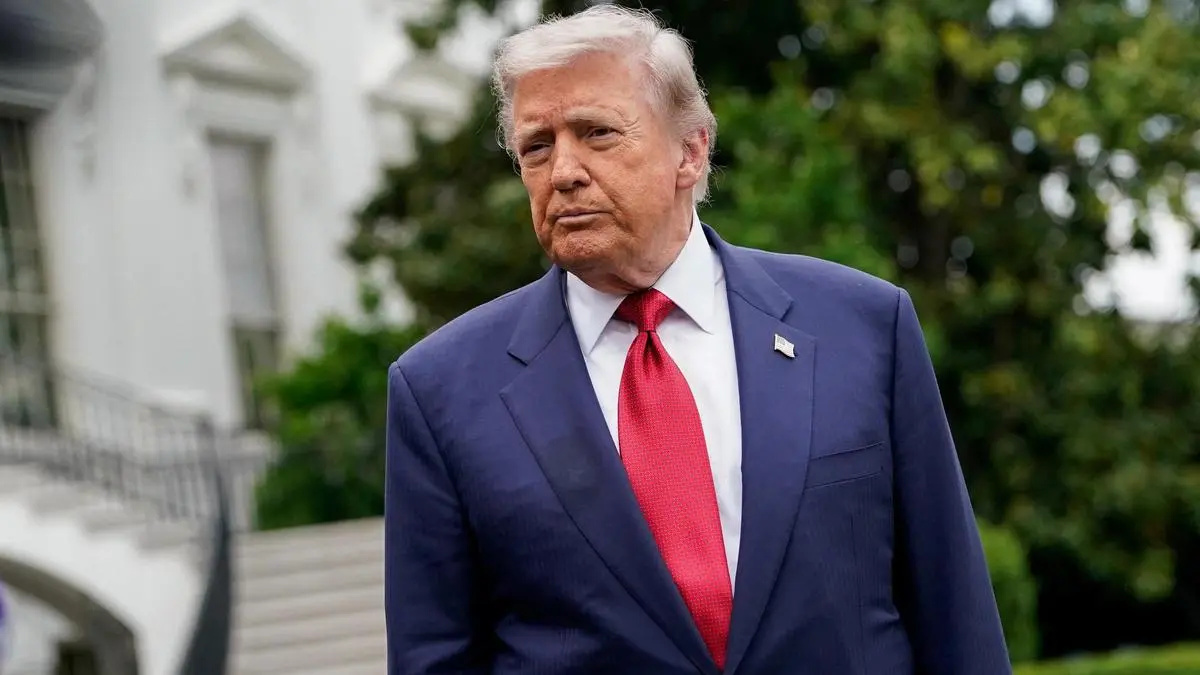
The ticker tape doesn't care about politics. It doesn't care about rallies, indictments, or the thunderous roar of a campaign trail. It only understands the cold, binary language of profit and loss. On the glowing screens of brokerage accounts, names like Donald Trump are stripped of their titles and reduced to a series of strategic moves—a dance of capital choreographed behind the scenes while the rest of the world watches the stage.
During the first three months of the year, while the American public was fixated on the primary trail, a different kind of movement was happening in the quiet corners of the former president’s financial portfolio. It wasn't a slow drift. It was a flurry.
The Pulse of the Machine
Think of the global economy as a massive, interconnected nervous system. At the center of that system right now sits Nvidia. It is the engine of the artificial intelligence boom, the company providing the "shovels" for the modern gold rush. To own Nvidia is to bet on the future of human intelligence itself. To sell it is to signal something else entirely.
In a series of transactions that feel more like a high-stakes poker game than a retirement plan, Trump’s financial managers executed a precise sequence of buys and sells. They dipped into the semiconductor giants—Nvidia and Intel—at a time when the chips undergirding our world have become more valuable than oil.
Intel is the old guard, the steady hand of American manufacturing trying to find its footing in a world that moved too fast. Nvidia is the rocket ship. By trading in and out of these positions, the portfolio reflected a restless energy. It wasn't just about holding assets; it was about timing the heartbeat of the market.
The Weight of the Wings
But the ledger tells a more complicated story than just a chase for digital chips. The inclusion of Boeing in this trading whirlwind adds a layer of metallic tension.
Boeing used to be the gold standard of American industrial might. Now, it is a company haunted by its own shadow. Every headline about a loose bolt or a mid-air malfunction sends a tremor through its stock price. For a high-profile investor, holding Boeing is a statement of belief—or perhaps a calculated wager on a comeback that has yet to arrive.
Imagine a single mother in Renton, Washington, working the assembly line at a Boeing plant. She sees the news. She feels the anxiety of a company in flux. To her, Boeing is a paycheck and a legacy. To the ledger, it is a ticker symbol to be bought at a dip and discarded when the momentum shifts. The "human-centric" reality of these trades is found in that gap—the distance between the person building the plane and the person trading the stock from a gilded club in Florida.
The Invisible Hand at the Keyboard
There is an inherent paradox in a political figure of this magnitude engaging in the granular shifts of the stock market. Every trade is a data point. When Intel is bought, it’s a nod toward domestic manufacturing. When it’s sold, it’s a cold admission that the numbers didn't add up this quarter.
The transactions weren't limited to the titans of tech and aerospace. The list spiraled out to include retail giants and energy firms, creating a mosaic of the American economy as seen through the eyes of a man who once sat at its helm.
Wealth at this level isn't about buying things. It’s about maintaining a position. It is defensive and offensive all at once. The first quarter of the year saw a shift in that posture. It was the financial equivalent of a boxer shifting his weight, moving from a stationary guard to a series of quick, stinging jabs.
The Ghost in the Portfolio
What does it mean for a man who promises to "Make America Great Again" to be so deeply enmeshed in the fluctuating fortunes of corporations that often outsource, automate, and disrupt the very lives of his constituents?
The stocks themselves are neutral. A share of Nvidia doesn't have a political party. But the act of trading them during a period of intense public scrutiny reveals a dedication to the bottom line that exists independently of the stump speech. It’s a reminder that at the highest levels of power, the language of the dollar remains the most fluent tongue.
Consider the hypothetical investor, let’s call him Elias. Elias lives in a small town in Ohio. He has a few thousand dollars in an index fund. He watches the news and hears about the "flurry of transactions." To Elias, the market feels like a storm he has to weather. To the former president, the market is a sea he intends to sail.
Elias sees a "sell" order on a major tech stock and wonders if the bubble is bursting. He feels a tightening in his chest. He worries about his retirement. Meanwhile, the ledger at Mar-a-Lago simply recalibrates. The stakes are different when the pile of chips is high enough to block out the sun.
The Friction of Transparency
These disclosures are required by law, a remnant of a system designed to ensure that those who lead the country don't profit unfairly from the secrets they hold. But transparency is a double-edged sword. It provides the facts, but it doesn't provide the "why."
We see the exit from a position. We see the entry into another. We don't see the whispered conversations in wood-paneled rooms. We don't see the algorithms that triggered the sell-off when a certain price point was hit. We are left to interpret the tea leaves of the SEC filings.
The frenzy of activity in the first quarter suggests a lack of confidence in a "buy and hold" strategy. It suggests a belief that the market is volatile, unpredictable, and ripe for the picking if you are fast enough. It is the strategy of a hunter, not a gardener.
The Echo of the Trade
As the sun sets over the Potomac and the campaign buses roar toward the next city, the trades are already settled. The digital ink is dry. The Nvidia gains have been locked in, or perhaps the Intel losses have been harvested for tax purposes.
The flurry has passed, leaving behind a trail of questions about the intersection of private wealth and public service. It is a story of numbers, yes. But it is also a story of a man refusing to sit still, even as the world around him demands he be defined by a single role.
In the end, the ledger doesn't care about the voters. It only cares about the closing bell. And as that bell rings, the portfolios of the powerful continue to pulse with a life of their own, indifferent to the noise of the crowd, focused entirely on the silent, relentless accumulation of more.
The ticker continues its crawl. The names change, the prices shift, and the world keeps turning, fueled by the very chips and wings that were traded in a flurry of activity while we were all looking the other way.