The mahogany doors of the Sorbonne do not just swing open; they groan with the weight of eight centuries of intellectual gatekeeping. To walk those halls is to inhale the scent of old paper, floor wax, and the desperate, burning desire for validation. In this world, prestige is the only currency that never devalues. It is a place where a single ribbon or a specific title can transform a mere mortal into a monument.
Joseph Maïla, a respected professor of political science and a former rector of the Catholic University of Paris, understood this hunger better than most. He spent his life navigating the intricate social geometries of the French elite. He was a man of the establishment, a mediator, a scholar of religion and diplomacy. But somewhere between the seminars and the international summits, the line between reality and artifice began to blur.
Maïla is now at the center of what French media is calling a "gigantic hoax." It wasn't a heist for gold or a play for political power. It was something far more fragile and, in a way, more desperate. He is accused of inventing a Nobel-style award—the Grand Prix de la Paix—and convincing some of the world's most influential figures that it was a legitimate, historical honor.
The Anatomy of a Mirage
Think of the way a master forger works. They don't just replicate a painting; they recreate the soul of the era. Maïla didn’t just print a certificate. He built an entire ecosystem of prestige. He leveraged his existing reputation to create a phantom institution.
He allegedly claimed the prize was backed by a foundation that didn't exist. He invoked the names of international bodies to lend the proceedings a veneer of global consensus. This wasn't a clumsy internet scam. This was a high-stakes performance piece played out in the most exclusive salons of Paris.
Imagine a hypothetical diplomat—let’s call him Henri. Henri has spent forty years in the trenches of foreign policy. He has brokered ceasefires in humid jungles and signed treaties in drafty palaces. He is tired. He is nearing the end of his career and fears the silence that follows retirement. Suddenly, an invitation arrives. It is embossed. It mentions the Sorbonne. It speaks of a "Grand Prize for Peace," a recognition of a lifetime of "invisible labor."
Henri doesn't Google the foundation. Why would he? The invitation comes from Maïla, a man he has shared wine with at the Quai d’Orsay. The ego is a powerful filter; it blocks out any fact that threatens a flattering narrative. Henri wants the prize to be real. Therefore, it is.
The Weight of a Shadow
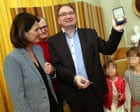
The deception reportedly went as far as a formal ceremony held in the heart of Paris. Photos show Maïla standing alongside luminaries, handing over medals that looked heavy enough to be history itself. There were speeches about the "moral compass of humanity" and the "unwavering pursuit of harmony."
But the "Grand Prix de la Paix" had no endowment. It had no selection committee of grey-bearded experts deliberating in secret vaults. It was, effectively, a one-man show. Maïla was the judge, the jury, and the benefactor.
The problem with a lie of this magnitude is that it requires a constant infusion of fresh belief. Like a Ponzi scheme of social capital, you have to keep inviting bigger names to validate the smaller ones. When the recipients began to list the "Grand Prix" on their official CVs and Wikipedia pages, the phantom prize began to bleed into the real world. It became a "fact" because it was cited by people who were themselves considered factual.
The Breaking Point
Cracks usually appear in the smallest places. Perhaps it was a suspicious accountant at an academic institution, or a journalist looking for a list of past winners only to find a digital void. When the scrutiny finally turned toward the foundation, the architecture of the hoax collapsed with terrifying speed.
Maïla has since been sidelined. The academic world, once his fortress, has become his courtroom. The Sorbonne and other institutions have scrambled to distance themselves, scrubbing his name from committees as if he were a ghost they accidentally invited to dinner.
The betrayal felt by those who "won" the prize is profound. It is a specific kind of humiliation—the realization that your life’s work was used as a prop in someone else’s fantasy. They weren't just lied to about a medal; they were lied to about their own significance.
The Invisible Stakes
Why do we care about a fake prize in a niche corner of French academia? Because it exposes the terrifyingly thin membrane of our social reality. We live in an era where "truth" is often just "reputation with a better marketing budget."
We rely on institutional signals—the Harvard degree, the Nobel Prize, the blue checkmark—to tell us who to trust. Maïla proved that if you know the secret handshake and have the right stationery, you can bypass the gatekeepers entirely. He hacked the human desire for status.
There is a deep, uncomfortable irony in a "Peace Prize" built on a foundation of deception. Peace, after all, requires a shared understanding of reality. It requires trust. By faking the recognition of peace, the hoaxer committed a small act of war against the very concept of merit.
The halls of the Sorbonne are quiet again. The mahogany doors are shut. The medals, once polished to a blinding sheen, are now sitting in desk drawers, heavy with the weight of a different kind of history. They are no longer symbols of peace. They are artifacts of a man who looked into the eyes of the elite and saw exactly what they were missing: the need to be told, one more time, that they mattered.
The most successful lies are the ones we tell ourselves. Maïla simply provided the stage and the lighting. We provided the applause.