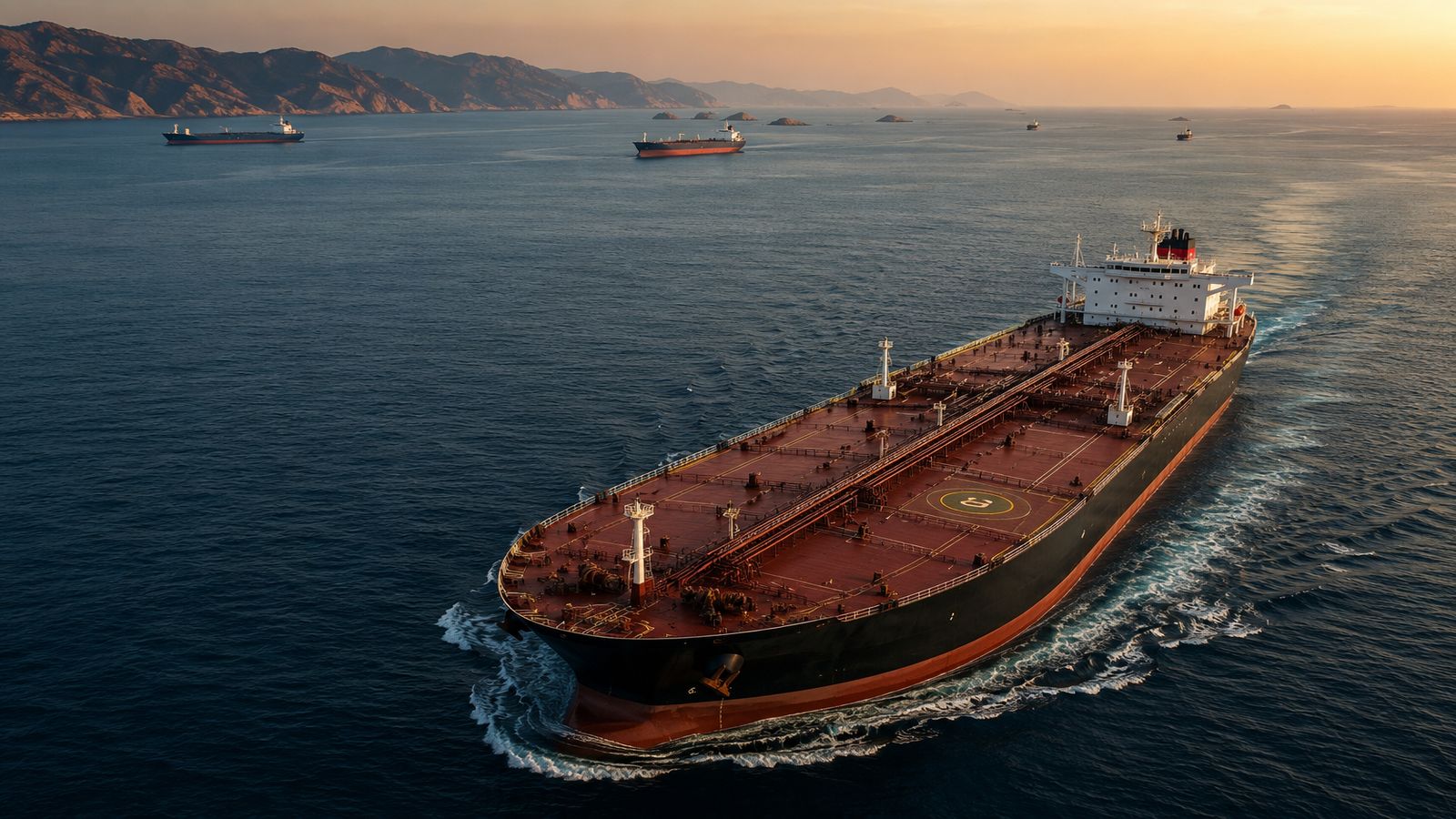
The International Monetary Fund is panicking about West Asia again. They issued another dire warning, claiming that localized conflicts will drag down the global economy, trigger infinite inflation, and fracture supply chains.
They are wrong. They are looking at the wrong data, asking the wrong questions, and feeding a lazy consensus that treats every regional crisis as an existential threat to global capitalism.
I have spent twenty years watching institutional economists miss the forest for the trees. I watched them predict a total collapse during the 2011 supply shocks, and I watched them panic when oil lanes faced friction in 2019. Every single time, the global economy did not just survive; it recalibrated, tightened its margins, and emerged more efficient.
The institutional elite view stability as a prerequisite for growth. The reality is the exact opposite. Prolonged stability breeds corporate bloat, inefficient supply lines, and systemic fragility. Regional friction is the brutal, necessary catalyst that forces the global market to shed its dead weight.
The Inflation Myth: Why Conflict No Longer Drives Hyper-Inflation
The standard institutional narrative says that conflict in the Middle East automatically equals a global inflation spike. This logic is stuck in 1973.
The global energy matrix has fundamentally shifted. When the IMF warns about lingering economic impacts from regional wars, they assume the global supply chain is a rigid glass pipe. Break it in one place, and the whole system shatters.
In reality, the modern economy behaves like a liquid network. When one channel constricts, capital and resources route around it instantly.
Let's look at the actual mechanics of the oil market. The United States produces over 13 million barrels of crude oil per day. Permian Basin production acts as a massive global shock absorber. Furthermore, non-OPEC+ supply growth consistently outpaces legacy cartels. When localized conflicts threaten traditional shipping lanes, they do not trigger a 1970s-style stagflation crisis. They trigger an immediate, automated reallocation of supply.
To answer the flawed question everyone asks: Will regional conflict destroy your portfolio's purchasing power? No. It will change where the yield comes from.
The risk isn't a global collapse; it is an optimization problem. Companies that rely on cheap, fragile, single-source supply chains get crushed. Companies with localized, redundant systems thrive. The conflict does not create the weakness; it merely exposes it.
The Danger of Artificial Stability
Imagine a scenario where a central bank could completely eliminate economic volatility for a decade. No recessions, no market corrections, no geopolitical risk premiums.
What happens? Every corporation on earth takes on maximum leverage. They eliminate safety inventories. They source their components from a single factory in a volatile region because it saves them two cents per unit. They build a fragile tower of cards because they assume the weather will always be perfect.
This is exactly what institutional bailouts and "resilient economy" narratives encourage. By smoothing over every bump in the road, organizations like the IMF encourage massive corporate malpractice.
Regional conflict forces a violent, necessary unwinding of this leverage.
- It forces supply chain diversification. Companies stop talking about "near-shoring" as a PR buzzword and actually build the factories.
- It prices risk accurately. Insurance premiums rise, forcing capital out of zombie companies and into genuinely resilient enterprises.
- It kills corporate complacency. It forces executives to manage for worst-case scenarios rather than next-quarter earnings.
If you want a truly anti-fragile global economy, you cannot eliminate the stress testers. Geopolitical tension is the ultimate stress tester.
Dismantling the "Lingering Economic Impact" Fallacy
The IMF loves the phrase "lingering economic impact" because it is vague enough to never be proven wrong. If GDP growth dips by 0.1% three years from now, they will blame it on a conflict that happened today.
Let's talk about the downside of my position. Yes, localized conflict causes intense, concentrated pain for regional economies and specific sectors, particularly traditional maritime shipping and localized tourism. If your business model requires moving raw cargo through a specific choke point with zero margin for delay, you are going to suffer. That is a tragedy for those specific stakeholders.
But do not confuse localized sector pain with global systemic failure.
When freight rates spike due to rerouting around the Cape of Good Hope, the lazy analysis screams "global crisis." The sophisticated analysis looks at the shipping lines booking record profits and reinvesting that capital into modernized, more efficient fleets. The crisis accelerates the retirement of obsolete, carbon-heavy cargo ships and forces the adoption of automated port logistics.
It is a forced upgrade cycle.
Stop Hedging for the Wrong Crisis
Most corporate advisors tell you to hedge against global stagnation by hoarding cash or buying long-term bonds every time a headline breaks out of West Asia. This is terrible advice that ignores historical market mechanics.
During every major regional flashpoint of the last thirty years, the initial market panic lasted between 14 and 90 days. After the initial shock, markets normalized as new shipping routes were established, alternative suppliers were activated, and contract terms adjusted.
If you restructure your entire investment thesis around institutional fear-mongering, you will miss the massive capital migration that occurs during these resets. Capital does not disappear during a regional crisis; it searches for safety and utility. It flows directly into domestic infrastructure, automation technology, and defense systems that can protect trade networks.
The next time an international committee warns you about the lingering scars of regional instability, ignore the rhetoric and look at the capital flows. The global economy isn't a fragile patient needing a sterile room to survive. It is a wild, adaptive system that uses chaos to filter out the weak.
Stop managing for a world that never changes. Buy the volatility, back the infrastructure that bypasses the choke points, and let the legacy players panic over the headlines.