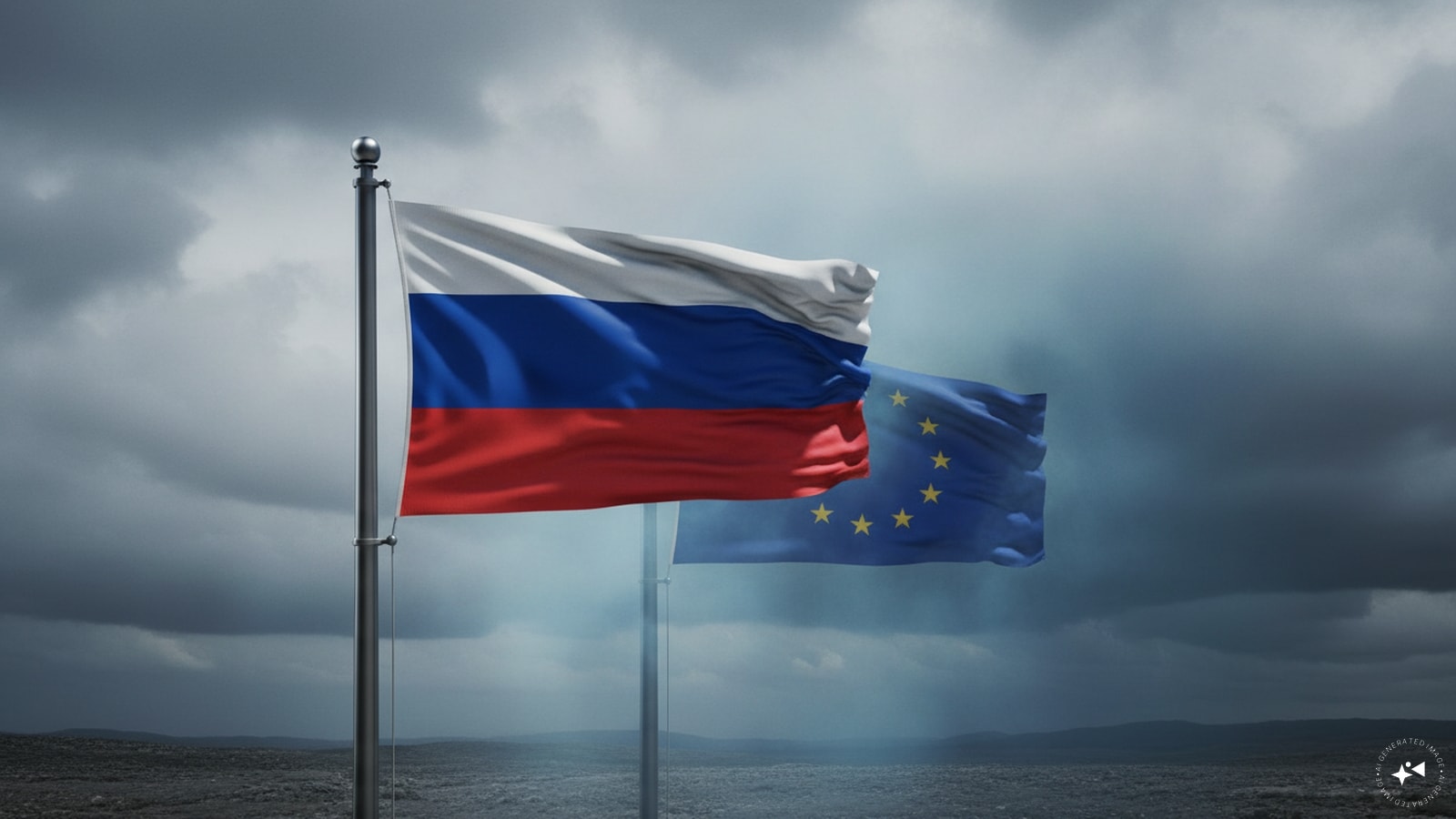
The desk is cleared of personal photographs first. That is always how it starts. A family portrait in a silver frame—two children squinting against a Crimean sun—is slipped into a cardboard box that smells faintly of copier paper. Then the Montblanc pen. Then the corporate seal, heavier than it looks, cast in cold brass.
Across Moscow, in glass-fronted monoliths that mirror the gray autumn sky, executives are practicing the art of the vanishing act. They are not leaving the country. They are leaving their companies. They are resigning from boards, stepping down as managing directors, and quietly reassigning their shares to obscure nominees whose phone numbers ring out into the empty steppe. If you liked this article, you might want to check out: this related article.
They are running because the rules of the room have changed overnight.
What the international press reports as a dry regulatory shift—a widening corporate crackdown by Moscow aimed squarely at European Union assets and lingering Western influence—feels on the ground like a shifting tectonic plate. It is a slow-motion seizure of economic gravity. When the state tightens its grip on the corporate machinery, it does not do so with a velvet glove. It uses an iron vise, and it leaves very little room for anyone caught in the middle to breathe. For another look on this story, check out the latest update from Forbes.
To understand why this matters, you have to look past the dense jargon of international sanctions, retaliatory asset freezes, and statutory expropriations. You have to look at a man like Mikhail.
Mikhail spent fifteen years building a mid-sized industrial supply firm in the heart of the capital, scaling it with German machinery and Dutch logistics software. He considered himself a pragmatist. He paid his taxes, kept his head down, and believed that commerce could remain neutral even as governments built walls. Last month, those beliefs were tested against a new reality. A state-linked entity knocked on his door with an offer that was not an offer at all. It was an inventory of his vulnerabilities.
His foreign partners were already gone, cut off by EU directives and compliance blockades. But the domestic pressure was entirely different. It was personal, sudden, and absolute. Either he integrated his supply chains into the state’s parallel architecture, or his remaining foreign-held accounts would be reclassified, his assets frozen under newly expanded national security statutes, and his leadership team subjected to audits that only one outcome could satisfy.
Mikhail signed the papers. He is wealthier than he was a decade ago, yet he has never felt poorer. He is trapped inside a golden cage of his own country's making.
This is the hidden cost of the widening crackdown. It is not just about punishing Brussels or signaling displeasure to the capitals of Western Europe. It is a fundamental rewiring of the internal economic circuit. For years, the Russian corporate landscape operated on a hybrid model—half globalized market, half state-directed monolith. The cracks had been widening since 2022, but this current phase represents something final. The bridge has been dynamited, and anyone standing on the pilings must choose which side of the river to drown on.
The official messaging from state broadcasters frames this as economic sovereignty. They call it the purification of national industry, a long-overdue severing of the colonial umbilical cord that tied domestic wealth to Frankfurt and London. They tell stories of triumphant self-reliance, of factories humming with domestic steel and homegrown microchips.
And to a degree, the machinery does hum. Factories are running double shifts. State procurement contracts are flowing like water through dry soil. But it is a forced march.
Consider what happens when a market is cut off from the global feedback loop. Innovation stops being a race for excellence and becomes a scramble for compliance. When corporate boards are populated not by strategists but by risk-mitigators whose primary qualification is their loyalty to the political wind, efficiency dies. Costs rise, quality drifts, and the consumer—whether that is a corporate buyer purchasing heavy machinery or a family buying groceries—pays the hidden tariff of isolation.
The European Union watches this unfold with a mixture of grim satisfaction and quiet alarm. From Brussels, the crackdown is viewed as proof positive of economic decoupling. Officials point to the disappearing foreign direct investment, the shuttered subsidiaries, and the legal limbo facing any European firm trying to extract its remaining capital as vindication of their hardline sanctions policy. They wanted to sever the ties, and Moscow is finishing the job for them.
Yet, there is a profound irony here that neither side cares to admit out loud.
By aggressively targeting remaining Western corporate footprints and squeezing local actors who maintain international ties, Moscow is accelerating its own economic provincialization. It is creating a fortress economy where the walls are so high they block out the sun. The corporate executives who once traveled to Milan for design fairs and Frankfurt for trade summits now look exclusively east or inward. They attend conferences where the language is exclusively Russian and the horizon stops at the Ural Mountains.
It is a quiet tragedy played out in quiet boardrooms. There is no drama, no cinematic police raid with flashing lights. Just a quiet email at 4:00 PM on a Friday afternoon. A notification that your access rights have been revoked. A signature on a digital transfer form.
The state wanted a message sent to the EU, and the message has been delivered loud and clear. But messages require an audience, and the true audience isn't sitting in glass offices in Brussels or Berlin. The audience is sitting right here, watching the family portraits go into cardboard boxes, wondering how long they can keep the lights on before someone comes to turn them off for good.
The door clicks shut. The lights in the executive suite go dark, one by one, across the Moscow skyline. Down on the street, the snow begins to fall, dusting the windshields of foreign cars that no one knows how to repair anymore. And the great machine grinds forward, heavier, colder, and entirely alone.


