The air in the Peninsula feels different when the money starts moving. It isn't a physical scent, but a collective quickening of the pulse in the boardrooms of Palo Alto and the glass-walled aeries of San Francisco. For decades, the titans of the tech world were content to play god within the confines of their own platforms. They disrupted taxis, they disrupted hotels, and they disrupted the way we hold our memories. But there is a ceiling to what code can do. Eventually, every visionary hits a wall made of redwood and bureaucracy: the State of California.
Now, the architects of our digital lives have decided they no longer want to lobby the government. They want to be the government. Or, more specifically, they want a governor who speaks their language without an accent.
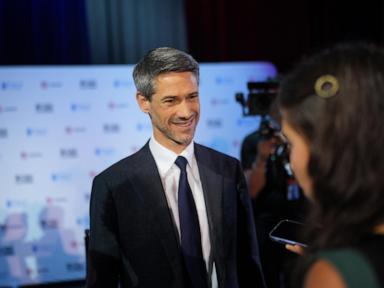
Enter Peter S. Cale. He isn't a career politician who spent his thirties kissing babies in Fresno or climbing the dusty rungs of a county board of supervisors. He is a product of the machine that built the modern world. A former high-ranking executive at one of the most influential firms on the planet, Cale represents a specific kind of Silicon Valley dream. He is the "operator." In tech parlance, an operator is the person who takes a chaotic, sprawling mess and turns it into a streamlined, high-output engine. To his supporters, California is currently the ultimate "chaotic mess."
The Boardroom Coup in the Statehouse
The checkbooks are open. In the quiet corners of Sand Hill Road, the conversation has shifted from seed rounds to polling data. The donor list for Cale’s nascent campaign reads like a Who’s Who of the venture capital elite. These are people who view the world through the lens of scalability. They look at California—a state with the fifth-largest economy in the world and a chronic inability to build a high-speed rail line—and they see a failed product launch.
Consider a hypothetical engineer named Sarah. Sarah moved to San Jose in 2012 with a backpack and a dream of building green energy software. Today, she earns a salary that would make a doctor in the Midwest weep, yet she spends forty percent of her take-home pay on a two-bedroom apartment that smells faintly of damp socks. She sits in traffic on the 101, watching the sun set behind the headquarters of companies worth trillions, wondering why the most innovative place on earth can’t figure out how to pave a road or keep the lights on during a windstorm.
Sarah is the voter the tech elite thinks they can win over. They are betting that the average Californian is so exhausted by the "old way" of doing things—the endless committees, the environmental impact reports that take years to file, the performative politics—that they will reach for a CEO.
But governing a state isn't like running a startup. You can't fire the citizens who don't fit your "culture." You can't pivot your business model when the agricultural sector in the Central Valley runs out of water. In a company, the CEO’s word is law. In Sacramento, the Governor is just one player in a brutal, multi-dimensional game of chess against a legislature that has its own ideas, its own donors, and its own grudges.
The Myth of the Great Optimizer
There is a seduction in the idea of the "Effective Executive." We want to believe that if we just applied a little logic, a little data, and a bit of "disruption," we could solve the homelessness crisis like it’s a bug in a mobile app.
Cale’s platform leans heavily into this. He talks about "Key Performance Indicators" for state agencies. He suggests that the DMV should function with the efficiency of an Amazon warehouse. He speaks of "un-breaking" the California dream. It sounds refreshing. It sounds clean.
The problem is that democracy is designed to be messy. It is slow by design to prevent the very thing that tech companies thrive on: unilateral, unchecked power. When a social media company changes its algorithm, it might accidentally tank a few thousand small businesses. That’s "churn." When a state government changes its tax code or its healthcare delivery system, people die. The stakes are not measured in Monthly Active Users. They are measured in human lives.
The tech community’s pivot toward Cale is also a defensive crouch. For years, the industry enjoyed a hands-off approach from regulators. That era is over. From AI ethics to data privacy, the walls are closing in. By installing one of their own in the Governor’s mansion, the industry isn't just looking for efficiency; they are looking for a firewall. They want someone who understands that "moving fast and breaking things" is a philosophy, not a crime.
A Tale of Two Californias
To understand the tension behind Cale’s rise, you have to look at the geography of the wallet. On one side, you have the "Cloud California." This is the world of stock options, remote work from Tahoe, and the belief that every problem has a technical solution. To these residents, the state's current leadership is stagnant, mired in the 20th-century thinking of labor unions and legacy industries.
On the other side is the "Concrete California." This is the world of the port worker in Long Beach, the almond farmer in Modesto, and the teacher in Oakland who can’t afford to live in the district where they teach. To them, a former tech executive doesn't look like a savior. He looks like the guy who priced them out of their own neighborhoods. He looks like the personification of the "gentrification" of the entire state.
Cale has to bridge this chasm. He has to convince the woman working two jobs in the Inland Empire that his experience optimizing a global supply chain will somehow lower the price of her groceries or make her neighborhood safer. It is a monumental task of translation. He has to take the cold, sterile language of the C-suite and turn it into something that feels like empathy.
The Ghost in the Machine
History is littered with the political corpses of "Business Saviors." From Arnold Schwarzenegger’s promise to "terminate" the deficit to the various "outsider" candidates who flame out once they realize they can't simply override a subcommittee chair, the transition from private power to public service is notoriously treacherous.
The tech elite believe they are different because their business is the future. They believe they possess a unique insight into the coming century that the "career politicians" lack. They see the rise of AI, the shift toward automation, and the crumbling of traditional institutions as a series of hurdles they are uniquely qualified to jump.
But there is a haunting question that follows Cale’s campaign like a shadow: Who is this really for?
If the state is run like a company, who are the shareholders? In a corporation, the shareholders are the people with the most money. In a democracy, the shareholders are supposed to be everyone. When the tech world bets on one of its own, they are betting that what is good for the industry will eventually trickle down to the person waiting for a bus in the rain. We have heard that story before. We know how it usually ends.
The race for California isn't just a contest between two people. It is a referendum on the soul of the state. Is California a community, or is it a platform? Is it a place where we protect the vulnerable, or is it a place where we optimize for the winners?
As the campaign enters its next phase, the digital ads will proliferate. The algorithms will begin to steer us toward our respective camps. The money will continue to pour in from the hills of Los Altos and the penthouses of Manhattan Beach.
Cale will stand on stages and speak of a "Version 2.0" for the Golden State. He will promise a future that is sleek, fast, and bug-free. And as he speaks, the voters will have to decide if they want a leader they can follow, or an administrator they can simply hope doesn't crash the system.
The sun sets over the Pacific, casting long, distorted shadows across the sand. In the dark, the lights of the silicon refineries and the data centers begin to twinkle. They look like stars. But they are just machines, humming in the cold, waiting for instructions from the person at the top.