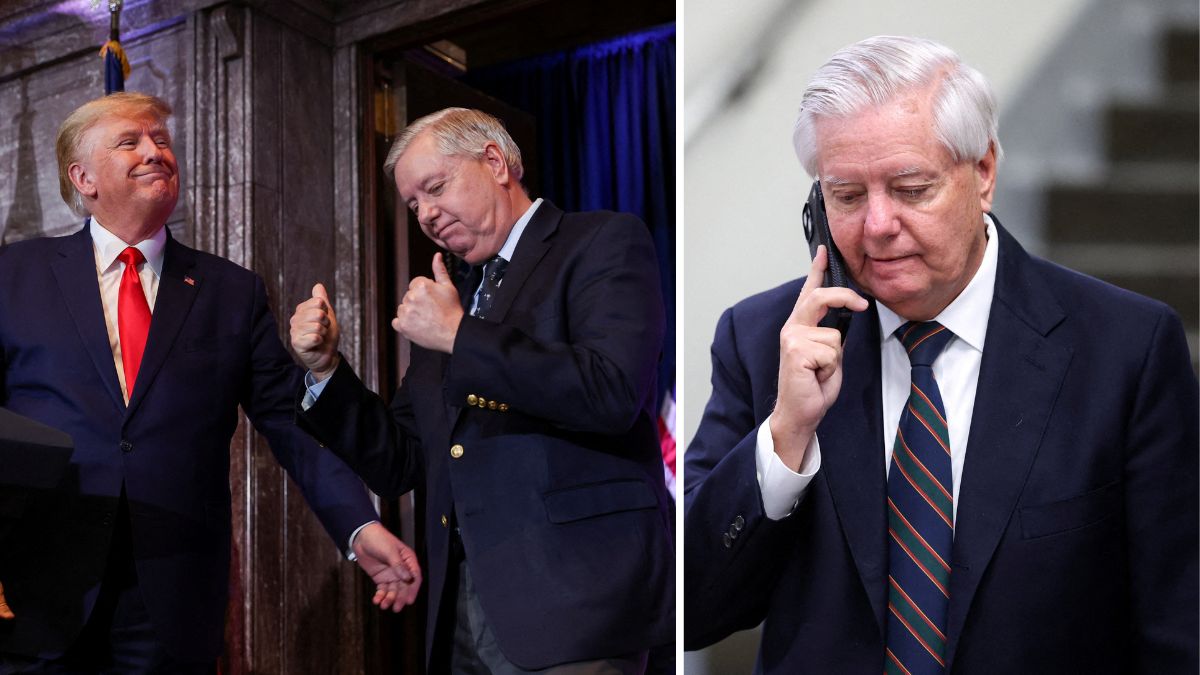
The mainstream media obituary machine is already running its favorite playbook. Following the news of Senator Lindsey Graham’s passing at 71, the predictable narratives have locked into place: the loss of a pivotal institutionalist, the sudden vulnerability of the MAGA coalition's legislative wing, and a desperate scramble to fill a supposed power vacuum.
They are wrong. They are misreading the entire mechanics of modern political capital.
The lazy consensus treats a senior senator like a irreplaceable CEO or a uniquely gifted military general. Cable news pundits are already speculating on how Donald Trump will replace his chief legislative whisperer, treating Graham's specific brand of transactional politics as an indispensable bridge between the populist right and the old-guard establishment.
But Washington doesn't work that way anymore. The idea that Graham's death destabilizes the current political alignment misunderstands a fundamental truth about modern governance: the bridge didn't matter because the river has already changed course.
The Mirage of the Indispensable Insider
For two decades, political analysts obsessed over Graham's ideological evolution. They tracked his shift from John McCain’s hawkish sidekick to Donald Trump’s golf partner as if it were a complex psychological drama. The standard consensus argued that Graham possessed a rare, tactical genius that allowed him to manipulate the populist wave from the inside.
That is a fundamental misreading of power dynamics.
Graham didn't guide the populist wave. He rode it because he understood that modern senatorial power is no longer built on personal fiefdoms or mastery of the committee room. It is built on pure, unadulterated alignment with the base's loudest signal.
When an insider of this scale passes, the immediate reaction is to look for a successor who can mimic their specific balancing act. Journalists ask: Who will be the next establishment figure to tame the populists?
That is the wrong question entirely. The correct premise is acknowledging that the establishment-populist divide is dead. The merger is complete. Graham wasn't a gatekeeper keeping the two factions talking; he was simply the mirror reflecting the final, total takeover of the party by its current leadership.
I have watched political consultants waste millions of dollars trying to manufacture "bridge candidates" who can play both sides of this coin. It fails every single time. You cannot replicate a political survivalist because survivalism is reactive, not strategic.
The Myth of the Legislative Power Vacuum
Let's address the inevitable "People Also Ask" query that dominates search engines during a sudden political transition: How will this affect major upcoming legislation?
The conventional wisdom says that without a seasoned dealmaker who knows where the bodies are buried in the Senate Judiciary Committee, legislative agendas stall. The assumption is that Graham’s institutional memory and backroom relationships were the glue holding complex judicial confirmations or defense spending bills together.
This view is completely disconnected from how the modern Senate operates.
- The Death of the Grand Bargain: The era of the individual senator hammering out a bipartisan deal over bourbon is over. Bills are written by leadership staff and special interest groups, then handed down for a party-line vote.
- The Redundancy of Access: Access to the executive branch is no longer monopolized by a few key gatekeepers. The pipeline between Mar-a-Lago and Capitol Hill is crowded with dozens of ambitious lawmakers who can pick up the phone just as quickly as Graham did.
- The Automation of Judicial Confirmations: The conservative judicial pipeline is a highly oiled machine run by external legal networks. It does not require a specific committee chairman to function; it requires a pulse and a party majority.
To believe that a single vacancy halts the momentum of a political movement is to mistake the hood ornament for the engine. The machinery of polarization ensures that whoever fills that Senate seat—whether via a quick gubernatorial appointment or a chaotic special election—will be forced into the exact same voting patterns.
The False Promise of Ideological Corrective
There is a quiet, naive hope among traditionalists that the sudden removal of a dominant political figure allows a state's politics to "reset." They look at South Carolina and imagine a return to the genteel, pre-populist era of Southern Republicanism.
Imagine a scenario where a state appoints a moderate, business-first institutionalist to fill a sudden vacancy. The donor class celebrates. The editorial boards write glowing pieces about the return of sanity and decorum.
Then comes the primary.
The reality of modern political gravity is brutal and absolute. Any successor who attempts to play the pre-2016 game will be systematically dismantled by a base that views compromise not as a tactical tool, but as outright treason. Graham understood this implicitly. His survival strategy wasn't a betrayal of his principles; it was an accurate assessment of his electorate.
The downside to this contrarian view is obvious: it paints a bleak picture of an institutional structure devoid of individual agency. It suggests that senators are merely vessels for broader, systemic forces. It is a cynical outlook, but it happens to be the only one that aligns with reality.
Stop Looking for a Successor
The media will spend the coming weeks grading potential replacements on their ability to manage the relationship with the executive branch. They will analyze shortlists based on who can best replicate Graham's unique blend of foreign policy hawkishness and domestic populism.
It is a fool's errand.
The next iteration of leadership will not look like the old one. It will not bother with the performance of institutional reverence. It will not feel the need to justify its policy shifts with references to old Senate traditions.
The vacancy left behind isn't a hole that needs to be plugged with a precise replica. It is an open doorway for a generation of politicians who don't remember the old rules at all, and have absolutely no interest in learning them. The bridge is gone, and nobody is building another one. Each faction is staying on its own side of the river, and the water is rising.