The microphones at the National Assembly are remarkably sensitive. They catch the sharp intake of breath before a politician speaks, the rustle of briefing binders, and, occasionally, the sound of a democratic line being crossed in real time.
On a June Friday, the final day of the legislative session before Quebecers head to the autumn ballot boxes, Paul St-Pierre Plamondon stood before the press gallery. The leader of the Parti Québécois possessed a comfortable audience and a microphone. He chose to talk about money. Specifically, he chose to focus on the Quebec Liberal Party, whose recent leadership race had triggered an ongoing investigation by UPAC, the province's permanent anti-corruption unit.
Then came the words that changed the temperature of the room.
He did not present a smoking gun. He did not offer a ledger or a named informant. Instead, he mused aloud about where political funds originate, wondering if the money trail led to organized crime. He called it a legitimate and logical question.
Words carry weight. In Quebec, a province where the scars of systemic corruption inquiries are deep and visible, the phrase "organized crime" is not a casual insult. It is a historical trigger.
Consider how easily a shadow is cast. A hypothetical voter, let us call her Marcelle, sits at her kitchen table in Lévis, sipping morning coffee while scrolling through the news. She does not read the full transcripts of legislative debates. She sees the headline. She registers the juxtaposition of a major political party and the mafia. Just like that, a seed of systemic cynicism is planted. The actual truth of the matter becomes secondary to the lingering bad odor of the accusation.
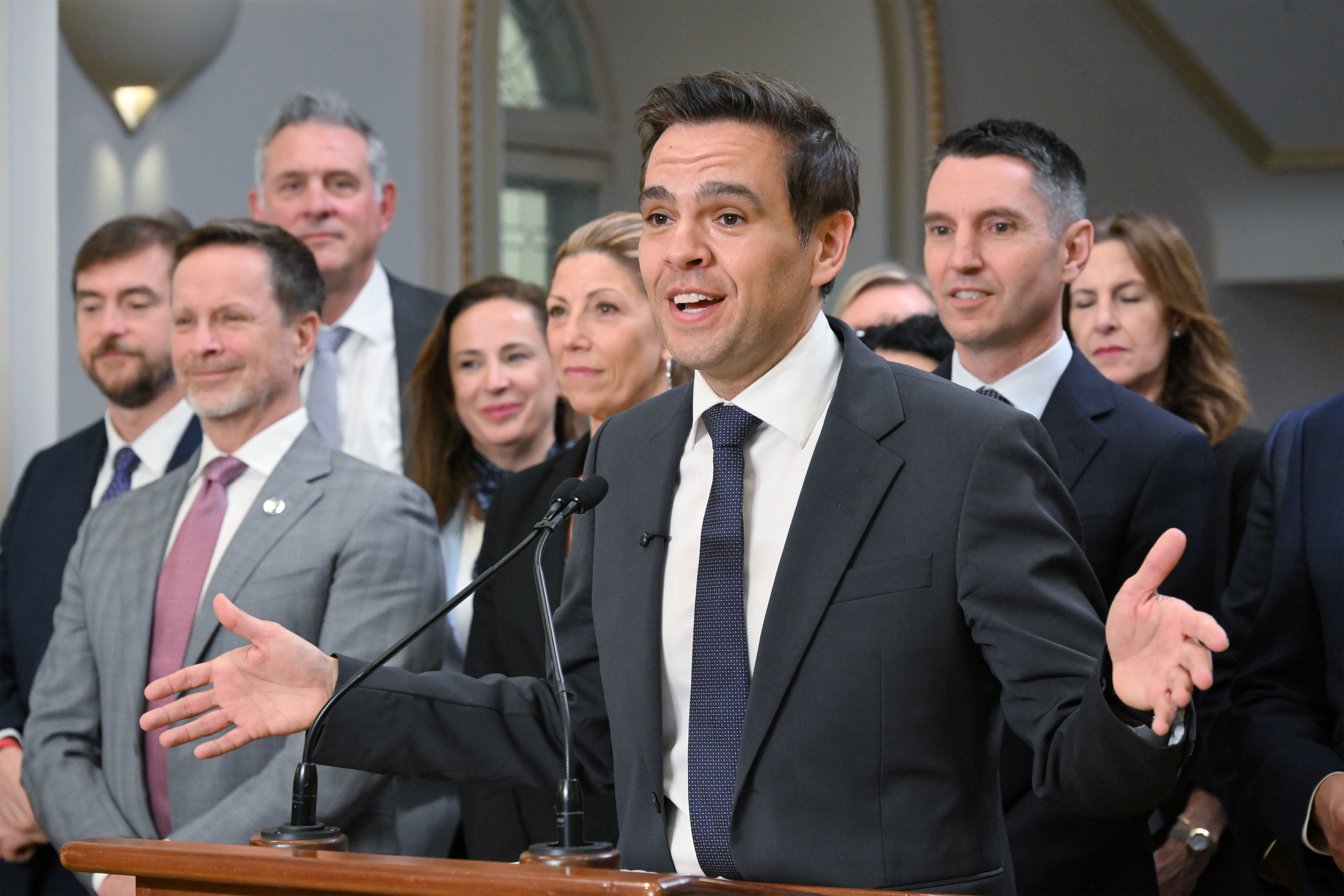
The response was swift, delivered with the quiet fury of a leader who knows his party’s survival relies on shedding the ghosts of past decades. On Sunday morning, Liberal Leader Charles Milliard called his own press conference. The tone was different. No speculation. No rhetorical flourishes.
Milliard gave the PQ leader seventy-two hours to apologize and retract the statement, threatening a comprehensive defamation lawsuit if the deadline passed unmet. There is a fundamental difference, Milliard argued, between vigorous democratic debate and throwing baseless accusations into the public sphere simply to sow doubt before an election.
By Sunday afternoon, the counter-response arrived. St-Pierre Plamondon stood his ground. He told reporters he had no intention of apologizing. He claimed he was merely asking an obvious question based on the fact that an anti-corruption unit was involved.
Defamation law, however, is notoriously indifferent to the grammatical defense of "just asking questions." Legal experts point out that wrapping a damaging insinuation in a question mark does not magically insulate a speaker from liability. If the average citizen walks away believing a political organization is funded by cartels or mobsters based on your public utterances, the damage is done.
But a courtroom drama is unlikely to unfold before the election. The wheels of justice grind slowly, far too slowly to catch up with the October campaign trail. This is about the court of public opinion, where the verdict is delivered in a single day at the polling station.
The strategy is clear. One side wants to revive ancient anxieties about political rot to position themselves as the sole honest alternative. The other side wants to draw a hard line, demonstrating a new, uncompromising spine that refuses to be bullied by old ghosts.
Meanwhile, the voter at the kitchen table is left to decipher the noise. It is easy to look at the back-and-forth legal threats and dismiss the entire episode as partisan theater. But the stakes are higher than a simple pre-election skirmish. When the language of politics degenerates from policy critiques to casual accusations of criminal conspiracy, the ultimate casualty is not one specific party's reputation.
The casualty is the institutional trust required for the whole system to function. Once that is eroded, it takes more than a retraction or a seventy-two-hour notice to build it back.