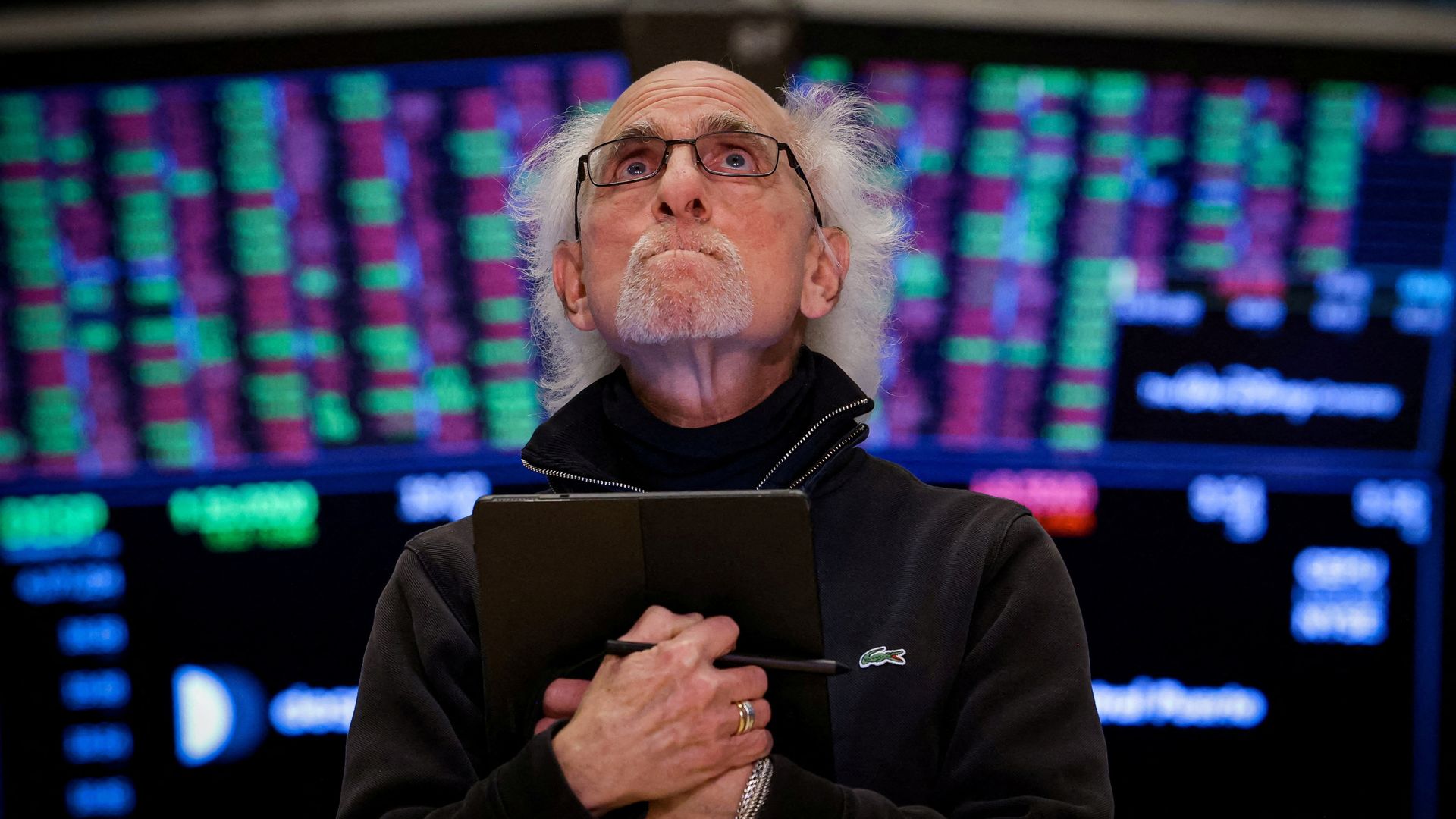
Every four years, the financial press dusts off the exact same playbook. Stocks wobble on election jitters, algorithmic headlines scream about uncertainty, and retail investors stampede into U.S. Treasuries like panicked cattle heading for a barn that is already on fire.
The prevailing wisdom is simple. Stocks are risky. Bonds are safe. When the political machine grinds toward November, you sell your equities, buy the 10-year note, watch yields drop as prices rise, and wait out the storm.
That narrative is lazy, outdated, and actively dangerous to your net worth.
Treating U.S. government debt as an automatic safe haven during an election cycle ignores the basic mechanics of modern fiscal policy, inflation expectations, and term premiums. The herd isn't buying safety. They are buying duration risk right before the exact moment politicians promise to spend trillions of dollars they do not have.
The Myth of the Automatic Flight to Safety
To understand why the consensus is broken, you have to look at what actually drives Treasury yields. Financial journalists love single-variable explanations. Equities go down, so bonds must go up. It makes for clean copy on a Tuesday afternoon.
In reality, bond yields are a cocktail of three distinct ingredients: expectations for short-term Federal Reserve interest rates, inflation expectations over the life of the bond, and the term premium—the extra yield investors demand for locking up their money for years instead of rolling over short-term bills.
During a traditional economic recession, the "flight to safety" works because growth is collapsing. Falling growth crushes inflation expectations and forces the Federal Reserve to slash interest rates. In that environment, buying long-dated Treasuries is a brilliant trade. Yields plummet, bond prices surge, and you look like a genius.
An election sell-off is not a deflationary recession. It is a political repricing event.
When stocks sell off ahead of a major election, the market isn't suddenly discovering that consumers have stopped buying groceries. It is reacting to tax policy uncertainty, regulatory shifts, tariffs, and geopolitical posturing. None of those things cure inflation. In fact, almost every item on a modern political menu—whether it is deficit-financed tax cuts, massive green energy subsidies, universal tariffs, or industrial policy—is inherently inflationary.
If you buy a 10-year Treasury note at a depressed yield because you are scared of stock market volatility, you are making a massive bet that inflation will stay dead while Washington prepares to open the fiscal firehose. I have watched institutional desks lose hundreds of millions of dollars making that exact assumption. They mistook a temporary liquidity squeeze for a structural shift in growth, bought the dip in yields, and got steamrolled the moment the post-election fiscal reality set in.
The Deficit Elephant in the Room
Let’s talk about supply and demand, the two words Wall Street conveniently forgets whenever panic sets in.
The United States government is running structural budget deficits that used to be reserved exclusively for world wars and global pandemics. Regardless of which party takes the White House or controls Congress, the Congressional Budget Office baseline projections show debt-to-GDP marching relentlessly higher. Neither side is campaigning on austerity. Austerity doesn't win swing states.
When the Treasury Department has to issue trillions of dollars in new debt just to pay the interest on the old debt and fund mandatory entitlement programs, the market has to absorb that supply. For decades, price-insensitive buyers like the Federal Reserve (via Quantitative Easing) and foreign central banks (recycling trade surpluses) soaked up those bonds without blinking.
Those buyers have stepped back. The Fed has spent years shrinking its balance sheet through Quantitative Tightening, and foreign sovereigns are diversifying their reserves. Today, the marginal buyer of U.S. debt is a price-sensitive private investor, a hedge fund, or a pension manager.
Think about what that means when yields fall during an election scare.
Imagine a scenario where pre-election anxiety pushes the 10-year Treasury yield down by 30 basis points in two weeks. Retail investors cheer their paper gains. Meanwhile, the Treasury announces its next quarterly refunding, revealing another massive wave of long-end issuance to cover a widening deficit. Suddenly, those price-sensitive private buyers look at a lower yield and say, "No thanks. Not at that price." Yields snap back violently, erasing months of equity-hedging gains in forty-eight hours.
Buying long-duration bonds when yields dip on political noise is picking up pennies in front of a steamroller. You are front-running a temporary panic while ignoring a permanent supply glut.
Why Your Portfolio Hedge Is Actually Correlated Risk
For over twenty years, from roughly 2000 to 2021, investors enjoyed a golden era of portfolio construction. Stocks and bonds were negatively correlated. Whenever the S&P 500 tanked, Treasuries rallied. The classic 60/40 portfolio felt invincible because the 40 percent bond allocation acted as an automatic shock absorber.
Many investors still treat that twenty-year window as an immutable law of physics. It wasn't. It was a historical anomaly driven by globalization, cheap labor, and persistently low inflation.
If you zoom out and look at market history from the 1960s through the 1990s, stocks and bonds frequently moved in the exact same direction. When inflation is the primary macro threat, higher yields hurt both asset classes simultaneously. Higher rates increase the discount rate used to value future corporate earnings (crushing stock multiples) while directly driving down the market value of existing bonds.
In 2022, investors learned this lesson the hard way when both the S&P 500 and long-term Treasuries suffered double-digit losses at the same time. Yet, the moment volatility spikes around an election, muscle memory takes over and people rush right back into the exact same duration trap.
| Market Regime | Primary Driver | Stock Behavior | Long-Term Bond Behavior | Portfolio Effect |
|---|---|---|---|---|
| Deflationary Bust (e.g., 2008, 2020) | Collapsing demand & liquidity | Sharp sell-off | Strong rally (yields plunge) | True Hedge: Bonds offset equity losses |
| Inflationary / Fiscal Shock (e.g., 1970s, 2022) | Rising rates & supply constraints | Valuation compression | Sharp sell-off (yields spike) | Double Whammy: Both assets lose value |
| Election Volatility | Policy uncertainty & deficit expansion | Choppy repricing | Initial dip in yields, followed by supply shock | Fake Hedge: Temporary relief, high reversal risk |
When you crowd into Treasuries during an election sell-off, you are assuming we are in the first row of that table. In reality, modern political cycles put us squarely in the second and third rows.
Dismantling the Bad Questions Investors Ask
When markets get choppy, search engines light up with the same predictable questions. Almost all of them are built on flawed premises. Let’s tear them down.
Are Treasury bonds completely safe during an election?
This depends entirely on your definition of safety. If by "safe" you mean the U.S. government will not technically default on its dollar-denominated debt obligations, then yes, they are safe. The Treasury can always print the dollars to pay you back.
If by "safe" you mean your principal won't lose value or purchasing power, the answer is a flat no. Credit risk (the risk of default) is zero, but duration risk (the risk that rising interest rates crush the market price of your bond) is massive. A 20-year Treasury bond can swing in price just as violently as a tech stock. If you buy a long-term bond when yields dip during an election panic, and yields rise just one percentage point after the votes are counted, you can easily lose 12 to 15 percent of your principal on a "risk-free" asset.
Should I sell my stocks before the election and hide in bonds?
Trying to time the market around political events is one of the fastest ways to destroy wealth. Data going back nearly a century shows that the stock market cares infinitely more about corporate earnings, liquidity, and the business cycle than it does about who sits in the Oval Office.
Investors routinely overestimate the impact of presidents on the economy and underestimate the adaptability of public companies. When you sell equities during a pre-election dip and rotate into low-yielding bonds, you have to be right twice: you have to get out before the bottom, and you have to have the nerve to buy back in when the headlines are still terrifying. Almost nobody pulls that off. Most people lock in equity losses, buy bonds at the top of a temporary rally, and watch from the sidelines as stocks rip higher once the election uncertainty clears.
What happens to bond yields after an election?
Once the political noise fades, the bond market immediately pivots back to math. Specifically, it looks at the winning party's fiscal platform and calculates how much new debt will be required to pay for it.
Historically, post-election environments often feature a steepening yield curve. Short-term rates remain anchored by whatever the Federal Reserve is doing with monetary policy, while long-term yields drift higher to price in heavier government borrowing and potential inflation. The exact "safety" trade that looked so smart in October frequently turns into a bleeding position by January.
The Nuance the Consensus Misses
Before you dump every fixed-income asset you own, let’s introduce some intellectual honesty. Saying "bonds are a trap" without distinguishing between different parts of the yield curve is just as sloppy as saying "bonds are safe."
The bond market is not a monolith. There is a massive difference between lending money to the U.S. government for three months versus lending it for ten or thirty years.
When financial media reports that "Treasury yields are falling," they are usually talking about the benchmark 10-year note. That is where speculative money and institutional hedgers pile in to express macro views. It is also where the greatest danger lies.
If you actually want safety, liquidity, and protection against an election-induced equity drawdown, you do not buy the 10-year note. You stay at the very front end of the curve.
How to Actually Position for Political Chaos
If you want to survive an election cycle without getting burned by false narratives, stop playing the duration game and execute a strategy built on actual math.
Hug the Front End of the Curve
If you want genuine safety, buy Treasury bills (T-bills) with maturities of three to six months, or stick to high-yield government money market funds. T-bills have virtually zero duration risk. If inflation spikes or the government announces another trillion-dollar spending package, your principal doesn't flinch. You collect a steady, predictable yield while keeping your dry powder completely intact.Use TIPS for Real Inflation Protection
If you feel compelled to hold longer-dated government debt, look at Treasury Inflation-Protected Securities (TIPS) rather than nominal bonds. Nominal Treasuries pay a fixed dollar amount; if post-election fiscal stimulus reignites inflation, your real return evaporates. TIPS adjust their principal value upward based on the Consumer Price Index. You are still exposed to changes in real interest rates, so keep the maturity short to intermediate, but you at least neutralize the biggest threat posed by reckless politicians.Treat Volatility as a Rebalancing Trigger, Not an Exit Sign
Instead of abandoning your asset allocation because cable news is screaming about an election, use predetermined thresholds to rebalance. If stocks drop 10 percent and your portfolio shifts from 70/30 to 65/35, you don't sell stocks to buy bonds. You do the exact opposite. You take the cash sitting in your short-term T-bills and buy the equities that panicking investors are dumping at a discount.Demand a Margin of Safety in Equities
Rather than fleeing the stock market entirely, rotate out of high-multiple, speculative names that depend on cheap capital and political favors. Move into cash-rich businesses with strong balance sheets, pricing power, and minimal reliance on government contracts. A company that generates massive free cash flow and buys back its own shares doesn't care who wins a swing state in Pennsylvania.
The Honest Downside to Sitting Short
No strategy is bulletproof, and pretending otherwise is how amateurs get wiped out. If you reject the long-bond safety trade and park your defensive capital in short-term T-bills, you face one specific risk: reinvestment risk.
If the election sell-off isn't just political noise—if it actually coincides with a severe, unexpected economic crash—the Federal Reserve will slash short-term interest rates aggressively. In that specific scenario, the yield on your T-bills will drop rapidly every time they mature and roll over. Meanwhile, the investors who bought the 10-year and 30-year Treasuries will enjoy massive capital appreciation as long-term yields collapse.
You have to decide which risk you are more willing to underwrite. Are you willing to risk missing out on a bond rally during a deflationary depression, or are you willing to risk getting crushed by duration losses during an inflationary fiscal binge? Given the structural realities of modern government spending, betting against fiscal discipline is the far higher-probability play.
Stop Buying the Headline
Markets are efficient machines for transferring money from the impatient to the disciplined. Every election cycle, the herd convinces itself that this time the political stakes are uniquely existential, and this time hiding in long-term government bonds is the only rational move.
They are looking in the rearview mirror. The bond market of the 2020s is governed by massive debt issuance, stubborn inflation dynamics, and a central bank that can no longer effortlessly suppress yields without breaking the currency.
Let the crowd stampede into the 10-year note and drive yields down. Keep your defensive money in short-term bills, keep your head while everyone else loses theirs, and use their panic to buy real assets on sale.