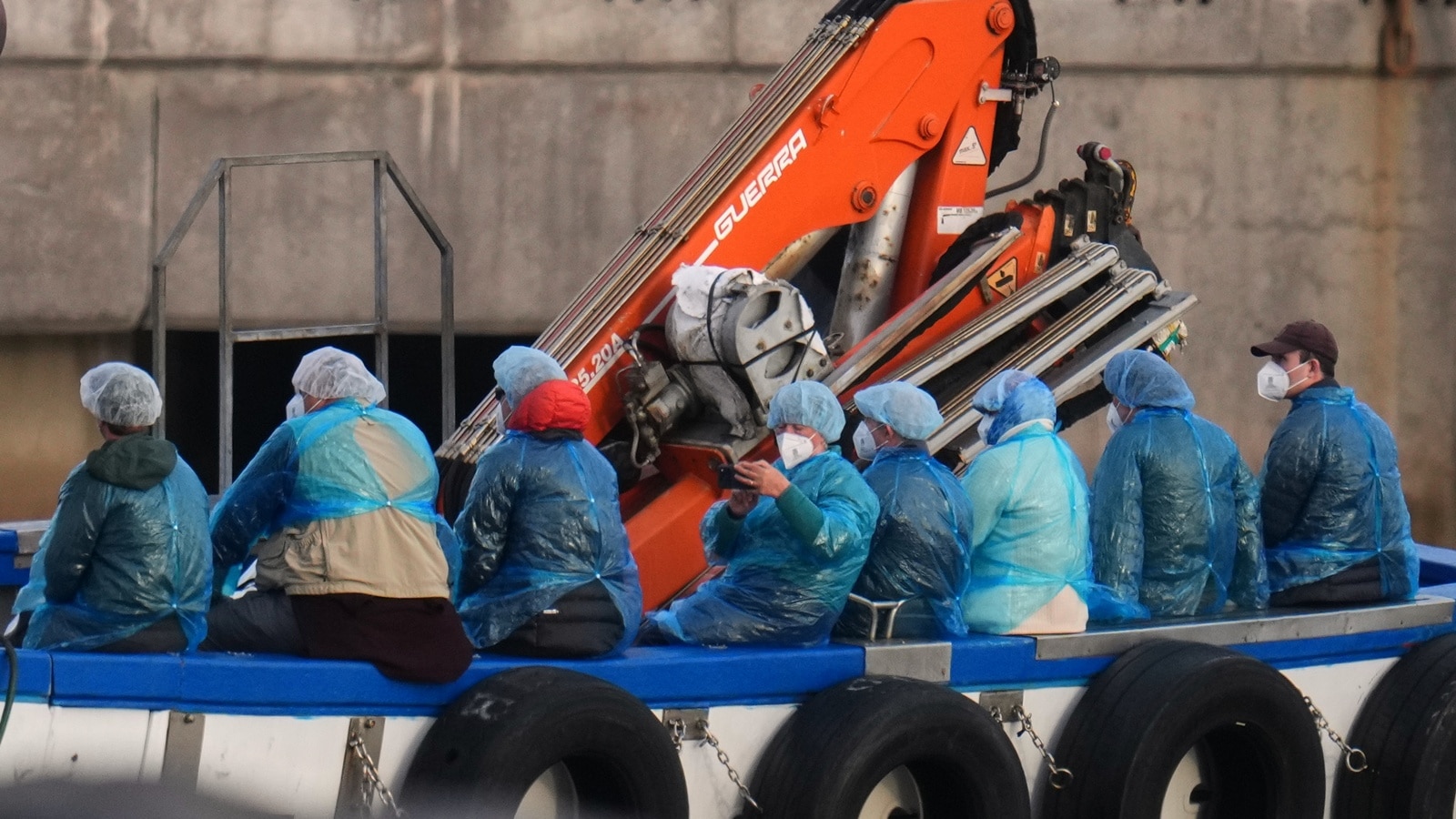
Fear is the most profitable cargo a cruise line never intends to carry. When news broke of a ship being evacuated due to "Hantavirus concerns," the media did what it does best: triggered a feedback loop of biological illiteracy. We saw headlines screaming about floating petri dishes and quarantine zones. We saw stock prices dip. We saw passengers weeping on piers as if they had just survived a brush with the Black Death.
It was all theater.
If you understand the basic mechanics of viral transmission and maritime logistics, you realize that an "evacuation" for Hantavirus is like burning down a house because you found a single spider in the attic. It is an overreaction so profound that it borders on institutional malpractice. The "lazy consensus" here is that cruise ships are uniquely vulnerable to every viral threat under the sun. The reality? Hantavirus is perhaps the one thing a cruise passenger almost certainly cannot catch while at sea.
The Rodent Math Problem
To understand why this panic was manufactured, we have to look at the biology of the virus itself. Hantavirus is not the flu. It is not COVID-19. It does not spread through casual human-to-human contact. For a human to contract Hantavirus, they generally need to inhale aerosolized particles of urine, droppings, or saliva from very specific species of rodents—primarily the deer mouse (Peromyscus maniculatus) or the cotton rat.
Now, let’s look at the environment of a modern cruise ship.
These vessels are steel fortresses. They are audited by the CDC’s Vessel Sanitation Program (VSP) with a level of scrutiny that would make a five-star Michelin restaurant sweat. To have a Hantavirus outbreak, you don't just need "a mouse." You need an established, breeding population of specific wild sylvan rodents living in the ventilation ducts or the galley.
I have spent twenty years in maritime logistics. I have seen ships with roach problems. I have seen ships struggle with Norovirus because a single passenger didn't wash their hands after the buffet. But a colony of deer mice thriving on a ship that spends 90% of its time in salt-air environments? It defies the ecological requirements of the host. Mice on ships are usually "hitchhikers" in dry goods, and they don't last long under the regime of industrial-grade pest control required by international maritime law.
The Evacuation Fallacy
Why evacuate? If the goal was truly public health, an evacuation is the worst possible move.
When you "evacuate" thousands of people from a controlled environment into a port city, you are accelerating the spread of whatever pathogen you think you have. If the authorities actually believed there was a transmissible threat, the ship would be held in offshore quarantine. The fact that they let people off the boat tells you everything you need to know: the threat was never the virus. The threat was the liability.
The cruise industry is terrified of the "plague ship" narrative. Since 2020, the sector has been walking on eggshells. One sneeze in the atrium and the legal department starts drafting refund vouchers. The evacuation wasn't a medical necessity; it was a PR exorcism. They dumped the passengers to signal "decisive action" to the shareholders.
The Reality of Risk vs. The Perception of Safety
Let's talk about $Sin\ Nombre$ virus—the most common strain of Hantavirus in North America. The mortality rate is high, roughly 38%. That sounds terrifying. But the incidence rate is infinitesimal. You are statistically more likely to be struck by lightning while winning the lottery than you are to contract Hantavirus on a Caribbean cruise.
The "People Also Ask" sections of the internet are currently filled with terrified travelers asking: "Is it safe to go on a cruise?"
The honest, brutal answer? Your greatest risk on a cruise is the high-sodium diet and the ladder in the pool, not a rare zoonotic respiratory virus. By entertaining the Hantavirus narrative, we are validating a culture of hyper-fragility. We are teaching travelers that any deviation from a sterile, bubble-wrapped existence justifies a national news cycle.
Why the "Petri Dish" Narrative Persists
The media loves the "petri dish" trope because it’s easy. It requires no investigative depth.
- Enclosed Space: Check.
- Buffet Food: Check.
- International Travelers: Check.
It’s a perfect recipe for a low-effort scare story. But cruise ships are actually some of the most monitored health environments on the planet. Unlike an office building, a mall, or a subway system, a cruise ship tracks every medical clinic visit in real-time. If three people show up with the same symptom, an alarm goes off.
Compare this to a standard hotel in Las Vegas. If ten people catch a respiratory bug in a Vegas resort, they go home to ten different states and no one ever connects the dots. The cruise ship is "dangerous" only because it is transparent. We see the data, so we fear the data.
The Cost of Institutional Panic
When a ship is evacuated for a non-threat, the secondary effects are devastating. We waste port resources, clog up local healthcare systems with "worried well" passengers, and destroy the local economy of the destination.
Imagine a scenario where a small island nation prepares for a docking, only to have the ship turn into a floating pariah because a single crew member had a fever and a janitor saw a mouse. The island loses the revenue, the passengers lose their vacation, and the only winner is the news outlet that got five million clicks on a headline about "The Death Ship."
Stop Fixing the Wrong Problem
The industry doesn't need better "evacuation protocols." It needs a spine.
It needs leaders who can stand in front of a camera and say: "We found a rodent. We trapped it. The risk to passengers is zero. The buffet is open." Instead, they fold. They evacuate because they are more afraid of a Twitter mob than they are of a biological reality.
If you are a traveler, stop looking for "Hantavirus-free" certifications. It’s a ghost. It’s a distraction from the real risks of travel—like the fact that you haven't checked your travel insurance policy for medical evacuation coverage or that you're ignoring the very real threat of Norovirus by touching the tongs at the salad bar.
The Hantavirus cruise evacuation was a masterpiece of modern anxiety—a high-stakes drama built on a foundation of zero evidence and poor biology. We have reached a point where the perception of a threat is treated with more urgency than the threat itself. If we continue to abandon billion-dollar assets and displace thousands of people every time a "possibility" of a rare virus emerges, we aren't practicing public health. We are practicing a secular form of superstition.
The mice weren't the problem. The panic was.
Stay on the ship. Eat the shrimp. Stop reading the headlines.