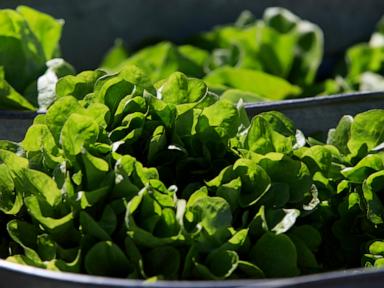
The walk-in cooler hums a low, teeth-aching vibration that anyone who has ever worked in a restaurant knows in their bones. At three in the afternoon, the air inside is frigid, smelling faintly of bleach, damp cardboard, and the metallic tang of stainless steel shelves.
Elena stands inside that box of manufactured winter, her fingers stiffening as she reaches for a plastic crate. She lifts it. It feels wrong. Too light. Too expensive for what it actually contains.
She pulls out a head of romaine. Or rather, what used to be a crisp, sturdy crown of green architecture. Instead, it yields under her thumb, bruised, yellowing at the edges, and carrying a price tag that makes her stomach twist. She remembers a time when a case of lettuce was an afterthought on the weekly invoice. A background player. A green garnish tossing casually beside a burger or anchoring a quick lunch salad.
Not anymore.
Today, that modest crate of leaves represents a financial hostage situation. Restaurant owners across the country are staring at spreadsheets that refuse to balance, caught between soaring wholesale costs that squeeze their margins to dust and the constant, terrifying whisper of a microscopic threat hiding right inside the produce drawer.
Prices climb. Parasites lurk. And the neighborhood bistro, the place where you celebrated birthdays and grabbed quiet Tuesday night dinners, absorbs the blow until it can't breathe anymore.
To understand how a simple leafy green became one of the most volatile commodities in modern commerce, you have to look past the white tablecloths and peer into the chaotic machinery of modern agriculture and supply chains.
Consider a hypothetical diner in Ohio, run by a chef who has spent twenty years perfecting a house Caesar dressing. To him, the lettuce is not a commodity symbol on a futures market. It is trust. It is the crunch a regular customer expects when they sit down at booth four.
When wholesale prices spike by fifty percent overnight—driven by erratic weather patterns, punishing droughts in primary growing regions like California and Arizona, and skyrocketing fuel costs—that chef faces an impossible choice. He can absorb the loss and watch his modest profit margin evaporate. He can raise the price of a house salad to fifteen dollars and watch his regulars stop ordering it. Or he can switch to a cheaper, inferior alternative and watch the quality of his life’s work degrade.
Most choose to absorb it, bleeding quietly behind the scenes. They cut labor hours. They streamline menus. They hope next month brings relief.
Except next month usually brings something worse.
It arrives silently. No warning label. No dramatic hiss.
Cyclospora.
The name sounds clinical, almost academic, but in the tight quarters of a commercial kitchen, it is a nightmare. This microscopic parasite has a grim habit of hitching a ride on imported or domestically grown leafy greens, slipping past initial washes because standard sanitizers often fail to dislodge it.
When an outbreak hits, the machinery of public health grinds into motion. Traceback investigations begin. The Centers for Disease Control and Prevention issues advisories. Suddenly, entire regions of agricultural output are flagged.
For a massive corporate chain, a lettuce recall is a logistical headache solved by a legal team and a swift supply chain pivot. For an independent restaurant, it can be a death sentence.
Imagine opening your morning emails to find that the local health department or your distributor has flagged the exact brand of greens sitting in your walk-in. You don't just throw away forty pounds of romaine. You throw away consumer confidence. Even if your kitchen has never had a single case of foodborne illness, the mere association of lettuce with contamination casts a long, devastating shadow over the dining room. Customers read the headlines over their morning coffee. By evening, tables sit empty.
We have built a food system optimized for speed, scale, and year-round availability, and we are now paying the interest on that debt.
For decades, consumers grew accustomed to walking into a grocery store in January and finding pristine heads of iceberg and tender spring mixes stacked high and cheap. We forgot that agriculture is seasonal. We forgot that farming relies on stable water tables, predictable weather, and immense human labor.
When those pillars wobble, the ripple effect reaches the back door of every restaurant from coast to coast.
The economic pressure is relentless. Fertilizer costs have surged. Agricultural workers are harder to retain as rural housing costs skyrocket and immigration patterns shift. Water rights in the American Southwest have turned into legal battlegrounds, forcing farmers to fallow fields that once fed millions. Every single one of these macro-economic shocks trickles down until it lands squarely on the cutting board of a line cook making minimum wage.
And yet, the resilience of these kitchens remains stubbornly alive.
Walk through the back doors of any thriving urban neighborhood at dawn, and you will see the pivot in real-time. Chefs are rewriting menus to feature root vegetables, ancient grains, and greenhouse-grown hydroponic greens sourced from urban micro-farms down the street. They are moving away from dependency on massive, fragile monoculture supply chains that stretch across thousands of miles.
They are discovering that if lettuce is going to be a luxury item fraught with risk, it is time to stop treating it like an infinite, disposable commodity.
The crisis is forcing a reckoning. It asks us to look at our plates and recognize the invisible web of labor, climate, economics, and microbiology required to put a green leaf in front of us. It reminds us that cheap food often carries a hidden price tag paid by the farmer, the restaurateur, or the public health system.
The walk-in cooler hums on. The door shuts with a heavy, magnetic thud, sealing in the cold. Outside, the dinner rush is about to begin, and somewhere out there, a chef is prepping a new menu, betting everything on the hope that tomorrow the greens will be safe, the prices will hold, and the people will keep walking through the front door.