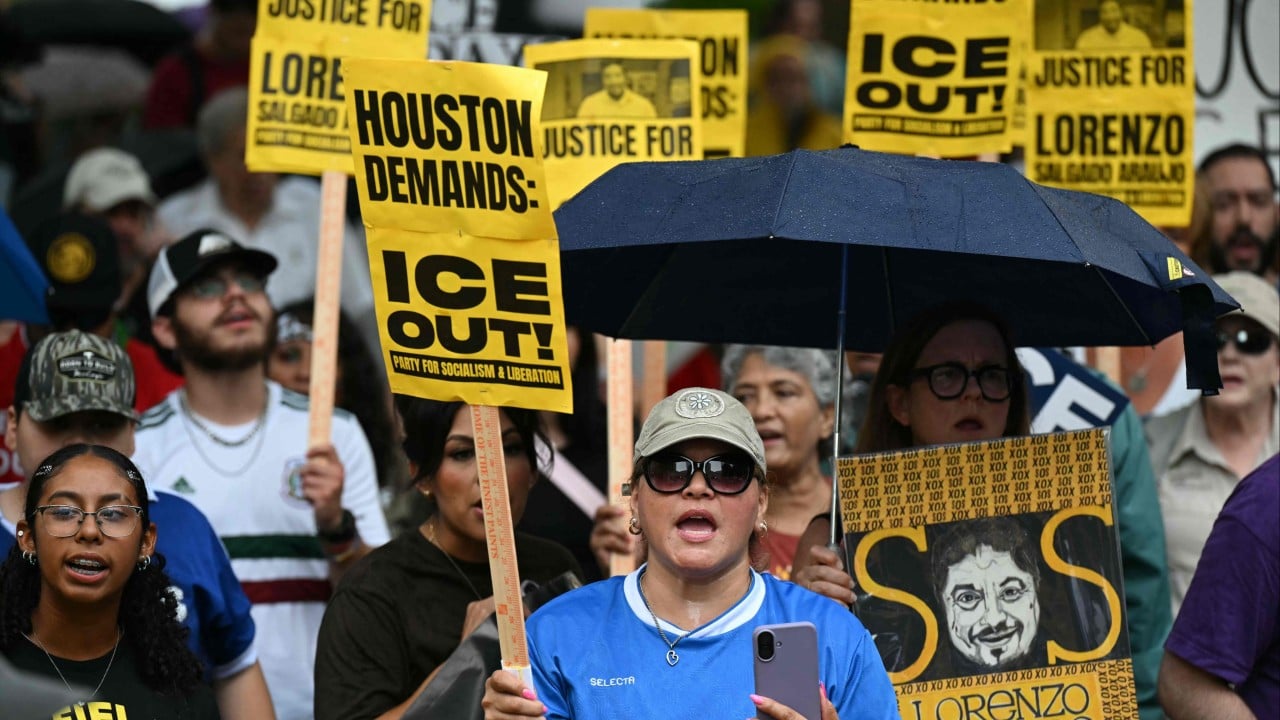
The recent decision by Immigration and Customs Enforcement to restrict vehicle stops following high-profile, tragic incidents is being celebrated as a triumph for public safety. The prevailing media narrative is predictable: federal agents are engaging in high-speed cowboy antics, and banning or severely limiting these pursuits will instantly make roads safer.
This is a dangerous lie.
The policy shift is a classic piece of bureaucratic theater designed to appease activist pressure while ignoring the brutal realities of transnational crime on the southern border. By stripping field agents of the authority to intercept suspects in vehicles, federal authorities are not reducing danger. They are simply outsourcing it to transnational criminal organizations who are already celebrating this policy change as a massive reduction in their cost of doing business.
We need to look past the sanitised PR statements and dissect the real-world mechanics of human smuggling, the economics of cartel recruitment, and the law enforcement strategies that actually protect the public.
The Illusion of the No-Chase Safety Dividend
The core argument of the anti-pursuit lobby relies on a simplistic, linear equation: if law enforcement stops chasing, fleeing drivers will slow down, and accidents will plummet.
This theory ignores basic human psychology and criminological data.
When a suspect fleeing federal agents knows there is a strict "no-chase" policy, their incentive to drive recklessly does not disappear. It increases. In jurisdictions across the country where local police departments implemented blanket bans on vehicle pursuits, the result was not a sudden outbreak of safe driving. Instead, these cities saw a dramatic spike in fleeing vehicles. Suspects quickly realized that simply stepping on the gas pedal acted as an instant "get out of jail free" card.
In the context of border security, the dynamics are even more extreme. The individuals behind the wheel of smuggling vehicles are not ordinary citizens panicking during a traffic stop. They are often working directly for cartels, under intense financial pressure, or carrying cargo that represents tens of thousands of dollars in illicit profit.
[Vehicle Pursuit Ban Implemented]
       │
       ▼
[Suspects Learn Policy Limits]
       │
       ▼
[Increased Propensity to Flee]
       │
       ▼
[Higher Rate of High-Speed Recklessness]
When ICE signals to these syndicates that vehicles will not be stopped if they pose a pursuit risk, it establishes a perverse incentive structure. Smugglers will deliberately drive more erratically, pack more people into unventilated truck beds, and run red lights specifically to trigger the "safety" threshold that forces agents to call off the interception.
The Cartel Playbook: Exploiting Bureaucratic Cowardice
To understand why this policy is a disaster, you have to understand how human smuggling syndicates actually operate. I have spent years analyzing the tactical operations of transnational criminal organizations. They do not operate in a vacuum. They are highly adaptive, market-driven enterprises that monitor US law enforcement policy changes with the precision of Wall Street day traders.
Cartels do not use seasoned operatives to drive loads of migrants or contraband across domestic highways. Instead, they use digital recruitment strategies to source disposable drivers.
- Social Media Recruiting: Cartels post ads on TikTok, Snapchat, and Instagram offering thousands of dollars for "quick transport jobs" in border states.
- Targeting Youth: The targets are often teenagers or young adults from low-income areas who do not understand the federal felony charges they will face if caught.
- Misleading Instructions: Recruiters explicitly tell these young drivers that federal agents are not allowed to chase them if they drive fast enough.
By codifying a ban on vehicle stops, federal authorities have validated the cartels' recruiting pitches. The cartels can now promise their teenage drivers that as long as they drive aggressively, ICE will back off.
This policy does not save lives. It increases the supply of exploitable youth willing to risk their lives behind the wheel, knowing the rules of engagement are stacked in their favor.
Dismantling the Fallacy of the Reckless Federal Agent
The media coverage surrounding vehicle stop tragedies almost exclusively blames law enforcement for the outcome. The underlying assumption is that the agent’s decision to initiate the stop is the proximate cause of the crash.
This is a fundamental misunderstanding of agency and culpability.
The person responsible for a vehicle crash during an attempted stop is the driver who refuses to pull over. Treating the pursuing officer as the primary threat to public safety is an act of intellectual dishonesty that shifts the blame from the criminal actor to the state.
Furthermore, federal agents do not initiate vehicle stops on a whim. These actions are typically the result of coordinated intelligence, physical surveillance, and a reasonable suspicion of federal felony activity. When we force agents to stand down, we are allowing individuals suspected of human trafficking, narcotics distribution, and arms smuggling to drive freely through American communities.
The Unintended Consequences of Tactical Retreat
Every policy has a trade-off. If ICE ceases vehicle stops, what happens to the individuals being transported?
When a vehicle stop is halted, the vehicle does not safely park at its destination. The migrants inside are still under the control of smuggling networks. They are still headed to stash houses—frequently run by cartels—where they are subjected to extortion, physical abuse, and forced labor to pay off their smuggling debts.
       [Knee-Jerk Stop Ban]
               │
       ┌───────┴───────┐
       ▼               ▼
 [More High-Speed [More Migrants Delivered]
  Evasion Tactics]     │
                       ▼
             [Stash House Extortion]
By preventing agents from intercepting these vehicles on the highway, the government is ensuring that these individuals reach the next, far more dangerous stage of the smuggling pipeline. We are trading a highly visible, public safety risk on the highway for an invisible, horrific human rights crisis in suburban stash houses.
The Reality of Field Operations
To build a policy that actually works, we must acknowledge the harsh realities of field work rather than crafting rules from comfortable offices in Washington.
A blanket ban on vehicle stops is a blunt instrument used by administrators who lack the courage to defend their agents when things go wrong. High-speed pursuits are incredibly stressful, dangerous, and require split-second decision-making. But the solution is not to surrender the roadway to criminals.
The solution is a rigorous, tech-driven framework that allows agents to disable vehicles safely without initiating high-speed chases.
Why Technology, Not Banishment, is the Answer
If the goal is to reduce crashes, we should look to tactical intervention technologies that eliminate the need for sustained high-speed chases:
- GPS Tracking Darts: Systems like StarChase allow agents to launch a GPS tracker onto a fleeing vehicle, allowing law enforcement to back off and track the suspect from a safe distance until they stop.
- Remote Engine Shutoffs: Requiring shipping and logistics vehicles frequently used in smuggling to have remote deactivation capabilities.
- Coordinated Air Support: Using aerial surveillance to track vehicles to their final destinations, allowing tactical teams to make arrests in controlled environments rather than on active highways.
Implementing these technologies requires investment, training, and a willingness to adapt. Unfortunately, banning vehicle stops is free, fast, and generates positive headlines from the lazy consensus of the media.
The Hard Truth About Public Safety
Let us be completely honest about the trade-offs.
Yes, continuing to conduct vehicle stops means that crashes will occasionally happen. Fleeing suspects will continue to make reckless, fatal decisions. But the alternative is far worse.
A nation that cannot, or will not, police its own transportation corridors is a nation that has surrendered its sovereignty. When we tell transnational syndicates that our roads are safe zones for their vehicles, we invite more exploitation, more trafficking, and ultimately, more violence.
We must reject the childish notion that we can eliminate all risk from law enforcement operations. The job of federal law enforcement is to manage risk in a way that minimizes harm to the public while maintaining the rule of law. Surrendering the highways to cartels to avoid bad press is not risk management. It is cowardice.

