Silence.
Not the polite quiet of a golf gallery or the hush before a field goal kick, but the heavy, unnatural stillness that drops over a locker room when a word like "clots" enters the conversation. Read more on a related issue: this related article.
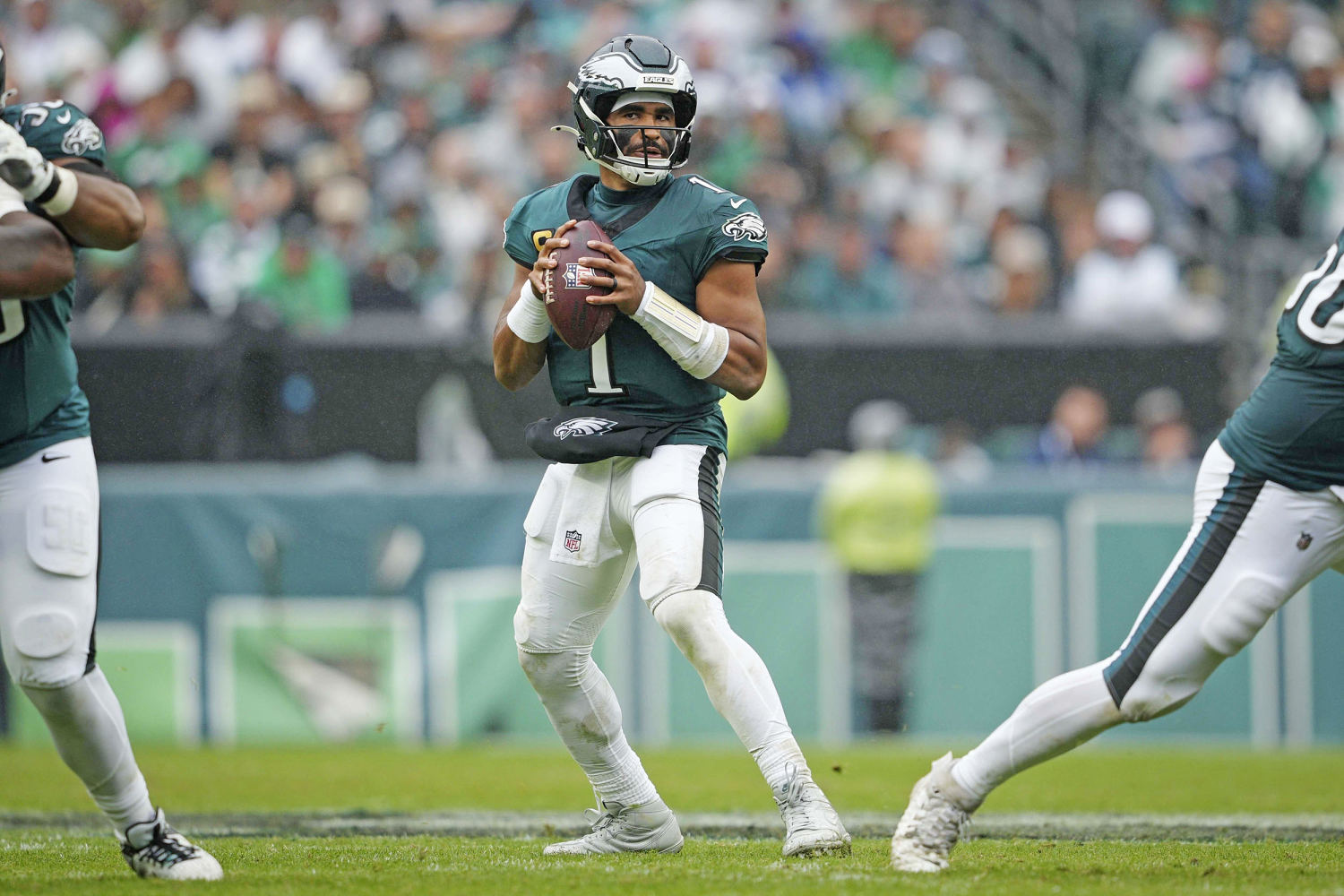
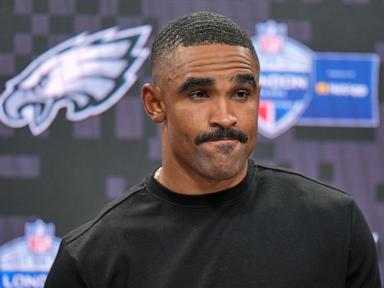
When the Philadelphia Eagles announce that quarterback Jalen Hurts has blood clots in his lungs, the injury report stops reading like a sports ticker and starts sounding like a medical bulletin. Fans look at the box score and wonder how many weeks he might miss. Doctors look at the anatomy and feel their pulse pick up.
A sprained ankle has a shape you can trace with your thumb. A torn ligament makes a sound you remember. Blood clots in the lungs—clinically known as a pulmonary embolism—are quiet until they aren't. They hide inside vessels you cannot see, carried along by the very river of life that keeps an athlete standing upright under three hundred pounds of moving muscle. Further journalism by The Athletic highlights similar views on the subject.
I have stood on sidelines and watched fierce competitors turn pale over things that looked minor from the press box. Once, a young distance runner I worked with told me his chest felt "a little heavy after flights," blaming jet lag and dry cabin air for two weeks before a routine scan caught a clot that had no business being there. Watching someone whose whole identity is built on lung capacity and grit suddenly realize their body set a silent trap is terrifying. It strips away the illusion that peak conditioning makes a person immune.
The Invisible Highway Inside Every Athlete
To understand why blood clots in the lungs carry such weight for an NFL quarterback, you have to follow the path a clot takes. (Note: The following anatomical walkthrough uses a simplified plumbing metaphor to explain how circulation and clotting interact.)
Think of the body's venous system as a network of return pipes bringing used, oxygen-poor blood back from the legs and torso to the heart, which then pumps it straight into the lungs to pick up fresh oxygen. If a blood clot—a thrombus—forms in a deep vein, often in the lower leg or thigh, and a piece breaks loose, it travels with the current. Where does that current deliver it? Right into the branching arteries of the lungs.
Once lodged there, a clot creates a traffic jam where oxygen exchange is supposed to happen. Blood flow slows or stops behind the blockage. The right side of the heart has to push harder against sudden resistance to force blood through narrowed passages. Mild cases might cause sharp chest pain when breathing in, shortness of breath that feels out of proportion to exertion, or a nagging cough. Severe cases can strain the heart dangerously or starve tissue of oxygen.
For an everyday person, a pulmonary embolism is already a serious medical event requiring prompt evaluation, blood-thinning medication (anticoagulants), and close monitoring. For a starting quarterback in the National Football League, every piece of that picture carries extra friction.
Consider what happens next: a player who thrives on split-second decisions, four-quarter endurance, and taking hits in the pocket is suddenly dealing with an internal condition that cannot be taped, braced, or "played through."
Why Contact and Conditioning Complicate Everything
Sports fans often assume elite athletes have fewer health risks because they train relentlessly and eat clean. Fitness helps in many ways, yet high-level football introduces its own set of variables.
Long flights across time zones, hours spent sitting in team meetings or recovery facilities, travel days, blunt-force trauma to the legs or chest, and dehydration all play roles in how blood moves and clots in certain people. Even without an obvious single trigger, clotting can stem from a mix of mechanical factors, recent physical stress, or an underlying predisposition that never showed up during a standard physical.
Then comes the hardest part of treatment for a contact athlete: blood thinners.
Anticoagulants help prevent existing clots from growing and stop new ones from forming while the body gradually breaks down the blockage. That is the good news. The catch is obvious the moment a linebacker lowers his shoulder. Medications that reduce clotting increase bleeding risk if a player takes a hard hit, suffers a deep bruise, or needs urgent intervention after a collision. A bump that might leave a normal bruise on a Tuesday afternoon becomes a much bigger calculation when the bloodstream takes longer to seal a leak.
That tension explains why team medical staffs move cautiously whenever pulmonary clots are diagnosed. Returning to full-contact football isn't just about whether a player feels winded during warmups; it depends on how the clot is responding, which medication protocol is used, how the heart and lungs look on imaging and testing, and what level of physical risk is acceptable.
A Hypothetical Morning in the Training Room
To feel the human weight behind a two-sentence team statement, picture a hypothetical scenario. (This character and sequence are fictional, created to illustrate the emotional reality many athletes face after a surprise diagnosis.)
Marcus is a third-year offensive lineman—not a household name, just a guy who has worked since middle school to earn a locker with his name stitched above it. On a rainy Wednesday in November, he wakes up feeling slightly off. Nothing dramatic. Just a catch in his breath when he walks up the stairs with his gym bag, and a dull ache near his shoulder blade that feels like he slept crooked.
By noon, an ultrasound and a chest scan change his week. No practice. No film review with the unit at two o'clock. Instead, he sits in a quiet room explaining to his family why he is on medication and why he cannot strap on shoulder pads right now.
The hardest part for Marcus isn't sitting in a chair. It's the quiet grief of watching his teammates jog past the window while he knows his body is doing something he didn't authorize. Toughness taught him to ignore discomfort. Now he has to listen to it—and respect limits he never asked for.
Even when a player is as accomplished and composed as Jalen Hurts, that shift from controlling the game to managing a medical timeline cuts deep. Quarterbacks spend their lives projecting calm command. Facing an internal diagnosis asks a different kind of courage: patience, humility, and trusting doctors over adrenaline.
What Fans Often Miss When Reading the Headline
When a major star lands on the injury report with blood clots in the lungs, coverage tends to split into two camps. One camp treats it like a fantasy football headache—asking how long he'll be out, who steps in under center, and whether the offense can stay afloat. The other camp spirals into worst-case scenarios based on dramatic stories from sports history.
Neither reaction captures the middle ground where most real recoveries live.
Historically, athletes across sports—from basketball players to distance cyclists and football linemen—have navigated blood clots with widely varying timelines depending on severity, location, underlying causes, and treatment plans. Some return after months of carefully managed care and clear medical clearance; others face longer adjustments or career-altering decisions if complications or recurring risks arise. Every case is individual, which is why vague timelines from teams aren't necessarily spin—they often reflect medicine moving one test and one week at a time.
Fans also sometimes wonder how a clot could go unnoticed until suddenly it's headline news. The body is remarkably good at compensating until it runs out of slack. A young, well-conditioned athlete with strong baseline heart and lung function can mask early warning signs better than someone who is sedentary, right up until a threshold is crossed and symptoms demand attention.
Breathing Room Beyond the Box Score
There is a reason a story like this lingers long after the afternoon highlights wrap up. Football is built on spectacle—collisions, comebacks, fourth-quarter drives under bright stadium lights. Blood clots in the lungs remind us how fragile the human machinery is beneath the shoulder pads and helmet.
A quarterback can read a blitz, slide in the pocket, and throw a strike into a tight window thirty yards downfield. He cannot outrun his own circulation.
When the initial shock of a headline fades, what stays with you isn't a depth chart or a point spread. It is the image of an athlete sitting still, taking a slow, deliberate breath, and realizing that sometimes the bravest play of all is letting your body heal before you ask it to fight again.