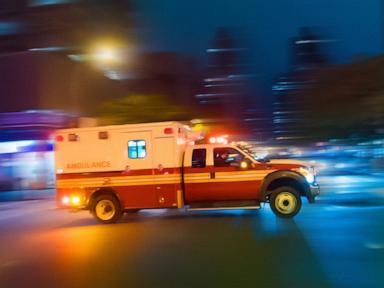
Every first responder carries a quiet, unspoken dread in the back of their mind whenever the dispatch radio crackles to life in their own neighborhood. You train for years to compartmentalize chaos, treating strangers with detached clinical precision while blood and twisted metal surround you. Then the radio drops a familiar cross-street, you pull up to a deadly accident, and the patient on the asphalt isn't a stranger at all.
When a paramedic responding to a deadly accident discovers their son is the victim, clinical training collides violently with raw parental instinct. It's the ultimate nightmare scenario in emergency medical services, and it happens far more often than the public realizes—especially in rural counties and tight-knit suburban communities where local responders cover the exact roads their own families drive every single day.
The Reality Behind the Headlines
News stories about a paramedic responding to a fatal crash involving their own child tend to go viral for obvious reasons. People read them, feel a gut-punch of secondhand grief, and move on with their day. What those brief local news reports almost always miss is the brutal operational reality of how emergency dispatch actually works—and why this tragedy is structurally baked into small-town EMS systems.
In major metropolitan areas like New York or Chicago, a paramedic might work an entire twenty-year career without ever running a call in the neighborhood where their kids go to school. Dispatch zones are massive. Call volumes are staggering. The statistical odds of crossing paths with your own family on an active trauma scene remain relatively low.
Small towns and rural districts operate on completely different math.
If you're working a shift in a county with only two or three active ambulances, you're covering every highway, backroad, and intersection within a thirty-mile radius. Volunteer firefighters and rural EMTs literally protect their own blocks. When a dispatcher sends out tones for a single-vehicle rollover or a head-on collision at 2:00 AM, the crew rolling out of the bay knows the road by heart. Sometimes, they recognize the make and model of the car before they even get the patient out of the wreckage.
Consider the documented real-world cases that have made national headlines over the years. In 2015, veteran firefighter and paramedic Adrian Smith responded to a crash in rural Texas only to realize the critically injured victim was his own son. In similar documented tragedies across North America, responders have arrived at severe motor vehicle collisions, initiated standard trauma protocols, and suffered the devastating shock of recognizing a familiar jacket, a license plate, or a face beneath a neck brace.
Why Clinical Training Breaks Down in Seconds
People outside emergency medicine often wonder how a trained professional handles that moment. They picture a movie scene where the hero pushes through the tears and miraculously saves the day.
Real life doesn't work like a script.
Emergency medical training relies heavily on emotional detachment and muscle memory. When you walk up to a severe car crash, your brain runs through a rigid checklist: scene safety, airway, breathing, circulation, rapid extrication. You aren't looking at a person with a history, a favorite song, or a family waiting at home. You're looking at a set of physiological problems that need immediate mechanical solutions.
Recognizing your own child shatters that protective cognitive wall instantly.
Neurologically, your brain switches from the prefrontal cortex—where analytical triage and medical protocols live—straight into an acute amygdala hijack. Your heart rate spikes past 160 beats per minute. Fine motor skills evaporate. Hands that can normally thread an intravenous catheter into a collapsed vein in the back of a bouncing ambulance suddenly shake uncontrollably.
That isn't a failure of character or training. It's basic human biology. Even the most seasoned flight paramedics and trauma surgeons are explicitly barred by medical ethics and hospital policy from treating their own immediate family members in non-emergent settings because emotional proximity destroys objective clinical judgment. On the side of a dark highway, nobody has the luxury of stepping back until backup arrives.
What Actually Happens on Scene When a Responder Knows the Victim
When a crew realizes a responder has a personal connection to a trauma victim, standard scene management changes immediately—assuming enough personnel are on site to make adjustments.
Here is how competent EMS command handles the crisis in real time:
- Immediate role reassignment: The moment a partner or incident commander realizes the victim belongs to a responder on scene, they physically pull that responder off direct patient care. You cannot have a parent performing chest compressions or managing an airway on their own kid if another qualified provider is standing three feet away.
- Channeling the responder into a support role: Simply locking a grieving parent in the back of a cruiser usually backfires. Experienced officers or supervisors will often keep the responder nearby where they can see what's happening without interfering with clinical interventions, or assign a dedicated peer to stay physically beside them.
- Calling secondary units immediately: Dispatch is notified to send an additional supervisor and a backup ambulance—not just for the patient, but because the original crew is now functionally out of service. A paramedic who just found their child in a wreck cannot safely drive an ambulance or treat another patient later that shift.
- Controlled communication: Command restricts radio chatter about patient status on open channels to prevent family members listening on scanner apps from learning of a death before an official in-person notification can happen.
In rural areas where a two-person crew might be the only medical help for twenty minutes, the situation becomes infinitely harder. The responder has no choice but to work on their own child until another unit arrives, knowing every single medical detail about how bad the injuries really are. Ignorance can be a mercy for a regular parent waiting in an emergency room lobby; for a paramedic on scene, knowing exactly what a blown pupil or absent breath sounds mean removes any buffer of hope.
The Myth of "Closure" and the Long-Term Psychological Fallout
Civilians sometimes say things like, "At least they were there with them at the end."
Ask any veteran paramedic or trauma counselor, and they'll tell you that sentiment misses the mark completely. Being on scene doesn't bring comfort—it multiplies the trauma.
Most parents who lose a child in an accident remember them as they were that morning at the breakfast table. A paramedic who responds to the crash is forced to carry the clinical memory of the scene forever: the smell of radiator fluid and blood, the exact vital signs on the cardiac monitor, the sound of the extrication tools cutting through the door frame.
According to research from the Substance Abuse and Mental Health Services Administration (SAMHSA), first responders already experience post-traumatic stress disorder (PTSD) and depression at rates roughly five times higher than the general population. When you layer personal bereavement directly onto occupational trauma, standard coping mechanisms collapse. The very thing that normally helps a paramedic recover—going back to work, leaning on crew routines, trusting their training—becomes a constant trigger. Every siren, every intersection, and every pediatric or young-adult trauma call drags them right back to that night.
How EMS Agencies Can Prepare Before Tragedy Strikes
You can't stop accidents from happening, and you can't rewrite geography in rural counties. Still, most fire departments and ambulance services do a terrible job preparing for the day one of their own ends up on the wrong side of the stretcher.
Waiting until a fatality occurs to figure out your department's response protocol is reckless. Agencies need concrete plans in place before the tones drop:
- Establish a formal "Immediate Relief" protocol: Train every supervisor and partner to recognize emotional compromise immediately. Make it explicit policy—not an informal suggestion—that any responder who knows a victim is relieved from clinical duties the second another provider arrives.
- Audit dispatch notification practices: Dispatchers should never read names of crash victims over open radio frequencies. If a license plate check returns the surname of an on-duty responder, dispatch supervisors should alert the battalion chief or shift supervisor privately by phone so they can intercept the responder before they arrive on scene.
- Build regional peer-support networks: Local Critical Incident Stress Management (CISM) teams are great, but a responder grieving their own child needs support from outside their immediate station. Having agreements with neighboring counties ensures unbiased, trauma-informed peers can step in without bringing departmental politics into the room.
- Guarantee immediate, no-questions-asked administrative leave: Nobody should have to burn sick days or navigate HR paperwork after pulling their own child out of a car wreck. Agencies need pre-approved catastrophic leave policies that cover both the affected responder and their partner on that shift.
If you work in EMS, fire, or law enforcement, bring this up at your next shift briefing or union meeting. Check whether your dispatch center has a protocol for flagging responder family vehicles during plate lookups. Ask your command staff who takes over your rig if you're the one who gets pulled off a scene. Having those answers locked down won't stop the worst day of your life from hurting, but it ensures you won't have to navigate it alone.