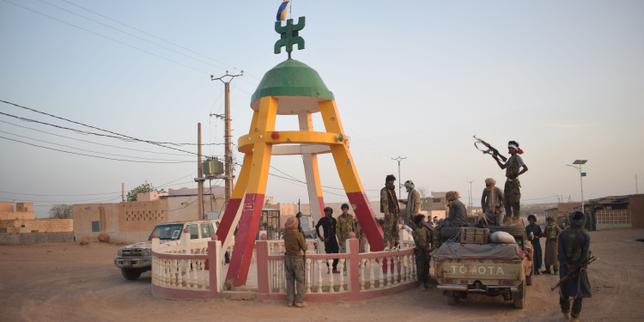
Mali's military leaders took a massive gamble when they kicked out French forces and invited Russian mercenaries to fix their security nightmare. They promised stability. They promised to crush the insurgents who've been tearing the country apart for over a decade. But if you look at the map today, those promises feel like a cruel joke. The junta isn't just struggling. It's facing a multi-front collapse that Moscow seems either unable or unwilling to stop.
The Wagner Group—now rebranded under the Russian Ministry of Defense as Africa Corps—hasn't brought the "silver bullet" solution the generals in Bamako sold to the public. Instead, we're seeing more civilian deaths, lost territory, and a terrifyingly emboldened coalition of jihadist groups. If you're following the Sahel, you know this isn't just a local skirmish. It's a case study in what happens when a state trades traditional diplomacy for a transactional, "no-questions-asked" security deal with a partner that has its own distracting problems in Ukraine.
The Timbuktu Siege and the Myth of Russian Control
For months, the historic city of Timbuktu has lived under a suffocating blockade. Jihadist fighters from the Group for the Support of Islam and Muslims (JNIM), an al-Qaeda affiliate, have effectively cut off supply lines. Food prices are soaring. Fuel is a luxury. People are starving. This wasn't supposed to happen with Russian "instructors" on the ground.
Russia’s strategy in Mali focuses on high-profile, brutal raids and protecting the seat of power in Bamako. It doesn't focus on tedious, long-term counter-insurgency or protecting rural trade routes. When Russian drones and fighters show up, they often leave a trail of human rights allegations behind them. I'm talking about incidents like the Moura massacre in 2022, where the UN reported that over 500 people were killed. These events don't just kill people; they're the best recruitment tools the jihadists ever had. Every time a village is raided by "White men in uniform" and local soldiers, the survivors find it a lot easier to pick up a gun for the other side.
The insurgents aren't stupid. They've shifted from direct confrontation to asymmetric warfare that bleeds the state dry. They've realized that the Russian presence is spread thin. While Moscow can provide flashy hardware like L-39 Albatros jets or Mi-17 helicopters, those machines need maintenance. They need pilots who know the terrain. Most importantly, they can't be everywhere at once in a country as massive as Mali.
Why the Kremlin Is a Distant Ally
You've got to understand the math Moscow is doing. Mali is a strategic win because it gives Russia influence in West Africa and access to resources like gold mines. It's a cheap way to annoy the West. But let's be real. Russia's main priority is, and will remain, the war in Ukraine.
Resources are finite. The best equipment, the most seasoned mercenaries, and the most competent commanders are being sucked into the Donbas. What’s left for Mali? Often, it’s the second-stringers or recruits with less experience. We saw this clearly during the battle of Tinzaouaten near the Algerian border. In July 2024, Tuareg rebels and jihadist elements ambushed a convoy of Malian soldiers and Russian mercenaries. It was a bloodbath. Dozens of Russians were killed or captured. It was the biggest single loss for Russian forces in Africa since they arrived.
That defeat shattered the aura of invincibility that the junta used to keep the population hopeful. It proved that "the Russians" bleed just like anyone else. More importantly, it showed that they can be outmaneuvered in the desert. Moscow didn't rush in a massive relief force or launch a world-shaking counter-offensive. They simply tightened security around the gold mines they control. That tells you everything you need to know about where their loyalties lie. It's about the gold, not the people of Gao or Ménaka.
The Northern Front Is Igniting Again
Mali isn't just fighting jihadists. They've also managed to restart a war with Northern rebels who were previously part of a 2015 peace deal. By tearing up the Algiers Accord, the junta bit off more than it can chew. They're now fighting al-Qaeda, Islamic State (ISGS), and a secular Tuareg independence movement all at the same time.
It's a chaotic mess. Sometimes these groups fight each other. Sometimes they find common ground in their hatred for the central government. The Malian Armed Forces (FAMa) are stretched to the breaking point. They rely on Russian air support for everything. If a Russian helicopter doesn't show up, the Malian troops are often sitting ducks in isolated outposts.
I’ve seen reports of Malian soldiers feeling increasingly frustrated. They were told the Russians would lead from the front. Instead, they’re often used as the "shield" while the mercenaries stay in the rear or focus on high-value targets. This creates a massive rift in morale. When the people you're paying millions of dollars a month won't take the same risks as your own underpaid privates, resentment grows fast.
Economic Suffocation and the Cost of Pride
Politics isn't just about guns; it's about bread. Mali’s economy is taking a beating. Sanctions, even those that have been lifted, left a scar. The departure from ECOWAS (the Economic Community of West African States) was a bold move by the junta, but it’s one that hurts ordinary Malians every day.
By pulling out of the regional bloc, Mali is isolating itself from its biggest trading partners. The junta’s "Alliance of Sahel States" with Niger and Burkina Faso sounds good on paper, but these are three landlocked, impoverished nations trying to help each other while their own houses are on fire. They don't have the capital to build the infrastructure they need. They don't have the diplomatic weight to negotiate better trade deals.
Russia doesn't fill this gap. Russia sells security and weapons. They don't build hospitals. They don't provide massive low-interest loans for development. They don't buy Malian cotton in bulk. The relationship is purely extractive. If you’re a Malian business owner in Bamako, the "Russian alliance" hasn't made your life easier. It's probably made it harder to move goods across borders or access international credit.
The Looming Threat of a Bamako Strike
For a long time, the capital felt safe. That changed in September 2024 when JNIM launched a sophisticated attack on a military police school and the airport in Bamako. This wasn't a hit-and-run in some remote village. This was a strike at the heart of the regime's power.
The message was clear: "We can touch you anywhere."
The fact that militants could penetrate the capital's security—supposedly bolstered by Russian expertise—was an embarrassment. It showed that the intelligence gathering is failing. It showed that the perimeter is porous. Since that attack, the vibe in Bamako has shifted. There’s a sense of "when," not "if," the next one happens. The junta responds with more arrests and tighter control over the press, but you can't arrest your way out of a security vacuum.
What Happens When the Money or the Will Runs Out?
The Malian junta has tied its survival to Moscow. If the Russians leave, or if their support stays at this mediocre level, the generals have no Plan B. They've burned their bridges with France, the EU, and many of their neighbors. They are "all in" on a partner that is notoriously fickle.
We need to watch the gold mines. That's the barometer. As long as the gold keeps flowing to Russia, the mercenaries will stay. But if the jihadists start seizing those mining sites—which they are already eyeing—the financial incentive for Moscow evaporates. At that point, the "Russian instructors" will be on the first flight back to Rostov, leaving the Malian army to face the music alone.
If you want to understand the future of Mali, stop listening to the propaganda broadcasts in Bamako. Look at the price of grain in the markets. Look at the casualty lists from the North. And look at how much gold is being flown out of the country on Russian cargo planes.
The immediate steps for anyone watching this space are clear. Watch for signs of internal fracturing within the Malian officer corps. Not everyone is happy with the Russian deal. Pay attention to the border with Mauritania, which is becoming a new flashpoint for refugees and cross-border raids. Most importantly, don't buy the narrative that this is a "win" for sovereignty. Trading one foreign master for another isn't independence—it's just a change in management, and right now, the new managers are failing their performance review.
Mali is at a tipping point. The "Russian gamble" is looking less like a masterstroke and more like a desperate lunge. For the sake of the millions of people living there, let's hope the junta finds a way to pivot before the insurgents decide the capital is their next target. History isn't kind to regimes that outsource their survival to mercenaries with their own agendas.