Trust is an invisible currency. In political campaigns, it is minted from the small, quiet sacrifices of everyday people. Think of a pensioner in Dundee giving up a portion of their heating allowance to slip £20 into a campaign envelope, or a young activist in Aberdeen spending their weekend pouring cold tea and typing data. They do not give this money for a tax write-off or political access. They give it to buy a piece of a dream.
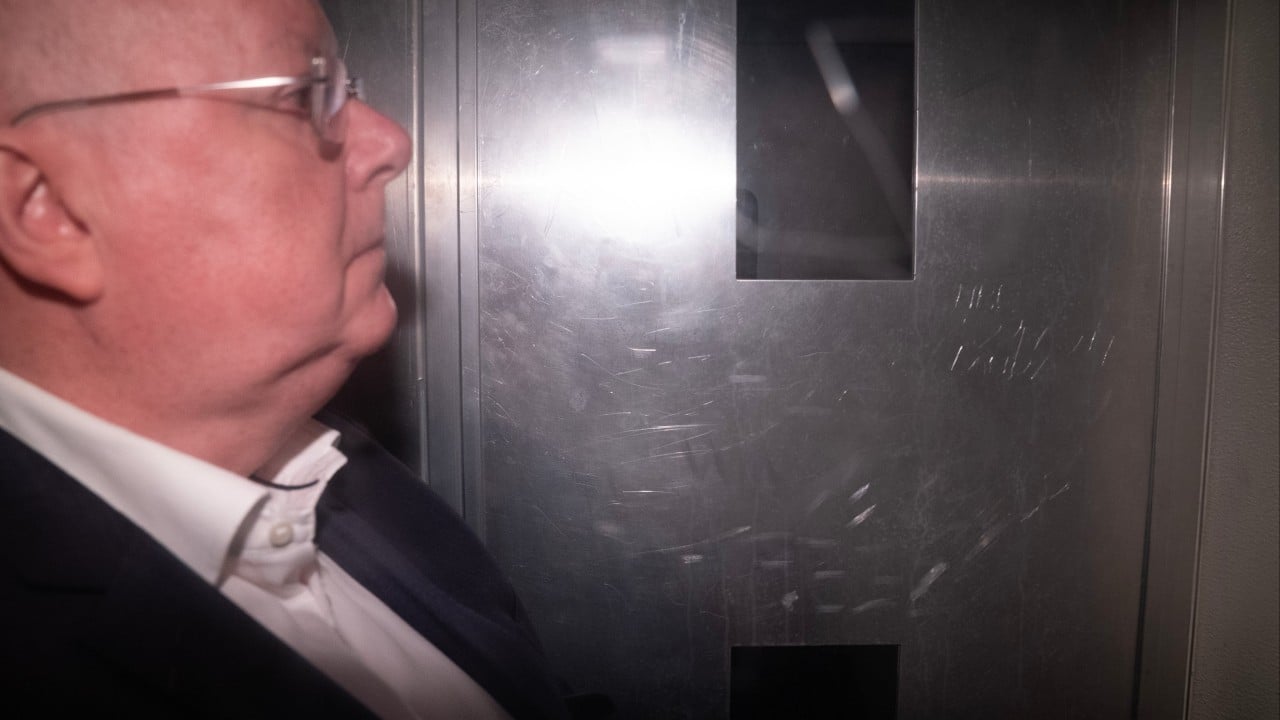
When Peter Murrell walked into the High Court in Edinburgh, handcuffed to a prison officer, that currency was officially declared bankrupt.
The courtroom was quiet, save for the dry rustle of legal papers. Murrell, 61, stood in a dark suit and navy tie, looking smaller than he did during his two decades as the undisputed architect of the Scottish National Party. Outside, the rain did what Scottish rain always does. Inside, a judge stripped away the remaining veneer of a political dynasty.
Lord Young looked down from the bench. He spoke of a "calculated crime of dishonesty" and a "significant breach of trust." He sentenced Murrell to five years and three months in prison for embezzling £400,310.65 from the very party he had spent his life building.
To read the standard headlines, you would think this was a story about high-flying political fraud, about grand strategies and complex shell corporations. It was not. It was far stranger, and far more human. It was a slow, agonizing slide into an addiction of the mundane.
The Weight of the Small Things
Between 2010 and 2022, the SNP was an election-winning machine. It transformed from a fringe movement into the dominant force of Scottish public life, managing £58 million in expenditure at the headquarters level alone. Murrell was the chief executive, the gatekeeper of the vault, and for much of that time, the husband of Scotland’s First Minister, Nicola Sturgeon.
His theft amounted to a mere 0.69% of that total budget. In the vast ledger of political spending, it was a rounding error. But crime, like loyalty, lives in the details.
When detectives under Operation Branchform finally began turning over the stones of the party’s accounts, they did not find complex offshore accounts. They found itemized receipts.
Consider what happens next when an investigator starts looking at the books of a cash-strapped political party during a tight campaign. You expect to see printing bills, venue rentals, and social media advertising targets. Instead, an officer noticed a series of invoices from Le Creuset, the luxury French cookware brand.
It was a bizarre anomaly. Why was a political headquarters purchasing designer kitchenware while its local branches were begging for leaflet money?
The inventory of stolen funds reads less like a criminal mastermind's haul and more like a desperate attempt to fill an empty house with status. There were eight Le Creuset mugs bought for £204. Measuring spoons and cups for £43. Mickey Mouse ramekins costing £39.
The small items bled into larger ones. A £3,223 coffee machine. A £3,000 robotic lawnmower. Lalique salt and pepper grinders worth £2,600. Two luxury Bremont watches totaling more than £9,000. Montblanc fountain pens. A Jaguar SUV. And finally, parked on his mother’s driveway in Fife, a luxury motorhome worth £124,550—a vehicle that, when seized by police, had been driven exactly four miles.
The tragedy of the crime is its sheer lack of utility. The items sat unused, trophies of an inexplicable urge to possess things paid for by someone else's hope.
"You found yourself unable to stop this offending," Lord Young noted during sentencing. "It was only the detection of the crime which brought it to an end."
The Solitary Ledger
Every embezzler lives two lives. In one life, they are the trusted custodian, nodding along at budget meetings, looking colleagues in the eye, and bemoaning the tight financial margins. In the other life, they are sitting alone in front of an accounting spreadsheet, altering expense codes, forging invoices, and fabricating numbers to ensure the left hand never reveals what the right hand is taking.
It is a exhausting way to live. The psychological toll of keeping those two worlds from colliding is immense. In 2021, when the party's cash reserves ran so low that the organization faced a crisis, Murrell actually loaned the SNP £107,000 of his own money.
Think about that contradiction. He was stealing from the party with one hand and keeping it afloat with his own personal funds with the other. During a police interview in April 2024, a detective confronted him with this paradox, pointing out that the reason the reserves were depleted was that Murrell had been feeding off them.
He had become trapped in his own mechanism. He could not stop. The system he built to hide his tracks—the falsified invoices and miscoded entries—only served to prolong the inevitable, lengthening the police investigation and spinning the web tighter around him.
The fallout has been total. Political alliances have shattered. The marriage that once defined the modern Scottish state is over; Murrell and Sturgeon separated in 2025. Sturgeon herself expressed utter devastation, stating she had no knowledge or suspicion of the deception, describing the pain of being let down by a husband she loved and trusted.
His defense lawyer, John Scullion KC, did not look for excuses in the courtroom. He admitted the prison sentence was entirely deserved. He painted a picture of a man who is now completely isolated, ostracized by the friends he grew up with, and transformed into a figure of public ridicule. His humiliation will outlast his prison term.
The Ghost in the Machine
There is an old ghost that haunts this story. Whispers from the late 1980s suggest that a young Murrell, working for former party leader Alex Salmond, allegedly took £500 from office funds. Salmond quietly repaid the sum and hushed it up to protect the young man's future, but those close to him say a shadow of doubt remained.
That shadow was never communicated to John Swinney, the childhood friend who would later appoint Murrell as chief executive in 2001. They had been in the Boys’ Brigade together in west Edinburgh. They had shared the early, lean years of the movement.
That is where the true weight of the sentence lands. It isn't just about the £400,310.65, a sum Murrell possesses the personal wealth to repay under the impending confiscation orders this September. It is about the destruction of a shared history.
When the prison van pulled away from the High Court, heading toward Dumfries prison, it carried a man who had traded his legacy, his marriage, and his oldest friendships for a collection of luxury watches, high-end coffee granules, and a motorhome that never went anywhere.
The dream of a movement remains, but the ledgers have been stained by the quiet, repetitive clicks of a keyboard in a locked office, where a man couldn't stop taking what wasn't his.


