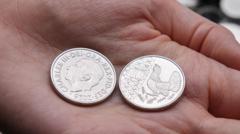
More than seven million ten pence coins bearing the portrait of King Charles III are entering public circulation across the United Kingdom. For the average consumer buying a morning coffee or paying for parking, receiving one in their change might prompt a brief glance at the new monarch's profile. However, this rollout represents far more than a simple aesthetic refresh of British pocket change. It marks a calculated, highly technical intervention by the Royal Mint to manage physical cash demand in an increasingly digital economy.
The Mechanics of Minting Definitives
The Royal Mint announced the introduction of 600,000 coins dated 2023 alongside 6.5 million bearing the 2026 date stamp. These figures are striking for their modesty. In a monetary ecosystem containing over 24 billion coins, seven million new ten-pence pieces account for roughly one percent of the total volume.
Minting circulating currency is not an arbitrary exercise in production. It is a precise science dictated by supply attrition, loss, and hoarding. Coins vanish from circulation constantly. They slip down sofa cushions, sit in forgotten jars, or leave the country in tourist pockets. When commercial banks report localized shortages of specific denominations, the Mint responds with targeted batch strikes.
The 10p denomination has experienced a distinct uptick in transactional demand. Despite the relentless march of contactless payments and mobile wallets, small-denomination coins retain a stubborn utility in parking meters, vending machines, charity boxes, and peer-to-peer cash transactions.
Flora, Fauna, and the Royal Rebrand
For nearly two decades, British pocket change featured Matthew Dent’s heraldic shield design, where individual coins pieced together to form the Royal Shield. That cohesive graphic era is quietly ending. The new ten-pence piece features the capercaillie, a ground-dwelling grouse native to Scottish pine forests, rendered on the reverse.
This design choice follows the broader ecological theme personally championed by King Charles III. Previous denominations introduced under the current reign have highlighted bees, Atlantic salmon, and oak foliage. Shifting away from abstract heraldry toward conservation milestones serves a dual purpose. It modernizes the visual identity of British currency while signaling environmental priorities.
Numismatists often debate whether these thematic series will encourage public hoarding. When the 2018 alphabet fifty-pence series launched, millions of people actively checked their change to complete sets. The capercaillie ten-pence coin carries a similar collector allure. Yet, because the Royal Mint intends these to function as heavy-duty workhorses of commerce, their long-term survival in pockets depends entirely on velocity. If people hoard them immediately upon receipt, the Mint will simply have to commission secondary press runs to fill the physical gap left in cash registers.
The Coexistence Paradox
Transitioning monarchical portraits while keeping legacy currency fully functional creates a fascinating logistical duality. Millions of coins bearing the late Queen Elizabeth II remain legal tender and active participants in the economy.
The Royal Mint avoids the astronomical economic and environmental costs of recalling older currency by allowing natural attrition to handle the phase-out. Striking billions of new coins to replace perfectly functional older ones would generate an unacceptable carbon footprint and drain public resources. Instead, the new Charles III pieces are filtering directly into the existing monetary pool, sharing cash drawers with coins minted decades ago.
This gradual integration means the public will experience a multi-year transition period. Spotting a new portrait requires patience and a bit of luck. As these coins leave post offices and bank branches to begin their circulation journeys, they enter a financial landscape that values physical money less with each passing quarter.
The small metal disc in your hand is both a historic marker of a new reign and an artifact of an older, analog world fighting to maintain its relevance. Check your change tonight, because that capercaillie might just be one of the few tokens of physical transition you see for a long time.