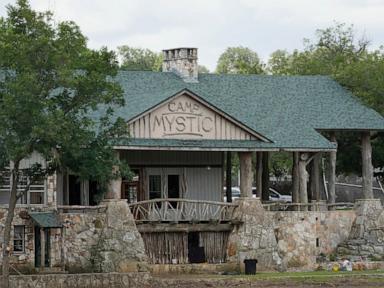
The courtroom fell silent as Marcus Thorne, the former director of Camp Mystic, lowered his head and offered a choked apology to the families gathered in the gallery. It was the moment the public had waited months to see. However, for those tracking the systemic rot within the private summer camp industry, the tears felt less like a breakthrough and more like a scripted tactical maneuver. While the media focused on the emotional spectacle of the hearing, the hard reality remains that Thorne’s contrition does nothing to address the insurance loopholes and oversight gaps that allowed the crisis to escalate for years. The tragedy at Camp Mystic was not an isolated incident of bad judgment, but the predictable outcome of a business model that prioritized high-density enrollment over basic safety protocols.
Behind the Velvet Curtain of the Summer Camp Industrial Complex
Summer camps are often viewed through a lens of nostalgia, seen as wholesome retreats for personal growth. In reality, the sector has transformed into a high-margin business dominated by private equity interests and legacy owners who operate with startlingly little regulatory interference. In most states, hair salons face more frequent health and safety inspections than youth residential camps. This lack of external pressure creates a vacuum where directors like Thorne can cut corners on staff background checks and medical training without fear of immediate repercussion.
Thorne’s defense team argued that the director was overwhelmed by rapid expansion. This is a common refrain in corporate negligence cases. Between 2021 and 2024, Camp Mystic increased its capacity by 40 percent while simultaneously reducing its ratio of senior staff to campers. The goal was clear: maximize the short-term revenue generated during the narrow ten-week summer window. When safety is viewed as a cost center rather than a foundational requirement, disasters become a matter of "when," not "if."
The Insurance Shield and Liability Management
One of the most overlooked factors in the Camp Mystic saga is the role of specialized liability insurance. During the hearing, evidence suggested that Thorne’s management team was more concerned with maintaining their coverage than with implementing the safety recommendations provided by internal whistleblowers.
Insurance providers for high-risk youth activities often require "paper compliance"—signed waivers and documented orientations—rather than proof of actual safety culture. As long as the checkboxes were marked, the premiums stayed manageable. This creates a dangerous incentive structure. Management becomes obsessed with the appearance of safety to satisfy underwriters, while the lived experience of the campers on the ground tells a much darker story. Thorne’s apology may have been aimed at the families, but his legal strategy throughout the process has been laser-focused on shielding the camp’s remaining assets from total liquidation.
The Myth of the Unforeseeable Accident
Throughout the testimony, the word "unforeseeable" appeared constantly. It is the favorite shield of the negligent. However, internal emails recovered during the discovery phase tell a different story. Staff members had repeatedly flagged the broken communication systems and the lack of emergency response drills.
When a crisis finally hit, the response was a chaotic failure. The "unforeseeable" was actually a documented risk that had been ignored in favor of operational speed. This is where the veteran analyst sees the pattern. In every major industry failure, there is a trail of ignored warnings. The Camp Mystic directors didn't just fail to see the danger; they actively chose to look away because addressing the risk would have required pausing operations and losing money.
Professionalization vs. Passion Projects
The industry is currently split between two worlds. On one side are the professionalized, accredited camps that treat safety as a rigorous, data-driven discipline. On the other are the "legacy" camps run by charismatic figures who rely on their reputation and "passion" to bypass scrutiny.
Thorne was the quintessential charismatic leader. He built a brand around his personality, making parents feel like their children were part of an exclusive family. This personal trust is a powerful tool. It often blinds parents to the absence of professional standards. A director’s charisma is not a substitute for a certified nursing assistant or a modern GPS tracking system for wilderness excursions. The hearing proved that when the "family" atmosphere is tested by legal reality, the owners will protect the business interests every single time.
Why State Oversight Continues to Fail
If you expect the government to step in and fix the camp industry, you haven't been paying attention to state budgets. Most state health departments are chronically underfunded. They prioritize permanent facilities like restaurants and hospitals. Seasonal camps, which only operate for a fraction of the year, often slip through the cracks.
- Self-Reporting Loopholes: In many jurisdictions, camps are only required to report "significant" injuries, a term that is left dangerously vague.
- The Accreditation Gap: Private accreditation, while helpful, is voluntary. A camp can operate for decades without ever being vetted by a third-party safety organization.
- Political Influence: Large camp owners are often significant contributors to local economies and political campaigns, making regulators hesitant to shut them down or impose heavy fines.
Thorne exploited every one of these weaknesses. He knew that an inspector was unlikely to show up unannounced on a Tuesday in July. He knew that if an incident occurred, he could frame it as a minor mishap rather than a symptom of a larger problem. The apology in court was the final act in a long play of deception. It was designed to humanize a man who had spent years treating children as data points in a profit-and-loss statement.
The Economic Pressure of the Modern Summer Camp
The cost of running a safe camp is skyrocketing. Property taxes, food costs, and the wages required to attract competent, responsible staff have all climbed. Instead of raising tuition to a level that covers these costs, many directors choose to keep prices competitive by hollowing out their safety infrastructure.
They hire younger, less experienced counselors who are willing to work for low pay. They skip the expensive upgrades to fire suppression systems or waterfront safety gear. They rely on the hope that luck will hold for one more season. When Thorne cried on the stand, he wasn't just crying for the families; he was crying for the collapse of a house of cards he had built on a foundation of "good enough."
The False Comfort of Background Checks
Much has been made of the fact that the staff involved in the Camp Mystic incident had passed their background checks. This is the ultimate red herring. A background check only reveals past crimes; it does not predict future negligence or the failure of a leader to provide adequate supervision.
Relying on a background check as a total safety solution is a hallmark of lazy management. Real safety requires constant, active supervision of the staff themselves. It requires a culture where a junior counselor feels empowered to tell the director that a situation is unsafe. At Camp Mystic, the culture was one of silence and hierarchy. Thorne was the boss, and his word was law. That kind of environment is a breeding ground for disaster, regardless of what a criminal record check says.
Rebuilding Trust Through Radical Transparency
For the families in the courtroom, the apology is hollow because it comes without a commitment to change the industry. If the camp community wants to prevent another Camp Mystic, it must move toward radical transparency. This means making safety records public. It means allowing parents to see the results of every inspection and the details of every reported injury.
It also means moving away from the "cult of the director." A camp should be judged on its systems, not the charisma of its leader. If a director cannot explain the specific, redundant safety protocols in place for every activity, they should not be in business.
The industry is at a crossroads. It can continue to rely on emotional pleas and the "accident" narrative, or it can accept that it is a high-stakes business that requires professional-grade oversight. Marcus Thorne’s tears don’t bring back what was lost, and they don’t fix the broken system that allowed him to operate. The real work begins when the cameras leave the courtroom and the difficult, expensive process of implementing actual safety standards begins.
Safety is not an emotion. It is a rigorous, unceasing commitment to the idea that the life of a single child is worth more than the profit margin of a summer season. Until that philosophy is codified into law and enforced by regulators with teeth, the apologies will continue to be nothing more than performance art.
Owners must be held personally liable for systemic failures. When the consequences of negligence are limited to a corporate entity that can simply declare bankruptcy, there is no real deterrent. True accountability requires that those at the top face the same risks as the children they are paid to protect. Anything less is just a business expense.
The path forward requires a total rejection of the "it won't happen here" mentality. It happened at Camp Mystic because the leadership believed they were exempt from the laws of probability and the requirements of basic human decency. They were wrong. The families know it, the industry knows it, and now, finally, the public knows it too. Demand better than a tearful apology. Demand a system that makes those apologies unnecessary.