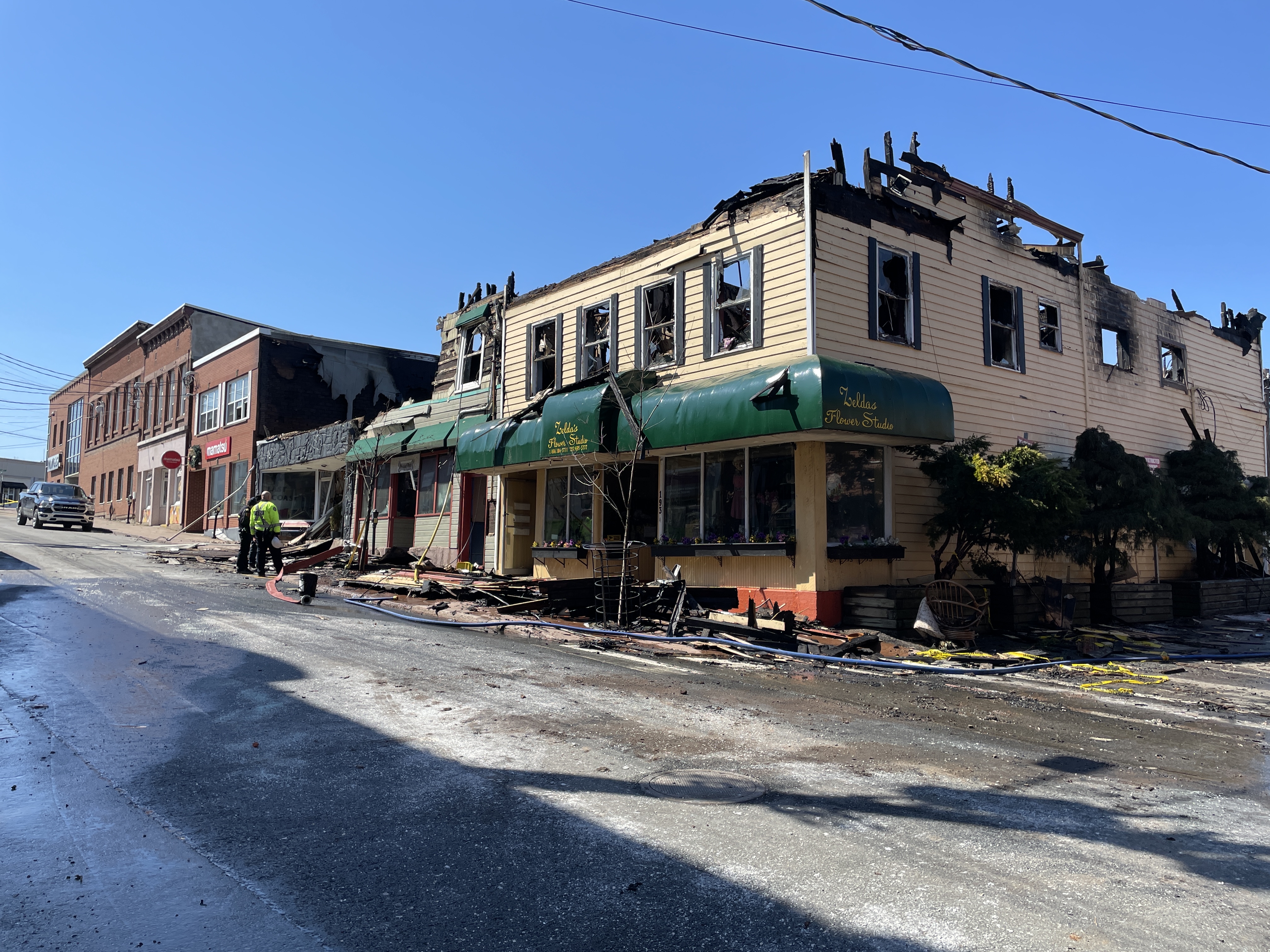
The smoke hanging over Provost Street in New Glasgow does more than just sting the eyes. It signals the potential end of a fragile economic ecosystem that has spent decades fighting for relevance in a changing Atlantic Canada. When a massive fire tore through the historic Roseland Cabaret building and adjacent properties, it didn’t just melt siding and shatter glass. It erased the physical footprint of several independent businesses and displaced dozens of residents, leaving a gaping wound in a downtown core that was already struggling to find its footing against big-box retail and digital shifts.
This isn’t a story about a single accident. It is an autopsy of a small-town nightmare. The fire represents the intersection of aging infrastructure, the rising cost of urban renewal, and the terrifying vulnerability of the "main street" dream. For an alternative look, consider: this related article.
The Anatomy of an Inferno
Fire departments from across Pictou County responded to the call, but by the time the first hoses were pressurized, the structural integrity of the century-old brick and timber was already compromised. Older downtown cores like New Glasgow's were built in an era before modern fire breaks and sprinkler mandates were standard. These buildings often share walls, or are separated by mere inches, creating a literal "chimney effect" that allows flames to leap across property lines before a single alarm can be triggered.
The loss of the Roseland building is particularly stinging. Originally a theater, its cavernous interior and seasoned wood provided a perfect fuel source. Investigators are left sifting through charcoal, but the broader community is sifting through the wreckage of their livelihoods. For the entrepreneurs who operated out of these storefronts, insurance payouts—if they exist at all—rarely cover the true cost of a total loss. Similar analysis on the subject has been shared by The Washington Post.
The Renters Left in the Cold
While the business losses dominate the headlines, the human displacement is the more immediate crisis. New Glasgow, like much of Nova Scotia, is currently gripped by a housing shortage that has driven rents to historic highs and vacancy rates to near zero.
The fire didn’t just destroy apartments; it destroyed some of the last remaining "affordable" units in the area. When a downtown block burns, the residents who are forced out often find themselves priced out of their own community. They aren't just looking for a new roof. They are looking for a miracle. Local shelters and community groups are currently stretched beyond their limits, trying to find beds for people who, 24 hours ago, had a kitchen and a closet.
The Economic Ripple Effect
The destruction of a downtown block creates a vacuum. When a cluster of businesses disappears overnight, the foot traffic for the remaining shops on the street evaporates.
- Reduced Consumer Flow: People stop coming downtown if there are fewer reasons to park the car.
- Property Tax Erosion: Burned-out shells don't generate the same revenue for the municipality, putting more pressure on the remaining tax base.
- Insurance Spikes: Every business owner in a five-block radius is likely to see their premiums jump as providers reassess the risk of aging wooden structures.
Why Rebuilding Isn't Guaranteed
There is a common misconception that after a fire, things just "go back." That is a fantasy. The cost of building to modern code in 2026 is astronomical compared to the value of the old structures. For many property owners, the math simply doesn't work. It is often more profitable to clear the lot, pave it, and sell it as a parking space or leave it as a vacant "development opportunity" for a decade.
New Glasgow faces the very real threat of permanent "missing teeth" in its architecture. Without aggressive municipal intervention or significant provincial grants, these lots risk becoming permanent scars. The town must decide if it will allow the downtown to become a series of disconnected lots or if it will fight to maintain the density that makes a town center viable.
The Insurance Trap
For many of these small businesses, the "Business Interruption" clause in their insurance is the only thing standing between them and bankruptcy. However, these clauses are notoriously difficult to trigger and often have strict time limits. If the building takes two years to rebuild—which is a conservative estimate given the current labor shortage in the construction industry—the insurance money will run out long before the doors can reopen.
We are seeing a trend across the Maritimes where "historic charm" is becoming a liability. The very features that draw tourists and shoppers—the old brickwork, the narrow alleys, the heritage storefronts—are the same features that make these buildings nearly impossible to insure at an affordable rate.
A Policy of Neglect
The fire also brings up uncomfortable questions about the state of rural infrastructure. Smaller municipalities often struggle to fund the level of fire inspection and code enforcement necessary to prevent these catastrophes. It is a reactive system rather than a proactive one. We wait for the smoke to appear before we talk about the lack of modern suppression systems in heritage buildings.
If New Glasgow wants to avoid another Provost Street disaster, it cannot rely on the bravery of volunteer and municipal firefighters alone. There needs to be a hard conversation about subsidized retrofitting. Asking a struggling small business owner to install a $50,000 sprinkler system in a rented building is a non-starter. But doing nothing ensures that the next spark will have the same devastating result.
The Social Cost of Displacement
When you lose a downtown, you lose a sense of place. New Glasgow has long served as the hub for the surrounding smaller villages. It is where people go for a lawyer, a coffee, or a unique gift. As these physical spaces vanish, the social fabric of the county frays. People move their shopping to the outskirts, to the faceless plazas where the parking is easy but the character is non-existent.
The residents who lived above those shops were the "eyes on the street." They provided the 24-hour presence that keeps a downtown safe and vibrant. Without them, the area becomes a ghost town after 5:00 PM.
The Long Road to Recovery
The immediate outpouring of community support—the GoFundMe pages, the clothing drives, the benefit concerts—is heartening, but it is a temporary fix for a structural problem. New Glasgow needs more than charity. It needs a massive infusion of capital and a radical rethinking of how it protects its remaining heritage.
The "Heartbreaking Loss" isn't just about the buildings that fell. It's about the potential that fell with them. Every day that those lots sit empty is a day that New Glasgow loses a bit more of its identity. The town council and the provincial government need to move past the "thoughts and prayers" phase of disaster management and move into the "steel and concrete" phase.
Rebuilding requires more than just money; it requires a vision that accounts for the fact that the old world is gone. You cannot simply recreate a 19th-century storefront with 21st-century costs and expect it to survive on 20th-century foot traffic. The new structures must be mixed-use, high-density, and fire-resistant, serving as an anchor for a town that refuses to be hollowed out.
The sirens have stopped, but the real work hasn't even begun. New Glasgow is at a crossroads where it can either succumb to the slow decay of a burned-out core or use this tragedy as a brutal, unwanted catalyst for a total urban redesign.
Demand a reconstruction plan that prioritizes local ownership over speculative real estate.


