You want whiter teeth, so you buy a box of sticky strips at the drugstore. You spend a week wearing them, drooling on your shirt, waiting for a blinding hollywood smile. Instead, you get sharp zaps of pain in your gums and a smile that looks exactly the same as it did last Sunday.
It's frustrating. Most at-home teeth whitening options simply don't work the way the marketing promises.
The truth is that your teeth aren't stained the same way your favorite coffee mug is. Teeth are living tissue. The discoloration happens deep within the tooth structure, not just on the surface. To actually change the color of your smile without ruining your enamel, you need to understand how the chemistry works and which methods are worth your hard-earned cash.
Let's break down what actually works, what damages your mouth, and how to get real results safely.
The Chemistry of a Brighter Smile
Most whitening products rely on one of two active ingredients: hydrogen peroxide or carbamide peroxide. These compounds penetrate the enamel to break down complex organic molecules that cause discoloration.
The main difference between them comes down to speed and stability. Hydrogen peroxide breaks down rapidly, releasing most of its whitening power within the first 30 to 60 minutes. Carbamide peroxide breaks down much more slowly, releasing about a third of its strength in the first two hours and remaining active for up to six hours.
Because carbamide peroxide is more stable, it often shows up in overnight gel systems. Dentists frequently prefer it for custom trays because it causes less sudden sensitivity.
Concentration matters immensely. A product with 10% carbamide peroxide is roughly equivalent to 3.5% hydrogen peroxide. Drugstore strips usually hover around 6% to 10% hydrogen peroxide, while professional take-home gels can climb as high as 35% carbamide peroxide.
If a brand doesn't list the exact percentage of its active peroxide ingredient, don't buy it. You're likely paying for flavored water and glycerin.
The Problem With Charcoal and Baking Soda
Walk down any toothpaste aisle and you'll see dozens of charcoal toothpastes claiming to lift stains naturally. Charcoal looks dramatic in a selfie, but it's a terrible long-term strategy for your mouth.
Charcoal is highly abrasive. It works like sandpaper on a wooden table. It scratches away surface stains from your morning latte, sure, but it also scrubs away your enamel. Enamel cannot grow back. Once you wear it down, the yellowish layer underneath, called dentin, starts showing through. Ironically, scrubbing too hard with abrasive charcoal paste makes your teeth look more yellow over time.
The American Dental Association evaluates the abrasiveness of oral care products using a scale called Relative Dentin Abrasion. Anything rated over 70 is considered abrasive. Many charcoal pastes push past 150.
Baking soda is slightly safer because its abrasiveness is relatively low, around 7 on the scale. But it lacks fluoride, which means it won't protect your teeth against cavities. It also does absolutely nothing to change the internal color of your teeth. It only lifts surface debris.
If you want to remove surface stains without destroying your enamel, stick to a whitening toothpaste that carries the official approval seal from a recognized dental association. These are tested to ensure they fall within safe abrasiveness limits.
How to Choose an At-Home System That Works
If you want to lift deep stains, you need a delivery system that keeps peroxide in contact with your teeth while keeping your saliva out. Saliva contains an enzyme called catalase, which instantly destroys hydrogen peroxide on contact.
Custom-Fitted Trays Are Best
The absolute gold standard for home whitening is a custom-fitted tray provided by a dentist, paired with a professional gel. The tray fits the exact contours of your mouth. This keeps the gel locked against the enamel and away from your gums.
It costs more upfront, but the trays last for years. You simply buy refill gel syringes whenever you need a touch-up.
Moldable Thermoplastic Trays
A tier below custom trays are boil-and-bite moldable trays. You soften them in hot water, then bite down to shape them to your teeth. They don't offer the exact precision of a dental mold, but they hold gel far better than generic, one-size-fits-all plastic trays.
Whitening Strips
Strips are cheap and widely available. They work reasonably well for the front six teeth, but they have a major flaw. They are flat. Your teeth are curved and have deep crevices between them. Strips often miss these spaces, leaving you with white fronts and yellow borders.
LED Light Kits Are Marketing Hype
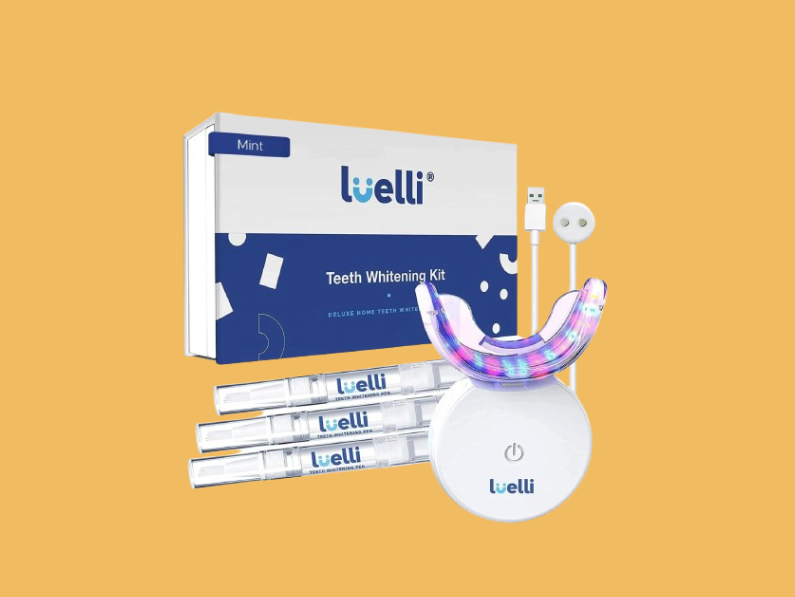
You've probably seen influencers grinning with a bright blue light shining in their mouths. Skip them.
The tiny blue lights included in consumer kits don't generate enough heat or specific wavelengths to accelerate the chemical reaction of peroxide significantly. The clinical studies that show lights helping are done in dental offices using high-powered lamps that cost thousands of dollars. The little plastic light in a drugstore kit is just an expensive glowing gimmick designed to justify a higher price tag.
Managing the Dreaded Tooth Zaps
The most common side effect of whitening is tooth sensitivity. This happens because peroxide temporarily opens up microscopic pores in your enamel, giving the chemical direct access to the nerves inside your dentin.
You can minimize this discomfort by prepping your teeth a week before you start whitening. Switch to a desensitizing toothpaste containing potassium nitrate. Potassium nitrate penetrates the tooth to calm the nerve endings, making them less reactive to the peroxide.
If you experience sharp pains during your whitening routine, stop for a day or two. Switch to every-other-day applications. Your teeth will still get just as white; it will simply take a little longer.
Keep Your Expectations Grounded
Everyone has a natural genetic limit to how white their teeth can get. Your teeth will never be whiter than the whites of your eyes. If you have gray or brown discoloration caused by childhood antibiotics like tetracycline, or by a previous tooth injury, peroxide gels won't fix it. Those stains live deep inside the tooth structure and require professional cosmetic bonding or porcelain veneers to mask.
To get started on a routine that actually delivers, book a standard dental cleaning first. Removing the hard tartar buildup ensures the whitening gel touches your actual enamel evenly. Buy a reputable peroxide-based gel system, ditch the trendy charcoal scrubs, and use a desensitizing toothpaste to keep your mouth comfortable throughout the process.