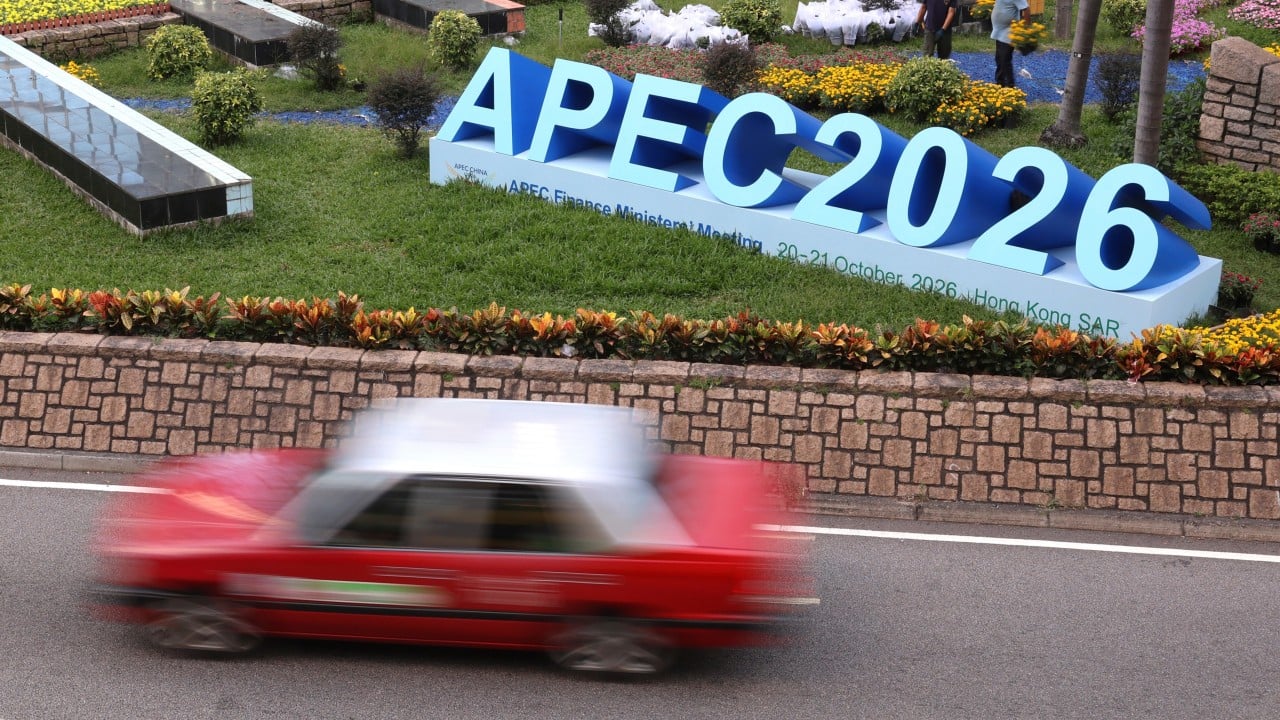
Hosting an Asia-Pacific Economic Cooperation (APEC) summit does not automatically restore capital flows, reverse talent outflows, or resolve geopolitical friction. For Hong Kong, treating the November 2026 APEC gathering in Shenzhen and its surrounding Greater Bay Area (GBA) spillover—or any Hong Kong-hosted ministerial track—as a mere public relations reset represents a fundamental misallocation of institutional capital. The territory’s value proposition relies entirely on institutional arbitrage: the capacity to operate a common-law, free-capital-flow interface directly adjacent to the world's second-largest economy. To convert APEC into an economic inflection point, Hong Kong’s policymakers and enterprise leaders must abandon soft-power branding exercises and execute a three-part structural conversion across capital markets, cross-border data governance, and bilateral trade settlement.
The Failure of Reputation-First Diplomacy
Conventional diplomatic commentary treats international summits as reputation-laundering mechanisms. The underlying assumption is linear: host global leaders, project stability, and foreign direct investment (FDI) will return. This model fails because institutional investors and multinational corporations (MNCs) allocate capital based on risk-adjusted yield and regulatory predictability, not banquet optics.
When a jurisdiction experiences prolonged geopolitical scrutiny and structural shifts in its legal-administrative framework, promotional roadshows create negative signaling. Sophisticated allocators interpret heavy state-backed marketing as a substitute for underlying structural reform. The cost function of corporate relocation or regional headquarters (RHQ) retention in Hong Kong is governed by three variables:
- Regulatory Friction: The compliance overhead required to navigate conflicting US-China sanctions, export controls, and data localization mandates.
- Capital Velocity: The speed and cost at which liquidity can move between mainland China and offshore clearing hubs.
- Talent Depth: The availability of bilingual, technically specialized labor capable of executing cross-border transactions.
An APEC event cannot alter the first variable directly, as geopolitical sanctions are exogenous to Hong Kong's domestic policy. Attempting to use APEC to argue that geopolitical risk has vanished is analytically dishonest and commercially ineffective. Instead, the summit provides a temporary coordination window—a compressed timeframe during which bilateral regulatory agencies, central banks, and trade ministries from 21 member economies are forced into direct operational contact.
Mechanism One Liquidity Routing and Alternative Clearing Architecture
The primary economic utility of Hong Kong within the APEC bloc is its function as the premier offshore Renminbi (RMB) hub. While Western commentary focuses on the decline of traditional initial public offerings (IPOs) from Western issuers, the structural shift in global trade is occurring in bilateral currency settlement across the Asia-Pacific.
Many APEC economies—specifically ASEAN member states and Latin American commodity exporters like Chile and Peru—face acute dollar-liquidity constraints when US interest rates remain elevated. Simultaneously, these economies run massive trade volumes with mainland China. Relying on US dollar intermediaries introduces foreign exchange conversion costs and correspondent banking delays.
Hong Kong’s strategic play during the APEC cycle is to operationalize multi-currency liquidity pools that bypass legacy settlement bottlenecks. Rather than pitching itself as a generic global financial center, the Hong Kong Monetary Authority (HKMA) and Hong Kong Exchanges and Clearing (HKEX) must use the APEC ministerial tracks to finalize technical interoperability in three specific areas:
- mBridge Expansion: Transitioning central bank digital currency (CBDC) cross-border settlement pilots from minimum viable product status into commercial clearing corridors for APEC central banks. Reducing settlement times from T+2 to near-instantaneous execution removes counterparty risk for mid-sized regional banks.
- Commodity-Linked RMB Financing: Establishing standardized trade finance facilities in Hong Kong that allow ASEAN and South American exporters to settle raw material shipments in RMB, then immediately deploy those RMB balances into yield-bearing mainland assets via Bond Connect or Swap Connect without converting back to USD.
- Dual-Counter Market Making: Deepening liquidity in the HKD-RMB dual-counter model by onboarding regional sovereign wealth funds from APEC economies as primary liquidity providers, reducing bid-ask spreads that currently deter institutional scale.
This approach shifts Hong Kong from a passive fundraising venue for mainland enterprises into an active treasury management engine for the broader Pacific Rim. The limitation of this strategy is clear: it concentrates Hong Kong’s risk profile within non-Western trade corridors. If global trade fragments further into rigid blocs, Hong Kong’s clearing infrastructure becomes heavily reliant on sustained mainland import demand.
Mechanism Two Cross-Border Data Governance as an Economic Moat
Modern trade among APEC economies is increasingly gated by digital trade rules and data localization laws, rather than physical tariffs. Mainland China enforces strict cross-border data transfer controls under its Personal Information Protection Law (PIPL) and Data Security Law. Conversely, economies like Singapore, Japan, and the United States push for unrestricted data flows under frameworks like the APEC Cross-Border Privacy Rules (CBPR) system.
Multinational enterprises operating across Asia face a binary compliance trap: build redundant, isolated data infrastructure inside mainland China at massive capital expense, or restrict mainland operations to prevent data commingling.
Hong Kong possesses a unique structural advantage to resolve this bottleneck through regulatory sandboxes established between the Office of the Privacy Commissioner for Personal Data (PCPD) and the Cyberspace Administration of China (CAC). The standard contract mechanism for data flows within the Greater Bay Area already allows simplified data transfer from nine mainland Guangdong cities into Hong Kong.
To turn APEC into a commercial catalyst, Hong Kong must scale this bilateral arrangement into a multilateral compliance bridge:
- Standardized Audit Protocols: Establish Hong Kong-domiciled data trustees certified to audit and anonymize mainland industrial, clinical, and financial datasets before those datasets are accessed by APEC-based research or financial institutions.
- CBPR Interoperability: Align Hong Kong’s domestic data privacy enforcement with the APEC CBPR framework while maintaining strict ring-fencing protocols demanded by Beijing. This creates a legally recognized "clean room" where data can be processed without violating either jurisdiction's statutory mandates.
- AI Compute Arbitrage: Position Hong Kong’s emerging supercomputing infrastructure (such as Cyberport’s AI Supercomputing Centre) as a neutral training ground. Regional enterprises from Southeast Asia can train models on localized datasets using mainland-developed open-source weights, avoiding the export-control restrictions that limit direct US cloud deployment in certain sectors.
The constraint here is trust asymmetry. Western APEC members may view any Hong Kong data framework integrated with the GBA as inherently permeable to mainland state access. Therefore, this mechanism will not attract US defense-adjacent tech firms. It will, however, capture mid-market fintech, biotech, and logistics enterprises from ASEAN, the Middle East, and Latin America that require access to Chinese supply-chain data without building onshore compliance teams.
Mechanism Three Supply Chain Re-Engineering and Professional Services
The dominant macroeconomic trend in the Asia-Pacific is the reconfiguration of manufacturing supply chains—often labeled "China Plus One." Factories are moving final assembly from Guangdong and Zhejiang to Vietnam, Indonesia, Thailand, and Mexico.
Superficial analysis views this migration as a net loss for Hong Kong’s traditional re-export and logistics sectors. That view misunderstands how supply chains actually function. When a manufacturer shifts assembly from Dongguan to Hai Phong, the physical goods bypass Hong Kong’s container terminals. However, the upstream component supply still originates in mainland China, and the corporate structuring, trade finance, intellectual property protection, and dispute resolution require a neutral common-law jurisdiction.
Vietnam and Indonesia lack the deep commercial courts, arbitration precedent, and tax treaty networks required to manage complex multi-jurisdictional joint ventures. Singapore captures a massive share of this headquarters and legal work, driven by aggressive tax incentives and perceived geopolitical neutrality.
Hong Kong’s competitive response cannot rely on matching Singapore’s direct subsidies, which are fiscally unsustainable given Hong Kong’s structural budget deficits and reliance on volatile land-sale revenues. Instead, Hong Kong must compete on upstream integration:
- The Headquarters-Factory Split: Market Hong Kong not as a standalone regional hub, but as the front-end corporate interface for GBA-integrated manufacturing. A manufacturer maintaining R&D in Shenzhen and assembly in Batam can domicile its holding company in Hong Kong to access mainland R&D tax deductions alongside ASEAN tariff preferences.
- Arbitration Specialization: Leverage the Hong Kong International Arbitration Centre (HKIAC) to capture supply-chain contract disputes. Under the Arrangement Concerning Mutual Assistance in Court-ordered Interim Measures in Aid of Arbitral Proceedings, Hong Kong is the only jurisdiction outside the mainland where parties to arbitral proceedings can apply directly to mainland courts for asset preservation orders. This is a hard legal moat that Singapore, London, and New York cannot replicate. During APEC, Hong Kong’s legal sector must aggressively market this specific statutory mechanism to APEC trade associations and state-owned enterprises investing in mainland supply chains.
- Green Supply Chain Certification: As APEC economies implement carbon border adjustments and mandatory ESG disclosures, Southeast Asian manufacturers face financing blocks due to unverified emissions data. Hong Kong’s accounting and engineering firms must standardize carbon-audit methodologies recognized by both mainland industrial regulators and international institutional lenders, turning Hong Kong into the mandatory verification checkpoint for Asian industrial exports.
Diagnosing the Structural Constraints
Executing these three mechanisms requires confronting internal bottlenecks that promotional rhetoric routinely ignores. Three systemic risks threaten to neutralize any momentum generated during the APEC cycle:
First, the fiscal rigidity of the Hong Kong government. Public expenditure has expanded significantly over the past five years, while traditional revenue pillars—stamp duties on equities and property, plus land premiums—have contracted sharply. Without diversifying the tax base or aggressively cutting non-productive administrative overhead, the government lacks the balance-sheet flexibility to co-invest in strategic infrastructure without drawing down fiscal reserves to uncomfortable levels.
Second, the cost-of-living to productivity ratio. Commercial real estate and residential rents in Hong Kong remain among the highest globally, even after recent market corrections. For mid-level technical talent—software engineers, quantitative analysts, and compliance officers—the after-tax, after-rent disposable income in Hong Kong has eroded relative to competing hubs like Kuala Lumpur, Bangkok, and Shenzhen itself. If Hong Kong cannot lower housing friction through accelerated land supply or targeted corporate housing allowances, talent attraction schemes will yield high initial visa approvals followed by rapid attrition.
Third, regulatory over-compliance by local financial institutions. Driven by fear of secondary US sanctions, many retail and commercial banks in Hong Kong apply Know Your Customer (KYC) and Anti-Money Laundering (AML) onboarding procedures that are significantly more restrictive than statutory minimums. Opening a corporate bank account for a legitimate, newly incorporated ASEAN trading firm in Hong Kong frequently takes months of bureaucratic friction. If a regional enterprise can incorporate and bank in Singapore within seventy-two hours, Hong Kong’s theoretical tax advantages become irrelevant.
Operational Execution Before the Summit
Waiting until the APEC summit convenes to announce policy frameworks guarantees failure; by the time heads of state arrive, bilateral agreements are already drafted and corporate capital allocation budgets for the following fiscal year are locked.
Hong Kong’s financial regulators, trade development councils, and corporate leaders must execute a sequenced pre-summit deployment:
- Eliminate Onboarding Friction (T-Minus 6 Months): The HKMA must issue explicit, binding safe-harbor guidelines to retail and commercial banks regarding corporate account onboarding for entities domiciled in APEC member economies. Establish a fast-track regulatory utility that validates corporate registries across ASEAN and Latin America, mandating a maximum ten-business-day turnaround for standard corporate banking activation.
- Launch Targeted Bilateral Liquidity Swaps (T-Minus 4 Months): Rather than waiting for multilateral consensus, the HKMA should finalize bilateral local-currency settlement agreements and sovereign repo facilities with three high-growth, dollar-constrained APEC central banks—specifically Bank Indonesia, Bangko Sentral ng Pilipinas, and the Central Bank of Chile—using Hong Kong’s clearing infrastructure as the settlement engine.
- Mandate GBA Data-Clean-Room Pilots (T-Minus 3 Months): Deploy three live commercial pilots under the PCPD-CAC framework involving non-sensitive supply-chain logistics, maritime insurance, and clinical trial data. Publish the exact compliance architecture and processing latency metrics ahead of the summit so multinational general counsels have empirical proof of operational viability rather than policy whitepapers.
- Restructure Tax Treaties for Supply Chain Holding Companies (T-Minus 2 Months): Introduce targeted unilateral tax credits or streamlined Double Taxation Agreement (DTA) qualification rules specifically for holding companies that manage split manufacturing footprints across mainland China and at least two ASEAN APEC members.
Hong Kong’s relevance to the Asia-Pacific is no longer guaranteed by geography or historical inertia. The territory’s survival as a tier-one economic node depends entirely on its ability to engineer legal, financial, and data-governance plumbing that solves high-friction cross-border problems no other jurisdiction is politically or legally positioned to touch.