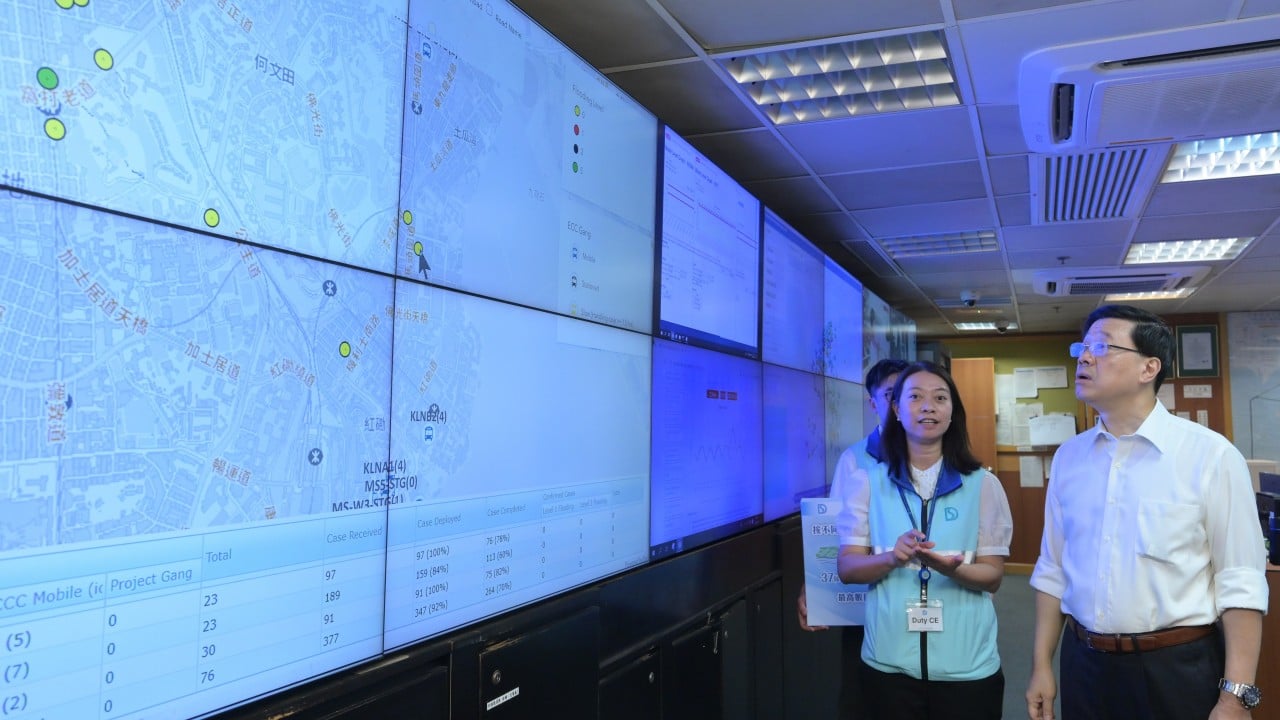
People panic whenever governments talk about building a centralized intelligence network. You hear phrases like mass surveillance or digital panopticon, and privacy alarms immediately go off in your head. When Chief Executive John Lee announced that Hong Kong is rolling out an integrated "AI city brain" to transform urban management, the pushback over data privacy started almost instantly.
Can a hyper-dense metropolis overhaul its disaster response and transit coordination using artificial intelligence without turning into a digital surveillance state? Let's look at what is actually happening behind the headlines.
The Real Goal Behind the System
For years, Hong Kong's government departments operated in rigid silos. If a torrential downpour triggered flash floods or a landslide threatened a hillside residential area, the Transport Department, the Observatory, and emergency services often relied on disjointed feeds and manual communication channels. Precious minutes vanished during those delays.
The new system aims to shatter these barriers by connecting fragmented digital infrastructure. Phase one links the Security Bureau's Emergency Monitoring and Support Centre with the 1823 public hotline and spatial planning tools like the Geographic Information System-based Common Operational Platform by early 2028.
The software isn't built to track your daily commute or monitor what you buy at the convenience store. Instead, it looks at macro-level data like structural stress points, traffic flow patterns, and weather anomalies. It is about predicting infrastructure failures and weather crises before they turn catastrophic, rather than playing catch-up after the damage is done.
The Privacy Reality Check
John Lee addressed public anxiety head-on by drawing a hard line on personal data protection. Officials emphasize that the system operates under strict legal parameters designed to prevent overreach.
Hong Kong already has a deeply entrenched legal framework governing personal data privacy, overseen by an independent privacy commissioner. Pulling data from disparate municipal departments to forecast a landslide or optimize ambulance routing doesn't require scraping private messages, facial recognition feeds of everyday pedestrians, or individual browsing histories.
Critics remain naturally skeptical because of how similar initiatives roll out globally. In many smart cities, creeping surveillance follows right behind infrastructural upgrades. But Hong Kong presents a unique layout. Its hyper-dense verticality and intensely vocal public mean any overt privacy violation triggers immediate public backlash and regulatory friction. Bureaucrats know that a heavy-handed approach will stall out due to internal resistance and public pushback long before it achieves its goals.
Why Copying Other Metropolises Fails
A common mistake commentators make is assuming Hong Kong can just copy-paste a mainland Chinese smart city model, such as those used in Hangzhou or Shenzhen. That strategy does not work.
Hong Kong operates under a distinct legal, spatial, and administrative environment. You cannot treat urban governance like an off-the-shelf software download. The city's narrow streets, underground utility labyrinths, and cramped residential blocks require a hyper-localized approach.
By expanding existing frameworks like the Common Operational Platform rather than starting from scratch, the government is trying to avoid the multi-million dollar failures that plague rushed municipal tech projects. The focus stays strictly on structural resilience, traffic bottlenecks, and emergency coordination.
What Happens Next
The success of Hong Kong's tech initiative won't depend on how flashy the neural networks look on paper. It will depend entirely on execution, transparency, and whether officials can maintain public trust as the 2028 completion target approaches.
If you live or work in the city, keep an eye on how data sharing agreements are audited between departments. Demand transparency from local council members regarding data retention limits. Real smart city progress means demanding efficient emergency response systems while keeping administrative power strictly accountable.