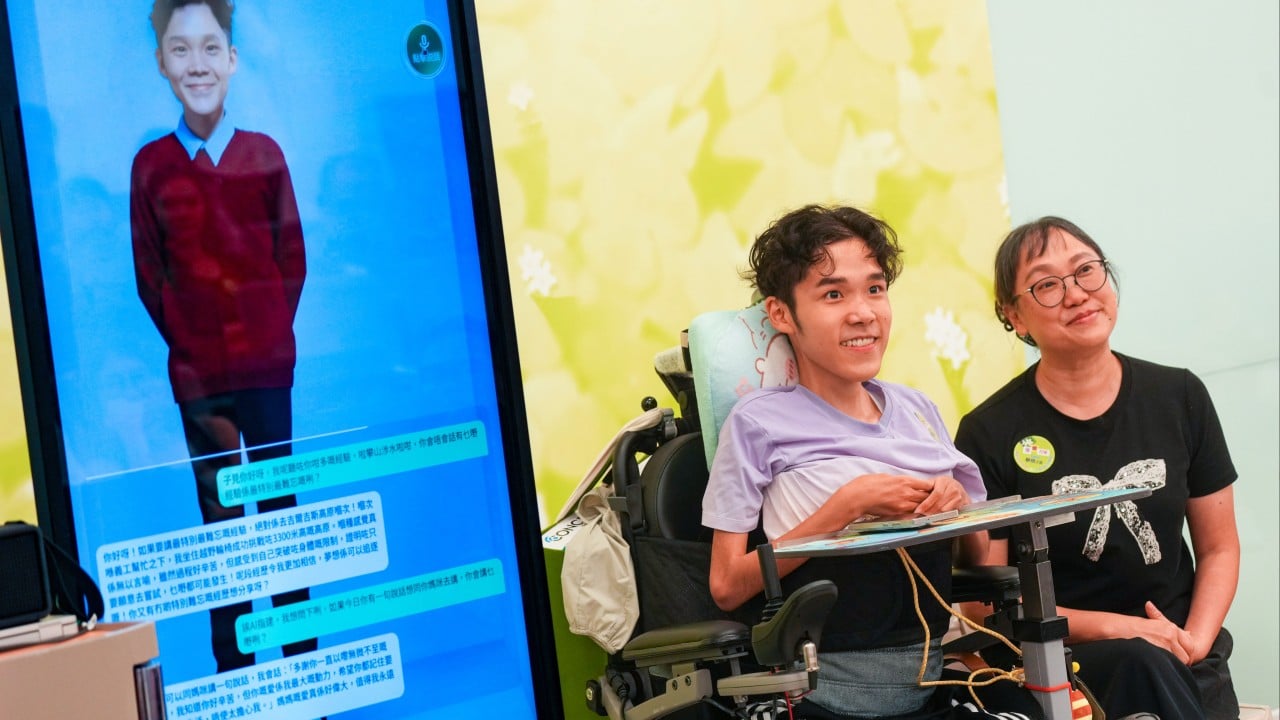
Picture sitting down to record your own life story while your body is quietly running out of time. That is the core tension behind a Hong Kong teen building an AI avatar so his voice and perspective stay behind after he's gone. It sounds like sci-fi. Honestly, it's also deeply practical—and kind of heartbreaking.
I've spent years watching health tech try to solve big emotional problems with shiny software. Most of the time, the software feels cold. A chatbot that mimics someone's phrasing isn't the same person. Yet when a teenager facing a rare disease builds an AI avatar to keep his story alive, the goal isn't tricking anyone into thinking he's still in the room. It's giving family, friends, and maybe even researchers a living archive that answers questions the way he actually thought about them. Meanwhile, you can find similar developments here: Why Meta Stumbling Over Its Own Employee Data Was Inevitable.
Let's be clear about what's happening here. We don't have a full public dossier on every detail of this specific Hong Kong teen's project, and I'm not going to fill in blanks with made-up names, dates, or quotes. Instead, let's look at what this kind of project really does, why rare disease patients are drawn to synthetic voice and conversational clones, and where the technology hits a hard wall.
How a Hong Kong teen building an AI avatar actually works under the hood
When someone talks about an AI avatar for legacy storytelling, people imagine a photorealistic hologram cracking jokes. Reality is much less flashy and way more work. To explore the full picture, we recommend the recent analysis by ZDNet.
First, you need source material. Audio recordings, video clips, written essays, texts, interviews. If a teen is battling a rare disease, fatigue is real. Recording hours of clean audio isn't easy when breathing, speech, or energy fluctuates from week to week. That's a huge detail most tech coverage glosses over. You can't just "upload a personality" in an afternoon.
Second, there's the voice and likeness layer. Modern text-to-speech systems can clone a voice from surprisingly short clips, sometimes under a minute, though longer, varied recordings sound far more natural. Lip-sync and facial animation models can map that audio onto a still photo or short video loop. Still, anyone who knows the person notices micro-expressions that feel slightly off.
Third comes the language model layer. Fine-tuning or prompting a model on someone's writing and Q&A answers lets the avatar respond in a recognizable cadence. Say he loved dry humor or explained medical stuff in plain terms—the system can echo those habits. It won't invent new lived memories accurately unless those memories were fed in, and even then, language models love to smooth over uncertainty.
I've tested conversational memory bots built from personal journals. They're impressive for ten minutes. On minute eleven, the bot hallucinates a detail about a trip that never happened, and the uncanny valley hits like cold water.
Rare disease patients face a unique clock
Rare diseases aren't rare in total human impact. Global health bodies like the World Health Organization and patient coalitions such as EURORDIS regularly point out that hundreds of millions of people worldwide live with rare conditions, often waiting years just to get an accurate diagnosis.
When a young person gets diagnosed with a rare disease, two things collide. Medical information comes fast and heavy, while personal agency shrinks. You spend half your week in clinics and the other half trying to feel like a normal kid.
Creating an AI avatar flips that script for a moment. Instead of being a passive patient on a chart, the teen becomes the director of his own archive. He decides what gets recorded. He decides what jokes stay in. He decides what he wants his parents or younger siblings to hear when a random Tuesday feels heavy.
That control matters. Grief isn't just missing someone's presence; it's realizing you forgot how they explained a specific idea or how they sounded when they were excited. A curated AI avatar doesn't erase grief, obviously. Nothing does. It gives survivors a structured way to revisit stories he chose to tell.
Where the hype collides with reality
Let's push back on the romantic version of digital immortality. Companies love pitching "digital twins" and "legacy AI" because subscriptions sound great in a pitch deck. Real life is messier.
Consider consent and drift. A teenager writing prompts or approving answers at sixteen or seventeen has a specific worldview. Five years later, an unmonitored model might combine his real notes with generic training data in ways he never signed off on. Who owns the weights, the audio stems, and the chat logs? If a third-party startup shuts down—which happens constantly in consumer AI—your loved one's avatar disappears behind a server error.
Then there's emotional friction for the family. Some parents find comfort hearing a familiar voice answer a question. Others feel trapped in a loop, talking to a mirror that can't grow, change its mind, or surprise them with a real new thought. Psychologists and bioethicists who study digital remains—look at work from institutions like the Oxford Internet Institute or MIT Media Lab—frequently flag that synthetic personas blur the boundary between memorialization and ongoing relationship.
There's also a medical angle worth watching. Patient stories from rare diseases aren't just family keepsakes. Clinicians and researchers often learn early symptom patterns or quality-of-life realities from patient narratives. If a teen's AI avatar is locked inside a closed app, that insight never reaches anyone outside his circle. If it's too open, privacy gets wrecked.
What people get wrong about AI legacy avatars
Misconception one: the avatar "is" the person. No. It's a statistical reflection built from whatever fragments were recorded before illness or time took its toll. Treat it like a person and you'll end up disappointed or hurt. Treat it like an interactive memoir, and it makes way more sense.
Misconception two: better models automatically solve authenticity. Larger models actually make fake confidence worse. When a model doesn't know something, a well-designed legacy system should say, "He didn't record anything about that." Most consumer chatbots guess instead.
Misconception three: this is only for wealthy tech insiders. Open-source voice models, local transcription tools, and basic retrieval setups have gotten cheap enough that a tech-savvy teen with a decent laptop can build a prototype at home. That's part of why stories like this Hong Kong teen's project keep popping up—the barrier to entry dropped faster than the social rules around it.
Practical steps if you're building a personal or family voice archive
If you or someone you know wants to preserve stories, voice, or perspective without falling into creepy territory, skip the flashy "bring them back" marketing and focus on durable basics.
Start with raw, unedited exports. Save original WAV or FLAC audio files, plain text transcripts, and video files on local drives you control, not just inside one app. Software dies; raw files survive.
Record structured prompts while energy allows. Short ten-minute sessions work better than marathon shoots. Ask concrete questions: how did you meet your best friend, what book changed how you saw things, what advice would you give someone starting high school, what mistake did you make and laugh about later?
Keep a clear boundary between verified quotes and AI-generated replies. If you experiment with an AI avatar layer, label generated responses clearly and restrict answers to verified notes whenever possible.
Decide stewardship early. Pick one or two trusted family members who hold the keys, set rules on whether new chats can be logged, and put those wishes in writing alongside practical account access.
A teenager in Hong Kong using an AI avatar to keep his story alive isn't proof that machines can replace a human life. It's proof that when time feels scarce, people reach for whatever tools let them say, "I was here, I thought about these things, and I mattered."