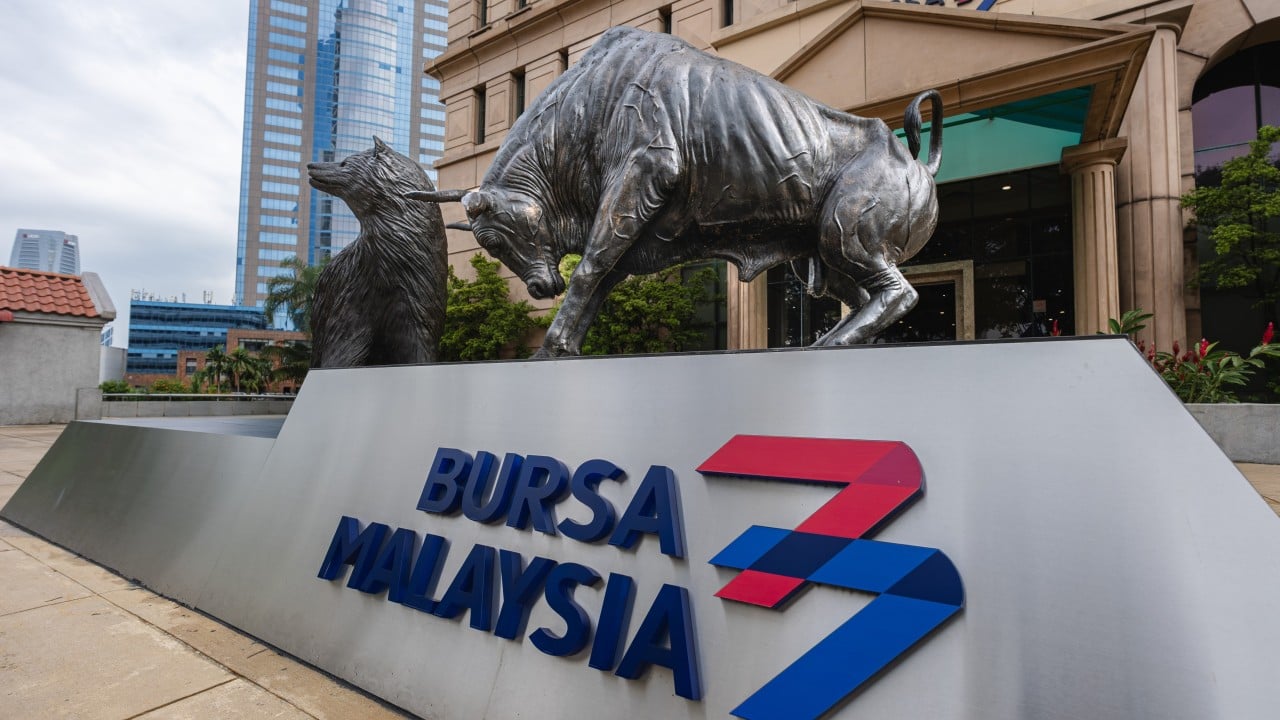
When the Malaysian government issued a US$1.5 billion sustainability bond, they didn’t head to London or New York. They chose the Hong Kong Stock Exchange. This isn’t just a random financial headline. It is the clearest signal yet that Hong Kong’s aggressive charm offensive toward the Association of Southeast Asian Nations (ASEAN) is actually working.
For years, critics claimed Hong Kong was losing its status as a global financial hub. They pointed to political instability and the rise of Singapore. They missed the bigger picture. Hong Kong remains the primary gateway for Chinese liquidity and institutional capital, a reality that regional players in Malaysia, Indonesia, and Thailand are finally acknowledging.
The mechanics behind the Malaysian bond listing
You might wonder why a Malaysian issuer would deal with the regulatory hurdles of a foreign exchange. The answer is simple: access to a deeper, more diverse pool of investors.
The US$1.5 billion dual-currency sukuk (Islamic bond) issuance was listed in both Kuala Lumpur and Hong Kong. By tapping into Hong Kong, the Malaysian government gained direct exposure to massive Chinese institutional funds and global asset managers who maintain their primary Asia-Pacific headquarters in the city.
This is not a one-off event. It’s part of a deliberate strategy by the Hong Kong Exchanges and Clearing (HKEX) to diversify away from its traditional reliance on mainland Chinese initial public offerings. When the equity market turns volatile—as it has periodically over the last three years—fixed-income products like sovereign bonds provide the stability the exchange desperately needs to maintain its transaction volume.
Why ASEAN companies choose Hong Kong over Singapore
Singapore is often seen as the default choice for Southeast Asian firms. It’s clean, efficient, and geographically central. Yet, Hong Kong offers a specific advantage that Singapore cannot replicate: the proximity to the Hong Kong-Mainland China Connect programs.
Companies listing or issuing debt in Hong Kong are effectively positioning themselves in the shop window for mainland Chinese investors. Through Bond Connect and the various Stock Connect schemes, investors in Shanghai and Shenzhen can trade Hong Kong-listed assets with relative ease. If you’re a Southeast Asian CEO looking to grow your business, you don’t just want capital. You want access to the world’s second-largest economy.
Hong Kong has also spent the last 24 months slashing red tape for foreign issuers. They’ve introduced:
- Simplified dual-listing rules for companies already trading on major overseas exchanges.
- Specialized technology board chapters that allow pre-revenue firms to raise capital without the traditional profit requirements.
- Green finance incentives that make ESG-compliant bonds significantly cheaper to issue in Hong Kong than in other regional markets.
The geopolitical reality of the charm offensive
Government officials in Hong Kong aren't just sending emails; they are traveling. The Chief Executive and senior HKEX leadership have spent significant time in Riyadh, Jakarta, and Kuala Lumpur.
This pivot toward the Global South is a survival mechanism. As tensions between the US and China complicate capital flows, Hong Kong is acting as the neutral ground where money moves regardless of Western sanctions or trade barriers. Southeast Asian nations are cautious about picking sides in the US-China rivalry. By using Hong Kong as a financial intermediary, they can maintain strong economic ties with Beijing without becoming overly dependent on mainland-only platforms.
This is a smart play for both sides. ASEAN needs infrastructure funding—estimated at hundreds of billions annually—and China has the excess capital looking for yield. Hong Kong sits right in the middle, collecting the transaction fees and cementing its relevance.
Managing the risks of cross-border issuance
If you are an investor or a corporate treasurer looking at this trend, don't get blinded by the headlines. Issuing in Hong Kong comes with complexities that domestic markets don't have.
First, regulatory divergence is real. You have to satisfy the Securities and Futures Commission (SFC) in Hong Kong, which maintains some of the strictest disclosure standards in the world. This is great for investor protection but creates massive legal overhead for smaller companies.
Second, currency risk is a factor. While the Hong Kong dollar is pegged to the US dollar, the underlying assets or the revenue streams of an ASEAN issuer might be in ringgit, rupiah, or baht. You need a sophisticated hedging strategy before you even file the paperwork.
Finally, don't ignore liquidity. Just because a bond is listed on the HKEX doesn't mean it will trade actively. Most institutional investors in the region hold these bonds until maturity. If you’re looking for a liquid asset to trade daily, sovereign bonds listed in Hong Kong might feel like a graveyard.
How to capitalize on this shift
For institutional investors, the "charm offensive" means more high-quality paper is hitting the market. Southeast Asian sovereign and corporate debt typically offers higher yields than comparable Chinese or developed-market debt, making it an excellent way to boost portfolio performance without taking on excessive risk.
- Watch the HKEX pipeline: Don't wait for the IPOs. Watch the bond listings. They are the leading indicator of where capital is flowing and which Southeast Asian conglomerates are looking to expand into China.
- Focus on ESG: The biggest growth area for these cross-border listings is in sustainability-linked bonds. Hong Kong is positioning itself as the green finance hub of Asia. Look for issuers with verifiable carbon-reduction targets.
- Analyze the "Connect" eligibility: If you are an investor, determine if the instrument is eligible for the Bond Connect scheme. Eligibility essentially guarantees a wider buyer base, which supports the price of the bond when you need to exit your position.
Hong Kong is successfully retooling itself as the bridge between the emerging economies of ASEAN and the massive capital reserves of China. It’s a pragmatic evolution that ignores political noise in favor of cold, hard financial logic. The US$1.5 billion Malaysian bond isn't an anomaly. It is the new blueprint for regional finance.